

Escrito por estudiantes que aprobaron Inmediatamente disponible después del pago Leer en línea o como PDF ¿Documento equivocado? Cámbialo gratis 4,6 TrustPilot
logo-home
Document preview thumbnail
Vista previa 2 fuera de 7 páginas
Examen

OCS11 – Spinal Anatomy, Back Pain Pathologies, OMM & EKG Interpretation | 70+ Verified Q&A | Vertebrae, SUD, Kyphosis, TART, CT/MRI | 2025/2026

Document preview thumbnail
Vista previa 2 fuera de 7 páginas

This document includes 70+ structured, clinically integrated questions and expert-verified answers from the OCS11 (Objective Clinical Skills – Week 21 Donor, Integrative, OMM, Clinical Skills) module at Medical University, created for the 2025/2026 academic year. It combines in-depth spinal anatomy, musculoskeletal pathologies, addiction medicine, EKG interpretation, and osteopathic manipulative treatment (OMT), making it an essential study aid for OSCEs, written exams, and clinical reasoning. Key topics covered: Mediastinum & Thoracic Inlet Compression: Detailed description of superior and posterior mediastinal structures and explanation of how anatomical crowding can lead to thoracic inlet syndrome and compression signs. Autonomic Nervous System (ANS) Review: Compares sympathetic and parasympathetic organization in the thorax vs upper/lower limbs, helping students understand neuroanatomical pathways and visceral somatic relationships. Back Muscle & Vertebral Anatomy: Differentiates superficial vs deep back muscles based on embryology, innervation, and morphology Covers erector spinae, transversospinalis, and spinotransverse columns Describes vertebral structures and compares cervical, thoracic, lumbar, and sacral vertebrae Spinal Cord & Meninges: Details the structure of spinal cord segments, meninges (dura, arachnoid, pia), and their significance for epidural vs spinal anesthesia. Intervertebral Disc & Aging: Structure of discs and age-related degeneration processes are described, including nucleus pulposus and annulus fibrosus changes. Spinal Pathologies & Imaging: Discusses natural history and differentials of kyphosis, scoliosis, radicular pain, axial back pain, ankylosing spondylitis. Also includes content on reading CT/MRI spine views (transpedicular, transforaminal, transdiscal). Substance Use Disorders (SUD): Defines SUDs as chronic brain disease Explores the impact of opioid use disorder (OUD) from a patient’s perspective Discusses Adverse Childhood Experiences (ACEs), stigma, and clinician communication strategies for respectful care Electrocardiography (EKG): Breaks down waves, intervals, rate, rhythm, and axis Helps students recognize bradycardia, tachycardia, heart blocks, AFib, VTach, Torsades, and STEMI Includes interval durations, segment lengths, and interpretation patterns OMM Skills: Students apply OMM to the thorax, ribs, and lymphatic system Emphasis on TART findings, somatic dysfunction assessment, and documentation Explains 5 models of osteopathic care and 4 tenets of osteopathy in clinical context This document is ideal for: Medical (DO, MD), PA, and PT students mastering spine and neuroanatomy Learners preparing for clinical skills exams, OSCEs, or board questions on SUD and EKG OMM-focused students refining diagnosis and treatment planning skills Keywords: vertebral anatomy, spinal cord, paraspinal muscles, intervertebral disc, meninges, kyphosis, scoliosis, radicular pain, thoracic inlet, ANS thorax, OUD, substance use disorder, ACEs, EKG interpretation, AFib, STEMI, VTach, OMM thorax, TART, osteopathic models, spinal imaging

Vista previa del contenido

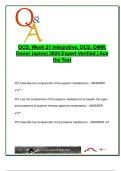
OCS: Week 21 integrative, OCS, OMM,
Donor (spine) 2025 Expert Verified | Ace
the Test


PQ: Describe the components of the superior mediastinum - 🧠ANSWER

✔✔***


PQ: Use the components of the superior mediastinum to explain the signs

and symptoms of superior thoracic aperture compression - 🧠ANSWER

✔✔**


PQ: Describe the components of the posterior medistinum - 🧠ANSWER ✔✔

, PQ: Describe the general organization of the Sympathetic Autonomic

Nervous System in the thorax and compare it to the organization of the

ANS in the upper or lower extremity - 🧠ANSWER ✔✔


PQ: Describe the general organization of the Parasympathetic Autonomic

Nervous System in the thorax and compare it to the organization of the

ANS in the upper or lower extremity - 🧠ANSWER ✔✔


PQ: Describe the general organization of the Parasympathetic Autonomic

Nervous System in the thorax and compare it to the organization of the

ANS in the upper or lower extremity:


Pulmonary embolis

Flail chest

Lung cancer


Anemia - 🧠ANSWER ✔✔


Distinguish between superficial and deep back muscles based on

embryology, morphology and innervation and list the three major columns

of deep back muscles - 🧠ANSWER ✔✔

Información del documento

Subido en
15 de diciembre de 2025
Número de páginas
7
Escrito en
2025/2026
Tipo
Examen
Contiene
Preguntas y respuestas
$15.99

¿Documento equivocado? Cámbialo gratis Dentro de los 14 días posteriores a la compra y antes de descargarlo, puedes elegir otro documento. Puedes gastar el importe de nuevo.
Escrito por estudiantes que aprobaron
Inmediatamente disponible después del pago
Leer en línea o como PDF

Seller avatar
Los indicadores de reputación están sujetos a la cantidad de artículos vendidos por una tarifa y las reseñas que ha recibido por esos documentos. Hay tres niveles: Bronce, Plata y Oro. Cuanto mayor reputación, más podrás confiar en la calidad del trabajo del vendedor.
JOSHCLAY
3.6
(87)
Vendido
401
Seguidores
15
Artículos
20795
Última venta
2 días hace


Por qué los estudiantes eligen Stuvia

Creado por compañeros estudiantes, verificado por reseñas

Calidad en la que puedes confiar: escrito por estudiantes que aprobaron y evaluado por otros que han usado estos resúmenes.

¿No estás satisfecho? Elige otro documento

¡No te preocupes! Puedes elegir directamente otro documento que se ajuste mejor a lo que buscas.

Paga como quieras, empieza a estudiar al instante

Sin suscripción, sin compromisos. Paga como estés acostumbrado con tarjeta de crédito y descarga tu documento PDF inmediatamente.

Student with book image

“Comprado, descargado y aprobado. Así de fácil puede ser.”

Alisha Student

Preguntas frecuentes
