NUR 2000 – Nursing the Emotionally Ill, page 1 of 33
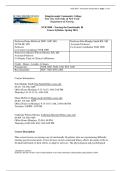
Kingsborough Community College
The City University of New York
Department of Nursing
NUR 2000 – Nursing the Emotionally Ill
Course Syllabus: Spring 2024
Professor Diane McDevitt DNP, ANP, MS, Professor Erin Murphy Smith RN, MS
ACNS-BC ,RN Associate Professor
Professor Co-Course Coordinator NUR 2000
Co-Course Coordinator NUR 2000
Professor Catherine Wilson-Mooney RN, MS
Assistant Professor
Co-Deputy Chair of Clinical Affiliations
Credit – Hours: 4 credits, 14 hours.
Prerequisites: NUR 1800, NUR 2100, PSY 3200
Recommended SOC 3100; ENG 2400
Contact Information
Erin Murphy Smith
M 431 718 368-5486
Office Hours Mondays 9:15-10:15, 4:00-5:00 PM
Thursdays 10:15-11:15, 4:00-5:00
Diane McDevitt
M 407 718 368- 5839
Office Hours on Mondays 9:15-10:15 AM, 5:00-6:00 PM
Tuesdays 2:00PM -3:00 PM
Catherine Wilson Mooney
M 409 718 368-5409
Office Hours Mondays 12:00-1:00 PM
Thursdays 8:00-9:00 AM, 3:00-4:00 PM
Course Description
This course focuses on nursing care of emotionally ill patients who are experiencing difficulty
meeting psychosocial needs. It also focuses on how emotional illness affects the needs of the in-
dividual and family in their efforts to adapt to stressors. The physiological and psychological
(08/06/2014, 8/5/2015,
02/05/16,1/26/18,8/13/18,8/1/19,2/14,2020,4/2020,8/11/20,1/26/21,8/24/2021,2/2022,6/2022,2/2023,5/2023,1/2024)
, NUR 2000 – Nursing the Emotionally Ill, page 2 of 33
needs of the patient are addressed through Quality and Safety for Nurses (QSEN) initiative in-
corporating the concepts of patient centered care, teamwork and collaboration, evidence-based
practice, safety, quality improvement and informatics, the nursing process, and the Categories of
Client Needs. Students are also introduced to the principles of management of patient groups. In
addition, this class is designated as a Civic Engagement Course by KCC. To fulfill the Civic En-
gagement requirement, students will attend an open Alcoholics Anonymous meeting and submit
a reflection paper about that experience. Class work for a typical week consists of five (5) hours
of classroom instruction, two (2) hours weekly college laboratory/simulation, and eight (8) hours
of health agency experiences. It is essential for students to engage in additional practice for fur-
ther development of skills. Provisions are available for additional time in the college laboratory
for practice.
All students should ensure they have access to their cuny.edu email, their library account,
CUNYfirst, Office365, CUNY Virtual Desktop, CUNY Dropbox. For assistance, contact the
student Helpdesk at L-106 or email at or phone 718-368-
6679.
COURSE STUDENT LEARNING OUTCOMES (SLOs)
Upon completion of NUR 2000, using the Nursing Process in a variety of health care settings to
a diverse population of mental health patients, the student will:
Course SLOs
1. Structure safe, compassionate, nursing care to patients within the continuum of care in
mental health services.
2. Prioritize patient-centered nursing interventions for patients with mental health problems
and disorders.
3. Deliver nursing care supported by principles of evidence-based practice.
4. Apply critical thinking and clinical reasoning strategies when providing care in mental
health nursing.
5. Implement principles of teamwork and collaboration when working with members of the
interdisciplinary mental health team.
6. Analyze pertinent leadership/management methods when providing care.
7. Demonstrate accurate quality documentation while using the principles of information
services and systems when providing care.
8. Practice professional nursing within an ethical and legal framework to protect the rights
of mental health patients.
(08/06/2014, 8/5/2015,
02/05/16,1/26/18,8/13/18,8/1/19,2/14,2020,4/2020,8/11/20,1/26/21,8/24/2021,2/2022,6/2022,2/2023,5/2023,1/2024)
, NUR 2000 – Nursing the Emotionally Ill, page 3 of 33
ASSESSMENT MEASURES for COURSE SLOs
Students will perform satisfactorily in the classroom, laboratory/simulation and clinical setting
as evidenced by achieving 75% or greater on written exams, completion/submission of various
course specific written assignments, and demonstration of satisfactory performance on course
specific clinical competency and evaluation tools.
ASSESSMENT TECHNOLOGY INSTITUTE (ATI) TESTING
Kingsborough’s Nursing Department uses ATI Nursing Education tutorials, testing and remedia-
tion each semester. Completion of ATI practice assessments and exams are requirements of this
course. ATI will account for 2% of the course grade. A grade of incomplete will be entered for
any student failing to submit all scheduled ATI assignments by the due date. Similarly, a grade
of incomplete will result if a student fails to take the proctored ATI exam. A grade of incom-
plete will prevent progression in the program.
ATTENDANCE
Complete participation in class is possible only when students are able to focus attention on the
class; therefore, entering class after it has begun is disrespectful to Faculty and classmates. Talk-
ing out of turn or exhibiting other disruptive behaviors is not tolerated and students will be asked
to leave the classroom or lab.
All cell phones, smart devices or other multimedia devices that generate sound must be muted or
turned off during lectures, labs and clinicals. Students must exit the virtual classroom to make or
receive calls.
A student is deemed excessively absent in any course when he or she has been absent 15% of the
number of contact hours a class meets during a semester. When a student is excessively absent, a
grade of “WU” will be assigned as described in the college catalogue. Attendance at pre- and
post-conference for clinical experience is required. Absence from either pre- or post-conference
constitutes an absence for the day’s experience.
STUDENTS WITH DISABILITIES
Access-Ability Services (AAS) serves as a liaison and resource to the KCC community regard-
ing disability issues, promotes equal access to all KCC programs and activities and makes every
reasonable effort to provide appropriate accommodations and assistance to students with disabili-
ties. Your instructor will make the accommodations you need once you provide documentation
from the Access-Ability office (D-205). Please contact AAS for assistance.
EXAM POLICY
All course exams are administered on-campus electronically via Exam Soft. In the event of a vir-
tual exam, students will be monitored during the exam. Therefore, it is imperative that the stu-
dent use a computer with audio and video capabilities. All students are required to have a camera
on during the virtual exam. The student testing environment should be in an area with adequate
Wi-Fi and free from distractions and personal items. The CUNY Policy on Academic Integrity
is strictly enforced throughout the exam. Any suspected violation of this policy may result in
removal from the course. Examples of this behavior include, but are not limited to, talking, use
(08/06/2014, 8/5/2015,
02/05/16,1/26/18,8/13/18,8/1/19,2/14,2020,4/2020,8/11/20,1/26/21,8/24/2021,2/2022,6/2022,2/2023,5/2023,1/2024)
, NUR 2000 – Nursing the Emotionally Ill, page 4 of 33
of any reading material, hand gesturing, and presence of other individuals in the immediate area.
No headphones (both wireless and non-wireless) or any other device that can receive sound is
permitted during the exam. There will be no individual exam reviews with faculty members and
there will be no group exam review at the end of the exam.
Please be advised that, pursuant to accreditation requirements, the nursing program requires the
mandatory use of remote proctoring tools for exams for all students in all nursing courses, re-
gardless of whether a course is given in person or remotely.
DOSAGE CALCULATION EXAM POLICY
A Dosage Calculation Competency Quiz will be administered at the beginning of each semester
to validate drug calculation competency.
Worksheets will be distributed prior to each exam. Please write your name at the top of the
worksheet. All worksheets will be collected at the end of the exam by the faculty. All work must
be shown on the exam worksheet.
Students must score at least 80% on the first exam. If a student does not receive a minimum of
80%, they must attend the two (2) hour scheduled Mandatory Math Workshop that is held on the
2nd Tuesday of the semester.
At the end of the Mandatory Math Workshop, the student will be given a 2nd math calculation
quiz.
Failure to attend the workshop will result in being withdrawn from all nursing courses for the
current semester.
If the student does not achieve a 100% on the 2nd exam, they will be withdrawn from all nursing
courses for the current semester.
You will receive a satisfactory/unsatisfactory grade for Dosage Calculation as it is not part of the
numerical calculation for your Final Grade in a course.
Keep in mind that this is a requirement for all clinical courses, therefore the above requirements
must be completed to receive a Final grade in the course. Failure to complete the requirements
will result in an INC (incomplete).
ACADEMIC INTEGRITY POLICY
Kingsborough Community College strives to promote academic integrity among students to help
prepare them for their future endeavors. The International Center for Academic Integrity defines
academic integrity by 5 core values. These values are as follows:
1 Honesty: The quest for truth and knowledge by requiring intellectual and personal
honesty in learning, teaching, research, and service
2 Trust: Academic institutions must foster a climate of mutual trust in order to stimu-
late the free exchange of ideas.
3 Fairness: All interactions among students, faculty and administrators should be
grounded in clear standards, practices and procedures.
(08/06/2014, 8/5/2015,
02/05/16,1/26/18,8/13/18,8/1/19,2/14,2020,4/2020,8/11/20,1/26/21,8/24/2021,2/2022,6/2022,2/2023,5/2023,1/2024)
Kingsborough Community College
The City University of New York
Department of Nursing
NUR 2000 – Nursing the Emotionally Ill
Course Syllabus: Spring 2024
Professor Diane McDevitt DNP, ANP, MS, Professor Erin Murphy Smith RN, MS
ACNS-BC ,RN Associate Professor
Professor Co-Course Coordinator NUR 2000
Co-Course Coordinator NUR 2000
Professor Catherine Wilson-Mooney RN, MS
Assistant Professor
Co-Deputy Chair of Clinical Affiliations
Credit – Hours: 4 credits, 14 hours.
Prerequisites: NUR 1800, NUR 2100, PSY 3200
Recommended SOC 3100; ENG 2400
Contact Information
Erin Murphy Smith
M 431 718 368-5486
Office Hours Mondays 9:15-10:15, 4:00-5:00 PM
Thursdays 10:15-11:15, 4:00-5:00
Diane McDevitt
M 407 718 368- 5839
Office Hours on Mondays 9:15-10:15 AM, 5:00-6:00 PM
Tuesdays 2:00PM -3:00 PM
Catherine Wilson Mooney
M 409 718 368-5409
Office Hours Mondays 12:00-1:00 PM
Thursdays 8:00-9:00 AM, 3:00-4:00 PM
Course Description
This course focuses on nursing care of emotionally ill patients who are experiencing difficulty
meeting psychosocial needs. It also focuses on how emotional illness affects the needs of the in-
dividual and family in their efforts to adapt to stressors. The physiological and psychological
(08/06/2014, 8/5/2015,
02/05/16,1/26/18,8/13/18,8/1/19,2/14,2020,4/2020,8/11/20,1/26/21,8/24/2021,2/2022,6/2022,2/2023,5/2023,1/2024)
, NUR 2000 – Nursing the Emotionally Ill, page 2 of 33
needs of the patient are addressed through Quality and Safety for Nurses (QSEN) initiative in-
corporating the concepts of patient centered care, teamwork and collaboration, evidence-based
practice, safety, quality improvement and informatics, the nursing process, and the Categories of
Client Needs. Students are also introduced to the principles of management of patient groups. In
addition, this class is designated as a Civic Engagement Course by KCC. To fulfill the Civic En-
gagement requirement, students will attend an open Alcoholics Anonymous meeting and submit
a reflection paper about that experience. Class work for a typical week consists of five (5) hours
of classroom instruction, two (2) hours weekly college laboratory/simulation, and eight (8) hours
of health agency experiences. It is essential for students to engage in additional practice for fur-
ther development of skills. Provisions are available for additional time in the college laboratory
for practice.
All students should ensure they have access to their cuny.edu email, their library account,
CUNYfirst, Office365, CUNY Virtual Desktop, CUNY Dropbox. For assistance, contact the
student Helpdesk at L-106 or email at or phone 718-368-
6679.
COURSE STUDENT LEARNING OUTCOMES (SLOs)
Upon completion of NUR 2000, using the Nursing Process in a variety of health care settings to
a diverse population of mental health patients, the student will:
Course SLOs
1. Structure safe, compassionate, nursing care to patients within the continuum of care in
mental health services.
2. Prioritize patient-centered nursing interventions for patients with mental health problems
and disorders.
3. Deliver nursing care supported by principles of evidence-based practice.
4. Apply critical thinking and clinical reasoning strategies when providing care in mental
health nursing.
5. Implement principles of teamwork and collaboration when working with members of the
interdisciplinary mental health team.
6. Analyze pertinent leadership/management methods when providing care.
7. Demonstrate accurate quality documentation while using the principles of information
services and systems when providing care.
8. Practice professional nursing within an ethical and legal framework to protect the rights
of mental health patients.
(08/06/2014, 8/5/2015,
02/05/16,1/26/18,8/13/18,8/1/19,2/14,2020,4/2020,8/11/20,1/26/21,8/24/2021,2/2022,6/2022,2/2023,5/2023,1/2024)
, NUR 2000 – Nursing the Emotionally Ill, page 3 of 33
ASSESSMENT MEASURES for COURSE SLOs
Students will perform satisfactorily in the classroom, laboratory/simulation and clinical setting
as evidenced by achieving 75% or greater on written exams, completion/submission of various
course specific written assignments, and demonstration of satisfactory performance on course
specific clinical competency and evaluation tools.
ASSESSMENT TECHNOLOGY INSTITUTE (ATI) TESTING
Kingsborough’s Nursing Department uses ATI Nursing Education tutorials, testing and remedia-
tion each semester. Completion of ATI practice assessments and exams are requirements of this
course. ATI will account for 2% of the course grade. A grade of incomplete will be entered for
any student failing to submit all scheduled ATI assignments by the due date. Similarly, a grade
of incomplete will result if a student fails to take the proctored ATI exam. A grade of incom-
plete will prevent progression in the program.
ATTENDANCE
Complete participation in class is possible only when students are able to focus attention on the
class; therefore, entering class after it has begun is disrespectful to Faculty and classmates. Talk-
ing out of turn or exhibiting other disruptive behaviors is not tolerated and students will be asked
to leave the classroom or lab.
All cell phones, smart devices or other multimedia devices that generate sound must be muted or
turned off during lectures, labs and clinicals. Students must exit the virtual classroom to make or
receive calls.
A student is deemed excessively absent in any course when he or she has been absent 15% of the
number of contact hours a class meets during a semester. When a student is excessively absent, a
grade of “WU” will be assigned as described in the college catalogue. Attendance at pre- and
post-conference for clinical experience is required. Absence from either pre- or post-conference
constitutes an absence for the day’s experience.
STUDENTS WITH DISABILITIES
Access-Ability Services (AAS) serves as a liaison and resource to the KCC community regard-
ing disability issues, promotes equal access to all KCC programs and activities and makes every
reasonable effort to provide appropriate accommodations and assistance to students with disabili-
ties. Your instructor will make the accommodations you need once you provide documentation
from the Access-Ability office (D-205). Please contact AAS for assistance.
EXAM POLICY
All course exams are administered on-campus electronically via Exam Soft. In the event of a vir-
tual exam, students will be monitored during the exam. Therefore, it is imperative that the stu-
dent use a computer with audio and video capabilities. All students are required to have a camera
on during the virtual exam. The student testing environment should be in an area with adequate
Wi-Fi and free from distractions and personal items. The CUNY Policy on Academic Integrity
is strictly enforced throughout the exam. Any suspected violation of this policy may result in
removal from the course. Examples of this behavior include, but are not limited to, talking, use
(08/06/2014, 8/5/2015,
02/05/16,1/26/18,8/13/18,8/1/19,2/14,2020,4/2020,8/11/20,1/26/21,8/24/2021,2/2022,6/2022,2/2023,5/2023,1/2024)
, NUR 2000 – Nursing the Emotionally Ill, page 4 of 33
of any reading material, hand gesturing, and presence of other individuals in the immediate area.
No headphones (both wireless and non-wireless) or any other device that can receive sound is
permitted during the exam. There will be no individual exam reviews with faculty members and
there will be no group exam review at the end of the exam.
Please be advised that, pursuant to accreditation requirements, the nursing program requires the
mandatory use of remote proctoring tools for exams for all students in all nursing courses, re-
gardless of whether a course is given in person or remotely.
DOSAGE CALCULATION EXAM POLICY
A Dosage Calculation Competency Quiz will be administered at the beginning of each semester
to validate drug calculation competency.
Worksheets will be distributed prior to each exam. Please write your name at the top of the
worksheet. All worksheets will be collected at the end of the exam by the faculty. All work must
be shown on the exam worksheet.
Students must score at least 80% on the first exam. If a student does not receive a minimum of
80%, they must attend the two (2) hour scheduled Mandatory Math Workshop that is held on the
2nd Tuesday of the semester.
At the end of the Mandatory Math Workshop, the student will be given a 2nd math calculation
quiz.
Failure to attend the workshop will result in being withdrawn from all nursing courses for the
current semester.
If the student does not achieve a 100% on the 2nd exam, they will be withdrawn from all nursing
courses for the current semester.
You will receive a satisfactory/unsatisfactory grade for Dosage Calculation as it is not part of the
numerical calculation for your Final Grade in a course.
Keep in mind that this is a requirement for all clinical courses, therefore the above requirements
must be completed to receive a Final grade in the course. Failure to complete the requirements
will result in an INC (incomplete).
ACADEMIC INTEGRITY POLICY
Kingsborough Community College strives to promote academic integrity among students to help
prepare them for their future endeavors. The International Center for Academic Integrity defines
academic integrity by 5 core values. These values are as follows:
1 Honesty: The quest for truth and knowledge by requiring intellectual and personal
honesty in learning, teaching, research, and service
2 Trust: Academic institutions must foster a climate of mutual trust in order to stimu-
late the free exchange of ideas.
3 Fairness: All interactions among students, faculty and administrators should be
grounded in clear standards, practices and procedures.
(08/06/2014, 8/5/2015,
02/05/16,1/26/18,8/13/18,8/1/19,2/14,2020,4/2020,8/11/20,1/26/21,8/24/2021,2/2022,6/2022,2/2023,5/2023,1/2024)