NURS 3320 Chapter 50- Diabetes Mellitus and the Metabolic Syndrome
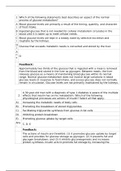
1. Which of the following statements best describes an aspect of the normal process of glucose metabolism? A) Blood glucose levels are primarily a result of the timing, quantity, and character of food intake. B) Ingested glucose that is not needed for cellular metabolism circulates in the blood until it is taken up to meet cellular needs. C) Blood glucose levels are kept in a steady state by selective excretion and reuptake by the kidneys. D) Glucose that exceeds metabolic needs is converted and stored by the liver. Ans: D Feedback: Approximately two thirds of the glucose that is ingested with a meal is removed from the blood and stored in the liver as glycogen. Between meals, the liver releases glucose as a means of maintaining blood glucose within its normal range. Normal glucose metabolism does not involve large variations in blood glucose levels in response to food intake, and excess glucose does not normally remain in circulation. Glucose levels are not primarily maintained by the kidneys. 2. A 30-year-old man with a diagnosis of type 1 diabetes is aware of the multiple effects that insulin has on his metabolism. Which of the following physiological processes are actions of insulin? Select all that apply. A) Increasing the metabolic needs of body cells B) Promoting the breakdown of stored triglycerides C) Facilitating triglyceride synthesis from glucose in fat cells D) Inhibiting protein breakdown E) Promoting glucose uptake by target cells Ans: C, D, E Feedback: The actions of insulin are threefold: (1) it promotes glucose uptake by target cells and provides for glucose storage as glycogen; (2) it prevents fat and glycogen breakdown; and (3) it inhibits gluconeogenesis and increases protein synthesis. Insulin acts to promote fat storage by increasing the transport of glucose into fat cells. It also facilitates triglyceride synthesis from glucose in fat cells and inhibits the intracellular breakdown of stored triglycerides. Insulin also inhibits protein breakdown. It does not directly influence the metabolic needs of body cells. 3. While reviewing the role of glucagon in regard to regulation of blood glucose, the nurse knows which of the following situations could lead to an inhibition of glucagon release? A) A sharp decrease in blood glucose concentration B) Recent strenuous physical activity C) Recent intake of large amounts of protein-rich food. D) An increase in glucose levels. Ans: D Feedback: Low blood sugar, intake of protein, and strenuous physical activity are associated with glucagon release. Lowered cellular metabolic needs and/or increased glucose levels would inhibit glucagon release. 4. A 3-year-old girl has just been diagnosed with type 1A diabetes. Her parents are currently receiving education from the diabetes education nurse. How can the nurse best explain to the parents the etiology (cause) of their daughter's diabetes? A) “The problem that underlies her diabetes is that her own body has destroyed the cells in her pancreas that produce insulin.” B) “It's not known exactly why your daughter has completely stopped making insulin, and treatment will consist of your rigidly controlling her diet.” C) “This tendency to produce insufficient amounts of insulin is likely something that she inherited.” D) “Environmental and lifestyle factors are known to play a part in the fact that her pancreas secretes and withholds insulin at the wrong times.” Ans: A
Escuela, estudio y materia
Información del documento
- Subido en
- 18 de febrero de 2021
- Número de páginas
- 12
- Escrito en
- 2020/2021
- Tipo
- Examen
- Contiene
- Preguntas y respuestas
Temas
- quantity
- and character of food
-
1 which of the following statements best describes an aspect of the normal process of glucose metabolism a blood glucose levels are primarily a result of the timing

Documento también disponible en un lote