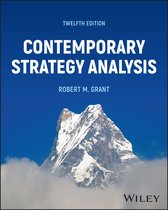
Contemporary Strategy
Analysis 12th Edition
ST
UV
TEST BANK
IA
?_
Robert M. Grant
AP
PR
Comprehensive Test Bank for Instructors
OV
and Students
© Robert M. Grant. All rights reserved. Reproduction or distribution without permission is
ED
prohibited.
??
©DREAMSHUB
, Contemporary Strategy Analysis – 12th Edition
(ISBN 9781394251599 – Verified)
Robert M. Grant
ST
TABLE OF CONTENTS
Chapter 1. The Concept of Strategy
UV
Chapter 2. Goals, Values, and Performance
Chapter 3. Industry Analysis – Fundamentals
Chapter 4. Industry Analysis – Dynamics of Industry and Competition
Chapter 5. Analyzing Resources and Capabilities
Chapter 6. Organization Structure and Management Systems
IA
Chapter 7. Sources and Dimensions of Competitive Advantage
Chapter 8. Industry Evolution and Strategic Change
Chapter 9. Technology-Based Industries and the Management of Innovation
?_
Chapter 10. Vertical Integration and the Scope of the Firm
Chapter 11. Global Strategy and the Multinational Corporation
Chapter 12. Diversification Strategy
Chapter 13. Managing the Multibusiness Firm
AP
Chapter 14. Current Trends in Strategic Management
PR
OV
ED
??
©DREAMSHUB
, Contemporary Strategy Analysis (12th edition)
SUGGESTED ANSWERS TO SELF-STUDY QUESTIONS
Chapter 1
The Concept of Strategy
ST
1. In relation to the four characteristics of successful strategies in Figure 1.1, assess Donald
Trump‘s 2024 presidential campaign.
UV
At the time of writing (August 2024), Donald Trump is odds-on favorite to win the
November 2024 presidential election. Given the legacy of his chaotic and mostly unpopular
term as president during 2016-2020, his campaign to date must be viewed as successful. In
terms of the four characteristics of successful strategies in Figure 1.1:
IA
• Clear, consistent, long-term objectives. Trump’s goal throughout the campaign has been
highly focused—to win re-election as President of the USA. This goal takes precedent
over every other goal typically embraced by presidential candidates. But despite the
?_
clarity of this overarching goal, his pursuit of the US presidency risks being
compromised by some of his personal goals—notably his sense of grievance over his
treatment by the US legal system, his stubborn refusal to accept the result of the 2020
presidential election, and his desire for vengeance over those he views as persecuting
AP
him.
• Profound understanding of the environment. Trump possesses an intuitive
understanding of the concerns of the emotions of his core demographic—notably the
fears and anger of white males, especially among the middle aged and the old. His
emotional connection with this group forms the core of the MAGA (“Make America
PR
Great Again”) movement. Trump strategy rests fundamentally upon his recognition
that 21st century politics in America is defined by cultural identity where appeals to
emotions are more influential than policies. He also demonstrates deep
understanding of the potential to intimidate fellow politicians and thereby force a
united support from the Republican party. More generally, he demonstrates
OV
considerable understanding of the malleability of the political perceptions of others—
which he has exploited through the demonization of Democrat politicians and office
holders and those supporting liberal and humanitarian causes. However, Trump’s
understanding of the potential to exploit fear and anger among the electorate, is
accompanied by remarkable lack of understanding of the machinery of government
ED
and the means by which policies can be transformed into action.
• Objective appraisal of resources. Trump’s strengths are his ability to empathize with,
communicate with, and motivate his core of supporters. However, this divisiveness
also represents a weakness—his inability to broaden the base of his political
support—especially at a time when his core of supporters is a shrinking part of the US
??
electorate. Trumps personal characteristics—notably his narcissism and disloyalty and
vengefulness also create a handicap in gain building the support needed for a
presidential campaign that, ultimately, must appeal to a more disparate group—
women as well as men, billionaires as well as the poor, and the godless as well as the
Christian right,
Copyright © 2025 John Wiley & Sons, Inc. 1
, Implementation. Trump has been highly effective in applying his skills of communication
and motivation through social media and political rallies. However, his lack of self-
control and lack of restrain over his anger and vindictiveness has made it difficult to
run consistent, effective campaigns. His erratic nature and propensity to deflect
criticism and blame have made collaboration with those outside his own family
exceptionally fraught.
ST
2. What is your career strategy for the next five years? To what extent does your strategy fit
with your long-term goals, the characteristics of the external environment, and your own
strengths and weaknesses?
UV
This question offers an opportunity for personal reflection. I do not wish to impose any of
my own preferences or priorities on your own thinking about your strategies. However, in
pondering your own futures, the book offers some useful guidance:
a) The process of engaging in strategic thinking—or to be more formal, strategic
IA
planning—can be very helpful in providing guidance your own life. The lessons from the
section “Why Do Firms Need Strategy?” (pp. 10- 14) can be applied to individuals as
well as to organizations. Thus, formulating a strategy can assist you first, by enhancing
the quality of decision-making, second, by facilitating coordination and, third, by
?_
focusing you on the pursuit of long-term goals.
b) Gaining experience in applying the “Common Elements in Successful Strategies” shown
in Figure 1.1.
In relation to (b), the exercise offers you an opportunity to consider your career goals—
AP
preferably in relationship to the goals for your life as a whole. These life goals may take the
form of an overall mission. or the linkages between your work and the other aspects of
your life. It is difficult to consider your career strategy without looking at what you hope to
achieve with your life.
Understanding the external environment requires knowledge of different occupations, the
PR
kinds of opportunities they provide, the key success factors within them, and how they will
be impacted by economic and technological changes.
Understanding one’s own resources and capabilities is a critical requirement in formulating
a career strategy. What is your profile of skills in terms of strengths and weaknesses? What
are your psychological traits? What resources do you possess in terms of educational and
OV
professional qualifications and relationships with people and institutions?
In terms of the content, what do we mean by a career strategy? The basic questions set out
in the section “Describing Strategy” (pp. 17-18): Where are we competing? and (b) How are
we competing? Offer a template for describing (the type of job, the sector in which you will
work and in which location, and the basis on which you will become a superior performer
within that job.
ED
Finally, you can explore implementation: What actions to you need to take to get this
strategy off the ground?
Given all the uncertainties concerning our own personal development and a changing
external world it cannot be formulated in specific terms. As with companies operating in
??
turbulent industries it is likely to be a set of guidelines underpinned by a recognition of
identity. In addition, such a strategy will be continually evolving. In the words of General
Eisenhower: “Plans are nothing; planning is everything.”
3. As the business environment of most firms has become more complex and more turbulent,
there has been a growing tendency for firms to express their strategies in simple statements
Copyright © 2025 John Wiley & Sons, Inc. 2
Analysis 12th Edition
ST
UV
TEST BANK
IA
?_
Robert M. Grant
AP
PR
Comprehensive Test Bank for Instructors
OV
and Students
© Robert M. Grant. All rights reserved. Reproduction or distribution without permission is
ED
prohibited.
??
©DREAMSHUB
, Contemporary Strategy Analysis – 12th Edition
(ISBN 9781394251599 – Verified)
Robert M. Grant
ST
TABLE OF CONTENTS
Chapter 1. The Concept of Strategy
UV
Chapter 2. Goals, Values, and Performance
Chapter 3. Industry Analysis – Fundamentals
Chapter 4. Industry Analysis – Dynamics of Industry and Competition
Chapter 5. Analyzing Resources and Capabilities
Chapter 6. Organization Structure and Management Systems
IA
Chapter 7. Sources and Dimensions of Competitive Advantage
Chapter 8. Industry Evolution and Strategic Change
Chapter 9. Technology-Based Industries and the Management of Innovation
?_
Chapter 10. Vertical Integration and the Scope of the Firm
Chapter 11. Global Strategy and the Multinational Corporation
Chapter 12. Diversification Strategy
Chapter 13. Managing the Multibusiness Firm
AP
Chapter 14. Current Trends in Strategic Management
PR
OV
ED
??
©DREAMSHUB
, Contemporary Strategy Analysis (12th edition)
SUGGESTED ANSWERS TO SELF-STUDY QUESTIONS
Chapter 1
The Concept of Strategy
ST
1. In relation to the four characteristics of successful strategies in Figure 1.1, assess Donald
Trump‘s 2024 presidential campaign.
UV
At the time of writing (August 2024), Donald Trump is odds-on favorite to win the
November 2024 presidential election. Given the legacy of his chaotic and mostly unpopular
term as president during 2016-2020, his campaign to date must be viewed as successful. In
terms of the four characteristics of successful strategies in Figure 1.1:
IA
• Clear, consistent, long-term objectives. Trump’s goal throughout the campaign has been
highly focused—to win re-election as President of the USA. This goal takes precedent
over every other goal typically embraced by presidential candidates. But despite the
?_
clarity of this overarching goal, his pursuit of the US presidency risks being
compromised by some of his personal goals—notably his sense of grievance over his
treatment by the US legal system, his stubborn refusal to accept the result of the 2020
presidential election, and his desire for vengeance over those he views as persecuting
AP
him.
• Profound understanding of the environment. Trump possesses an intuitive
understanding of the concerns of the emotions of his core demographic—notably the
fears and anger of white males, especially among the middle aged and the old. His
emotional connection with this group forms the core of the MAGA (“Make America
PR
Great Again”) movement. Trump strategy rests fundamentally upon his recognition
that 21st century politics in America is defined by cultural identity where appeals to
emotions are more influential than policies. He also demonstrates deep
understanding of the potential to intimidate fellow politicians and thereby force a
united support from the Republican party. More generally, he demonstrates
OV
considerable understanding of the malleability of the political perceptions of others—
which he has exploited through the demonization of Democrat politicians and office
holders and those supporting liberal and humanitarian causes. However, Trump’s
understanding of the potential to exploit fear and anger among the electorate, is
accompanied by remarkable lack of understanding of the machinery of government
ED
and the means by which policies can be transformed into action.
• Objective appraisal of resources. Trump’s strengths are his ability to empathize with,
communicate with, and motivate his core of supporters. However, this divisiveness
also represents a weakness—his inability to broaden the base of his political
support—especially at a time when his core of supporters is a shrinking part of the US
??
electorate. Trumps personal characteristics—notably his narcissism and disloyalty and
vengefulness also create a handicap in gain building the support needed for a
presidential campaign that, ultimately, must appeal to a more disparate group—
women as well as men, billionaires as well as the poor, and the godless as well as the
Christian right,
Copyright © 2025 John Wiley & Sons, Inc. 1
, Implementation. Trump has been highly effective in applying his skills of communication
and motivation through social media and political rallies. However, his lack of self-
control and lack of restrain over his anger and vindictiveness has made it difficult to
run consistent, effective campaigns. His erratic nature and propensity to deflect
criticism and blame have made collaboration with those outside his own family
exceptionally fraught.
ST
2. What is your career strategy for the next five years? To what extent does your strategy fit
with your long-term goals, the characteristics of the external environment, and your own
strengths and weaknesses?
UV
This question offers an opportunity for personal reflection. I do not wish to impose any of
my own preferences or priorities on your own thinking about your strategies. However, in
pondering your own futures, the book offers some useful guidance:
a) The process of engaging in strategic thinking—or to be more formal, strategic
IA
planning—can be very helpful in providing guidance your own life. The lessons from the
section “Why Do Firms Need Strategy?” (pp. 10- 14) can be applied to individuals as
well as to organizations. Thus, formulating a strategy can assist you first, by enhancing
the quality of decision-making, second, by facilitating coordination and, third, by
?_
focusing you on the pursuit of long-term goals.
b) Gaining experience in applying the “Common Elements in Successful Strategies” shown
in Figure 1.1.
In relation to (b), the exercise offers you an opportunity to consider your career goals—
AP
preferably in relationship to the goals for your life as a whole. These life goals may take the
form of an overall mission. or the linkages between your work and the other aspects of
your life. It is difficult to consider your career strategy without looking at what you hope to
achieve with your life.
Understanding the external environment requires knowledge of different occupations, the
PR
kinds of opportunities they provide, the key success factors within them, and how they will
be impacted by economic and technological changes.
Understanding one’s own resources and capabilities is a critical requirement in formulating
a career strategy. What is your profile of skills in terms of strengths and weaknesses? What
are your psychological traits? What resources do you possess in terms of educational and
OV
professional qualifications and relationships with people and institutions?
In terms of the content, what do we mean by a career strategy? The basic questions set out
in the section “Describing Strategy” (pp. 17-18): Where are we competing? and (b) How are
we competing? Offer a template for describing (the type of job, the sector in which you will
work and in which location, and the basis on which you will become a superior performer
within that job.
ED
Finally, you can explore implementation: What actions to you need to take to get this
strategy off the ground?
Given all the uncertainties concerning our own personal development and a changing
external world it cannot be formulated in specific terms. As with companies operating in
??
turbulent industries it is likely to be a set of guidelines underpinned by a recognition of
identity. In addition, such a strategy will be continually evolving. In the words of General
Eisenhower: “Plans are nothing; planning is everything.”
3. As the business environment of most firms has become more complex and more turbulent,
there has been a growing tendency for firms to express their strategies in simple statements
Copyright © 2025 John Wiley & Sons, Inc. 2