2.1 → Introduction to Human Resource Management
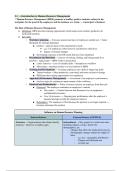
**Human Resource Management (HRM) promotes a healthy, positive, inclusive culture in the
workplace for the good of the employees and the business as a whole → crucial part of business
The Role of Human Resource Management
● Definition: HRM provides training opportunities which make more resilient, productive &
motivated members
● Key roles:
○ Workforce planning → Forecasts amount and type of employees needed now + future
(Required for strategic planning)
■ Gathers + analyzes data on the organization's needs
● e.g. # of employees, labor turnover, and business objectives
● Impact of external changes
■ Developing responses to the HR needs that have been identified
○ Recruitment and Retention → process of seeking, finding, and hiring people for a
position + right people = HRM works to retain them
■ Labor Turnover = Loss of valuable skills + disruption to workflow
■ Motivating + retaining workers is a key function of HRM
○ Training and Development → Teaching employees new skills or improving skills
■ Trained workers = More productive, motivated, and more resilient to change
■ HRM provides training opportunities for employees
○ Appraisal (Performance Management) → Assessment of an employee’s performance
■ Involves steps for continuous improvement of the workforce
○ Dismissal and Redundancies → When a business releases an employee from their job
■ Dismissal: The employer terminates an employee’s contract
● Misconduct → Unsafe behavior that threatens lives or equipment +
confidentiality breaches
● Poor Performance → Ongoing poor performance after the employer’s
repeated attempts to help the employee improve
■ Redundancy: The employee is fired because the position is no longer required →
business eliminates the position
Influence on Human Resource Planning
Internal Factors External Factors (STEEPLE)
Structure → Organizational chart helps identify Sociocultural → Way people live, belief and value
positions + plan how to address gaps including religion, cuisine, family life,
demographics, etc.
- Changes that affect the employment process.
- Demographic changes impact the supply of
labor
- e.g. size + geographic distribution
- Changes in birth/death rate
- Average age
, - Number of women
Size → Larger Organization = More workers Technological → New technology that could
needed to be recruited, trained, and appraised increase the use of robots in manufacturing
(complex HR planning) - HRM → responds by recruiting/training
employees with different skill sets
Budget → Increased revenue = more money to Economic → a shift in the economy
recruit + pay for employees - Recession: Country’s real GDP declines for
- Funds are needed → trains + develops 2 or more quarters
opportunities and employee wellbeing - Unemployment: Rates of unemployment =
abundant or limited supply of labor
Promotion → Keeps track of employees leaving - Labor mobility: Higher labor mobility =
to ensure vacancies for higher positions larger potential supply of labor (easier for
- Professional growth retains qualified recruitment)
employees - Geographical: willing to relocate for
a job
- Occupational: Take on jobs with
different skill sets
- Temporary Work: hiring temporary workers
(gig economy) → HL content
- Not qualified for the same level of
job protection + social security
benefits
Flexitime → Change working practices to ensure Legal and Political → Labor laws affected by
flexibility for employees political changes can change recruitment, pay,
- Changes in policies, practice, and training training, working hours, policies
Motivation → More motivated = greater
productivity + lower labor turnover
Strategies for Dealing with Change Reasons for Resistance to Change
Participation → Inclusion of employees in discussion Self-Interest → own interest conflicts with
(Formal + informal) organization's objectives
- Benefits: Increased motivation, reduced employee - Negative consequences for
concerns, develops a systematic mechanism for
wellbeing
management
- Disadvantages: Takes time, does not completely
eliminate resistance
Planning → Time must be allowed for employees to Low Tolerance → People prefer an
understand changes → Consistent feedback loops needed environment of order and stability (fearful
- Benefits: Implement and give ownership to of change)
employees
- Disadvantages: Takes time + can slow the change
, Communication → All stakeholders are kept informed at Misinformation → No good reason for
each phase of change change if not communicated clearly
- Benefits: Good communication = lower concern
- Disadvantages: Good communication = hard to
succeed
Negotiation → provide incentives to employees before, Interpretations of circumstances →
during, or after change occurs (Carrot approach) Different perceptions of a situation
- Benefits: Amendment can incentivize staff (communication is key)
- Disadvantages: Doesn’t always work = fire or
retirement solutions
Manipulation → Convince and influence the representative
towards change
- Benefits: Representative could influence a wider
group as well
- Disadvantages: Unethical
Coercion → ‘bully’ employees and force them to accept
change by threatening them with dismissal, redundancy,
disciplinary action (Proceeded implicitly not explicitly)
- Benefits: Final approach
- Disadvantages: Unethical or even illegal
2.2 → Organizational Structure
**The organization structure determines how tasks are divided and coordinated + what roles each
employee has within the organization
Terminology for Organizational Structures
● Definition: Determines the way in which tasks are allocated and determines the coordination,
supervision, and levels of hierarchy to achieve aims
Vocab Explanation
Delegation Definition: Empowers employees to make decisions (shifts in decision-making)
● Examples: fit another employee’s skill better than their own, are repetitive,
require less expertise
Advantages:
● Builds trust in employees → Increases motivation
● Allows managers to focus on larger + more important strategic matters
● Develops, trains, and tests employees for higher positions
Disadvantages:
● Managers only delegate repetitive jobs (loss of motivation) (no sense of
achievement)
● Some managers cannot accept losing control
● Poorly done tasks or inadequate training is given = delegation will not
succeed
**Human Resource Management (HRM) promotes a healthy, positive, inclusive culture in the
workplace for the good of the employees and the business as a whole → crucial part of business
The Role of Human Resource Management
● Definition: HRM provides training opportunities which make more resilient, productive &
motivated members
● Key roles:
○ Workforce planning → Forecasts amount and type of employees needed now + future
(Required for strategic planning)
■ Gathers + analyzes data on the organization's needs
● e.g. # of employees, labor turnover, and business objectives
● Impact of external changes
■ Developing responses to the HR needs that have been identified
○ Recruitment and Retention → process of seeking, finding, and hiring people for a
position + right people = HRM works to retain them
■ Labor Turnover = Loss of valuable skills + disruption to workflow
■ Motivating + retaining workers is a key function of HRM
○ Training and Development → Teaching employees new skills or improving skills
■ Trained workers = More productive, motivated, and more resilient to change
■ HRM provides training opportunities for employees
○ Appraisal (Performance Management) → Assessment of an employee’s performance
■ Involves steps for continuous improvement of the workforce
○ Dismissal and Redundancies → When a business releases an employee from their job
■ Dismissal: The employer terminates an employee’s contract
● Misconduct → Unsafe behavior that threatens lives or equipment +
confidentiality breaches
● Poor Performance → Ongoing poor performance after the employer’s
repeated attempts to help the employee improve
■ Redundancy: The employee is fired because the position is no longer required →
business eliminates the position
Influence on Human Resource Planning
Internal Factors External Factors (STEEPLE)
Structure → Organizational chart helps identify Sociocultural → Way people live, belief and value
positions + plan how to address gaps including religion, cuisine, family life,
demographics, etc.
- Changes that affect the employment process.
- Demographic changes impact the supply of
labor
- e.g. size + geographic distribution
- Changes in birth/death rate
- Average age
, - Number of women
Size → Larger Organization = More workers Technological → New technology that could
needed to be recruited, trained, and appraised increase the use of robots in manufacturing
(complex HR planning) - HRM → responds by recruiting/training
employees with different skill sets
Budget → Increased revenue = more money to Economic → a shift in the economy
recruit + pay for employees - Recession: Country’s real GDP declines for
- Funds are needed → trains + develops 2 or more quarters
opportunities and employee wellbeing - Unemployment: Rates of unemployment =
abundant or limited supply of labor
Promotion → Keeps track of employees leaving - Labor mobility: Higher labor mobility =
to ensure vacancies for higher positions larger potential supply of labor (easier for
- Professional growth retains qualified recruitment)
employees - Geographical: willing to relocate for
a job
- Occupational: Take on jobs with
different skill sets
- Temporary Work: hiring temporary workers
(gig economy) → HL content
- Not qualified for the same level of
job protection + social security
benefits
Flexitime → Change working practices to ensure Legal and Political → Labor laws affected by
flexibility for employees political changes can change recruitment, pay,
- Changes in policies, practice, and training training, working hours, policies
Motivation → More motivated = greater
productivity + lower labor turnover
Strategies for Dealing with Change Reasons for Resistance to Change
Participation → Inclusion of employees in discussion Self-Interest → own interest conflicts with
(Formal + informal) organization's objectives
- Benefits: Increased motivation, reduced employee - Negative consequences for
concerns, develops a systematic mechanism for
wellbeing
management
- Disadvantages: Takes time, does not completely
eliminate resistance
Planning → Time must be allowed for employees to Low Tolerance → People prefer an
understand changes → Consistent feedback loops needed environment of order and stability (fearful
- Benefits: Implement and give ownership to of change)
employees
- Disadvantages: Takes time + can slow the change
, Communication → All stakeholders are kept informed at Misinformation → No good reason for
each phase of change change if not communicated clearly
- Benefits: Good communication = lower concern
- Disadvantages: Good communication = hard to
succeed
Negotiation → provide incentives to employees before, Interpretations of circumstances →
during, or after change occurs (Carrot approach) Different perceptions of a situation
- Benefits: Amendment can incentivize staff (communication is key)
- Disadvantages: Doesn’t always work = fire or
retirement solutions
Manipulation → Convince and influence the representative
towards change
- Benefits: Representative could influence a wider
group as well
- Disadvantages: Unethical
Coercion → ‘bully’ employees and force them to accept
change by threatening them with dismissal, redundancy,
disciplinary action (Proceeded implicitly not explicitly)
- Benefits: Final approach
- Disadvantages: Unethical or even illegal
2.2 → Organizational Structure
**The organization structure determines how tasks are divided and coordinated + what roles each
employee has within the organization
Terminology for Organizational Structures
● Definition: Determines the way in which tasks are allocated and determines the coordination,
supervision, and levels of hierarchy to achieve aims
Vocab Explanation
Delegation Definition: Empowers employees to make decisions (shifts in decision-making)
● Examples: fit another employee’s skill better than their own, are repetitive,
require less expertise
Advantages:
● Builds trust in employees → Increases motivation
● Allows managers to focus on larger + more important strategic matters
● Develops, trains, and tests employees for higher positions
Disadvantages:
● Managers only delegate repetitive jobs (loss of motivation) (no sense of
achievement)
● Some managers cannot accept losing control
● Poorly done tasks or inadequate training is given = delegation will not
succeed