Nursing 122 Exam
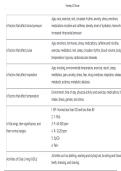
Age, race, exercise, rest, circadian rhythm, anxiety, stress, emotions,
6 Factors that affect blood pressure medications nicotine and caffeine, obesity, level of hydration, hemorrha
increased intracranial pressure
Age, emotions, hormones, stress, medications, caffeine and nicotine,
6 Factors that affect pulse exercise, meditation, rest, sleep, circadian rhythm, blood volume, body
temperature, hypoxia, cardiovascular diseases.
Age, smoking, environmental temperature, exercise, resort, sleep,
6 Factors that affect respiration meditation, pain, anxiety, stress, fear, drug overdose, respiratory diseas
metabolic acidosis, metabolic alkalosis.
Environment, time of day, physical activity and exercise, medications, fo
6 Factors that affect temperature
intake, illness, gender, and stress.
1. BP- Normal less than 120 and less than 80
2. T- 98.6
6 Vital sings, their significance, and 3. P- 60-100 bpm
their normal ranges. 4. R- 12-20 bpm
5. SpO2-
6. Pain-
Activities such as bathing, washing and styling hair, brushing and flossin
Activities of Daily Living (ADLs)
teeth, dressing, and shaving.
, Nursing 122 Exam
Afebrile The state of being without fever
A situation in which patients need some assistance with activities of dai
Assisted Care
living.
Assisted or Help Bath May be done in bed or with the patient sitting up in a chair.
In some hypertensive patients, the
period of silence between the first Korotkoff sound heard (the systolic
Auscultatory Gap
blood pressure [BP]) and the next Korotkoff sound heard when it resum
at a number 30 to 40 mm Hg lower.
This typeof bath is similar to the towel bath, but it also cottons 12 to 15
Bag Bath washcloths, that are saturated with no-rinse skin cleanser and heated in
bag in the microwaves.
Bath Blanket A large lightweight flannel blanket used during a bath to prevent expos
Respirations characterized by groups of several shallow breaths follow
Biot's Respirations
by variable-length periods of apnea.
Bradycardia A pulse that is less than 60bpm
Bradypnea A respiratory rate less than 12 breaths/min
Chain of Infection The chain of events is often referred to as the
Age, race, exercise, rest, circadian rhythm, anxiety, stress, emotions,
6 Factors that affect blood pressure medications nicotine and caffeine, obesity, level of hydration, hemorrha
increased intracranial pressure
Age, emotions, hormones, stress, medications, caffeine and nicotine,
6 Factors that affect pulse exercise, meditation, rest, sleep, circadian rhythm, blood volume, body
temperature, hypoxia, cardiovascular diseases.
Age, smoking, environmental temperature, exercise, resort, sleep,
6 Factors that affect respiration meditation, pain, anxiety, stress, fear, drug overdose, respiratory diseas
metabolic acidosis, metabolic alkalosis.
Environment, time of day, physical activity and exercise, medications, fo
6 Factors that affect temperature
intake, illness, gender, and stress.
1. BP- Normal less than 120 and less than 80
2. T- 98.6
6 Vital sings, their significance, and 3. P- 60-100 bpm
their normal ranges. 4. R- 12-20 bpm
5. SpO2-
6. Pain-
Activities such as bathing, washing and styling hair, brushing and flossin
Activities of Daily Living (ADLs)
teeth, dressing, and shaving.
, Nursing 122 Exam
Afebrile The state of being without fever
A situation in which patients need some assistance with activities of dai
Assisted Care
living.
Assisted or Help Bath May be done in bed or with the patient sitting up in a chair.
In some hypertensive patients, the
period of silence between the first Korotkoff sound heard (the systolic
Auscultatory Gap
blood pressure [BP]) and the next Korotkoff sound heard when it resum
at a number 30 to 40 mm Hg lower.
This typeof bath is similar to the towel bath, but it also cottons 12 to 15
Bag Bath washcloths, that are saturated with no-rinse skin cleanser and heated in
bag in the microwaves.
Bath Blanket A large lightweight flannel blanket used during a bath to prevent expos
Respirations characterized by groups of several shallow breaths follow
Biot's Respirations
by variable-length periods of apnea.
Bradycardia A pulse that is less than 60bpm
Bradypnea A respiratory rate less than 12 breaths/min
Chain of Infection The chain of events is often referred to as the