

NURS 480 Exam 2 – Questions With Proper
Solutions
Save
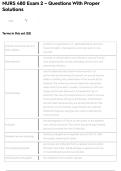
Terms in this set (52)
presence of granulation, re- epithelialization, and scar
Indicators that wound have
tissue formation. Decreased wound size and no new
been healed:
wounds.
removal of cellular debris from the burn wound. Priority
Debridement: care: assessing the wound, providing wound care, and
preventing infection.
used to debrided and examine the wounds. It is
performed by showering the patient on special shower
table or washing only small areas of the wound at the
bedside. This enhances wound inspection and allows
water temp to be kept constant. Immersion in tub is no
longer performed because it increases the risk of
Hydrotherapy
infection. The use of forceps/scissors is used to remove
loose, dead tissue during hydrotherapy. Small blisters
are left intact because they are protective barrier that
promotes wound healing. Large blisters are opened.
Washcloths/gauzes sponges are used to debride the
cheesy eschar
the disintegration of tissue by the action of the patient's
Autolysis own cellular enzymes. This is slow and prolongs hospital
stay and increases the risk of infection.
dressing changed and reapplied every 12-24 hrs. after
Standard wound dressings
thoroughly cleaning the areas.
are human skin obtained from a cadaver and provided
Homografts/allografts through a skin bank. Disadvantages: expensive and risk
of transmitting blood borne infection.
Heterograft's/xenografts: skin obtained from another species
, can be grown from a small specimen of epidermal cells
Cultured skin from an unburned area of the patient's body. Grown in
lab
made from beef collagen and shark cartilage. The
Artificial skin: artificial dermis slowly dissolves and replaced with
blood vessels and connective tissue.
Biosynthetic wound used for superficial partial thickness burns for scalds.
dressing:
made up of solid silicone and plastic membranes. Pain is
reduced because it prevents contact of wound nerve
Synthetic dressing:
endings with air. This dressing promotes faster healing
with low infection rates, minimal pain, and reduced cost.
Carbon Monoxide 1-10 % increased threshold to visual stimuli, increased blood
(normal): flow to vital organs,
Carbon Monoxide 11-20% HA, decreased cerebral function, decreased visual
(mild poisoning): acuity, slight breathlessness
HA, tinnitus, nausea, drowsiness, AMS and vertigo, AMS,
Carbon Monoxide 21-40% confusion, stupor, irritability, decrease blood pressure,
(moderate poisoning): increased and irregular heart rate, depressed ST
segment and dysrhythmias, pale to reddish purple skin
Carbon. Monoxide 41-60% coma, convulsions, cardiopulmonary instability
(severe poisoning):
Problems include PTSD, sexual dysfunction, and severe
depression. Address with patient reaction of others to
the sight of healing wounds and disfiguring scars. Visits
from friends and short public appearances before
psychosocial of burns
discharge may help patient begin to adjust to this
problem. Community reintegration programs can assist
the psychosocial and physical recovery of the patient
with serious burns.
Hemoglobin: 12-16 women+ 12-18 men = high
Hematocrit:37-47% women +42-52% men = high
BUN: 10-20 = high
Burns lab values glucose: 70-110 = high
Na: 135-145 =low
Cl: 98-106 =high
K: 3.5-5.0 = high
Solutions
Save
Terms in this set (52)
presence of granulation, re- epithelialization, and scar
Indicators that wound have
tissue formation. Decreased wound size and no new
been healed:
wounds.
removal of cellular debris from the burn wound. Priority
Debridement: care: assessing the wound, providing wound care, and
preventing infection.
used to debrided and examine the wounds. It is
performed by showering the patient on special shower
table or washing only small areas of the wound at the
bedside. This enhances wound inspection and allows
water temp to be kept constant. Immersion in tub is no
longer performed because it increases the risk of
Hydrotherapy
infection. The use of forceps/scissors is used to remove
loose, dead tissue during hydrotherapy. Small blisters
are left intact because they are protective barrier that
promotes wound healing. Large blisters are opened.
Washcloths/gauzes sponges are used to debride the
cheesy eschar
the disintegration of tissue by the action of the patient's
Autolysis own cellular enzymes. This is slow and prolongs hospital
stay and increases the risk of infection.
dressing changed and reapplied every 12-24 hrs. after
Standard wound dressings
thoroughly cleaning the areas.
are human skin obtained from a cadaver and provided
Homografts/allografts through a skin bank. Disadvantages: expensive and risk
of transmitting blood borne infection.
Heterograft's/xenografts: skin obtained from another species
, can be grown from a small specimen of epidermal cells
Cultured skin from an unburned area of the patient's body. Grown in
lab
made from beef collagen and shark cartilage. The
Artificial skin: artificial dermis slowly dissolves and replaced with
blood vessels and connective tissue.
Biosynthetic wound used for superficial partial thickness burns for scalds.
dressing:
made up of solid silicone and plastic membranes. Pain is
reduced because it prevents contact of wound nerve
Synthetic dressing:
endings with air. This dressing promotes faster healing
with low infection rates, minimal pain, and reduced cost.
Carbon Monoxide 1-10 % increased threshold to visual stimuli, increased blood
(normal): flow to vital organs,
Carbon Monoxide 11-20% HA, decreased cerebral function, decreased visual
(mild poisoning): acuity, slight breathlessness
HA, tinnitus, nausea, drowsiness, AMS and vertigo, AMS,
Carbon Monoxide 21-40% confusion, stupor, irritability, decrease blood pressure,
(moderate poisoning): increased and irregular heart rate, depressed ST
segment and dysrhythmias, pale to reddish purple skin
Carbon. Monoxide 41-60% coma, convulsions, cardiopulmonary instability
(severe poisoning):
Problems include PTSD, sexual dysfunction, and severe
depression. Address with patient reaction of others to
the sight of healing wounds and disfiguring scars. Visits
from friends and short public appearances before
psychosocial of burns
discharge may help patient begin to adjust to this
problem. Community reintegration programs can assist
the psychosocial and physical recovery of the patient
with serious burns.
Hemoglobin: 12-16 women+ 12-18 men = high
Hematocrit:37-47% women +42-52% men = high
BUN: 10-20 = high
Burns lab values glucose: 70-110 = high
Na: 135-145 =low
Cl: 98-106 =high
K: 3.5-5.0 = high

