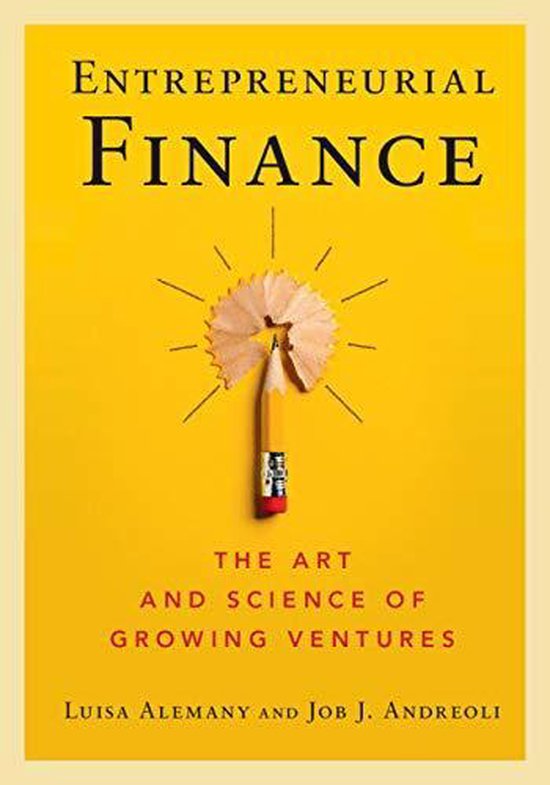
SOLUTION MANUAL
All Chapters Included
, Entrepreneurial Finance, 7th Edition by J. Chris Leach, Ronald W. Melicher, Chapters
1- 16, Complete With CAPSTONE CASES
TABLE OF CONTENTS
Part 1: THE ENTREPRENEURIAL ENVIRONMENT.
1. Introduction to
Finance for Entrepreneurs.
2. Developing the Business Idea.
Part 2: ORGANIZING AND OPERATING THE VENTURE.
3. Organizing and Financing a New Venture.
4. Preparing and Using Financial Statements.
5. Evaluating Operating and Financial Performance.
Part 3: PLANNING FOR THE FUTURE.
6. Managing Cash Flow.
7. Types and Costs of Financial Capital.
8. Securities Law Considerations When Obtaining Venture Financing.
Part 4: CREATING AND RECOGNIZING VENTURE VALUE.
9. Projecting Financial Statements.
10. Valuing Early-Stage Ventures.
11. Venture Capital Valuation Methods.
Part 5: STRUCTURING FINANCING FOR THE GROWING VENTURE.
12. Professional Venture Capital.
13. Other Financing Alternatives.
14. Security Structures and Determining Enterprise Values.
Part 6: EXIT AND TURNAROUND STRATEGIES.
15. Harvesting the Business Venture Investment.
16. Financially Troubled Ventures: Turnaround Opportunities?
Part 7: CAPSTONE CASES.
Case 1. Eco-Products, Inc.
Case 2. Spatial Technology,
,Chapter 1
INTRODUCTION TO FINANCE FOR ENTREPRENEURS
FOCUS
The purpose of this first chapter is to present an overview of what entrepreneurial
finance is about. In doing so we hope to convey to you the importance of
understanding and applying entrepreneurial finance methods and tools to help
ensure an entrepreneurial venture is successful.We present a life cycle approach
to the teaching of entrepreneurial finance where we cover venture operating and
financial decisions faced by the entrepreneur as a venture progresses from an idea
through to harvesting the venture.
LEARNING OBJECTIVES
LO 1.1: Characterize the entrepreneurial process.
LO 1.2: Describe entrepreneurship and some characteristics of entrepreneurs.
LO 1.3: Indicate several megatrends providing waves of entrepreneurial
opportunities.LO 1.4: List and describe the seven principles of
entrepreneurial finance.
LO 1.5: Discuss entrepreneurial finance and the role of the
financial manager.LO 1.6: Describe the various stages of a
successful venture‘s life cycle.
LO 1.7: Identify, by life cycle stage, the relevant types of financing
and investors.LO 1.8: Understand the life cycle approach used in this
book.
, CHAPTER OUTLINE
1.1 THE ENTREPRENEURIAL PROCESS
1.2 ENTREPRENEURSHIP FUNDAMENTALS
A. Who is an Entrepreneur?
B. Basic Definitions
C. Entrepreneurial Traits or Characteristics
D. Opportunities Exist But Not Without Risks
1.3 SOURCES OF ENTREPRENEURIAL OPPORTUNITIES
A. Societal Changes
B. Demographic Changes
C. Technological Changes
D. Emerging Economies and Global Changes
E. Crises and ―Bubbles‖
F. Disruptive Innovation
PRINCIPLES OF ENTREPRENEURIAL FINANCE
G. Real, Human, and Financial Capital must be Rented from Owners (Principle
#1)
H. Risk and Expected Reward go Hand in Hand (Principle #2)
I. While Accounting is the Language of Business, Cash is the Currency
(Principle #3)
J. New Venture Financing Involves Search, Negotiation, and Privacy (Principle
#4)
K. A Venture‘s Financial Objective is to Increase Value (Principle #5)
L. It is Dangerous to Assume that People Act Against Their Own
Self-Interests(Principle #6)
M. Venture Character and Reputation can be Assets or Liabilities (Principle #7)
1.4 ROLE OF ENTREPRENEURIAL FINANCE
1.5 THE SUCCESSFUL VENTURE LIFE CYCLE
A. Development Stage
B. Startup Stage
All Chapters Included
, Entrepreneurial Finance, 7th Edition by J. Chris Leach, Ronald W. Melicher, Chapters
1- 16, Complete With CAPSTONE CASES
TABLE OF CONTENTS
Part 1: THE ENTREPRENEURIAL ENVIRONMENT.
1. Introduction to
Finance for Entrepreneurs.
2. Developing the Business Idea.
Part 2: ORGANIZING AND OPERATING THE VENTURE.
3. Organizing and Financing a New Venture.
4. Preparing and Using Financial Statements.
5. Evaluating Operating and Financial Performance.
Part 3: PLANNING FOR THE FUTURE.
6. Managing Cash Flow.
7. Types and Costs of Financial Capital.
8. Securities Law Considerations When Obtaining Venture Financing.
Part 4: CREATING AND RECOGNIZING VENTURE VALUE.
9. Projecting Financial Statements.
10. Valuing Early-Stage Ventures.
11. Venture Capital Valuation Methods.
Part 5: STRUCTURING FINANCING FOR THE GROWING VENTURE.
12. Professional Venture Capital.
13. Other Financing Alternatives.
14. Security Structures and Determining Enterprise Values.
Part 6: EXIT AND TURNAROUND STRATEGIES.
15. Harvesting the Business Venture Investment.
16. Financially Troubled Ventures: Turnaround Opportunities?
Part 7: CAPSTONE CASES.
Case 1. Eco-Products, Inc.
Case 2. Spatial Technology,
,Chapter 1
INTRODUCTION TO FINANCE FOR ENTREPRENEURS
FOCUS
The purpose of this first chapter is to present an overview of what entrepreneurial
finance is about. In doing so we hope to convey to you the importance of
understanding and applying entrepreneurial finance methods and tools to help
ensure an entrepreneurial venture is successful.We present a life cycle approach
to the teaching of entrepreneurial finance where we cover venture operating and
financial decisions faced by the entrepreneur as a venture progresses from an idea
through to harvesting the venture.
LEARNING OBJECTIVES
LO 1.1: Characterize the entrepreneurial process.
LO 1.2: Describe entrepreneurship and some characteristics of entrepreneurs.
LO 1.3: Indicate several megatrends providing waves of entrepreneurial
opportunities.LO 1.4: List and describe the seven principles of
entrepreneurial finance.
LO 1.5: Discuss entrepreneurial finance and the role of the
financial manager.LO 1.6: Describe the various stages of a
successful venture‘s life cycle.
LO 1.7: Identify, by life cycle stage, the relevant types of financing
and investors.LO 1.8: Understand the life cycle approach used in this
book.
, CHAPTER OUTLINE
1.1 THE ENTREPRENEURIAL PROCESS
1.2 ENTREPRENEURSHIP FUNDAMENTALS
A. Who is an Entrepreneur?
B. Basic Definitions
C. Entrepreneurial Traits or Characteristics
D. Opportunities Exist But Not Without Risks
1.3 SOURCES OF ENTREPRENEURIAL OPPORTUNITIES
A. Societal Changes
B. Demographic Changes
C. Technological Changes
D. Emerging Economies and Global Changes
E. Crises and ―Bubbles‖
F. Disruptive Innovation
PRINCIPLES OF ENTREPRENEURIAL FINANCE
G. Real, Human, and Financial Capital must be Rented from Owners (Principle
#1)
H. Risk and Expected Reward go Hand in Hand (Principle #2)
I. While Accounting is the Language of Business, Cash is the Currency
(Principle #3)
J. New Venture Financing Involves Search, Negotiation, and Privacy (Principle
#4)
K. A Venture‘s Financial Objective is to Increase Value (Principle #5)
L. It is Dangerous to Assume that People Act Against Their Own
Self-Interests(Principle #6)
M. Venture Character and Reputation can be Assets or Liabilities (Principle #7)
1.4 ROLE OF ENTREPRENEURIAL FINANCE
1.5 THE SUCCESSFUL VENTURE LIFE CYCLE
A. Development Stage
B. Startup Stage