
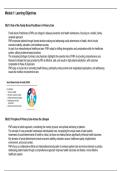
Module 1: Learning Objectives
OBJ1: Role of the Family Nurse Practitioner in Primary Care
Family Nurse Practitioners (FNPs) are integral in disease prevention and health maintenance, focusing on a holistic, family-
centered approach.
FNPs empower patients through shared decision-making and addressing social determinants of health, which include
economic stability, education, and healthcare access.
As part of an interprofessional healthcare team, FNPs adapt to shifting demographics and complexities within the healthcare
system, utilizing evidence-based practices.
The increasing shortage of primary care physicians highlights the essential role of FNPs in providing comprehensive care.
Research indicates that care provided by NPs is effective, safe, and results in high patient satisfaction, with outcomes
comparable to those of physicians.
FNPs play a crucial role in promoting health literacy, particularly among women and marginalized populations, and addressing
issues like nutrition and preventive care.
OBJ2: Principles of Primary Care Across the Lifespan
FNPs adopt a holistic approach, considering the mental, physical, and spiritual well-being of patients.
The concept of 'cura personalis' emphasizes individualized care, recognizing the unique needs of each patient.
Awareness of social determinants of health is critical, as these non-medical factors significantly influence health outcomes.
Key domains of social determinants include economic stability, education access, healthcare quality, neighborhood
environment, and social context.
FNPs focus on collaborative efforts and interprofessional education to enhance patient care and remove barriers to practice.
Addressing patient needs through a comprehensive approach improves health outcomes and fosters a more effective
healthcare system.
,OBJ3: Differentiating Primary Health Care and Primary Care
Primary Care refers to the direct relationship between healthcare providers and patients, encompassing a wide range of
services across the lifespan.
It includes medical and psychological diagnoses, support during illness, and education for chronic disease prevention.
Primary Health Care, as defined by the WHO, addresses the health needs of individuals, families, and communities, focusing
on broader determinants of health.
Key components of Primary Health Care include meeting health needs throughout life, addressing social determinants through
policy, and empowering communities.
Understanding the distinction between these two concepts is essential for FNPs to effectively navigate their roles in patient
care.
FNPs must integrate both primary care and primary health care principles to provide comprehensive and effective healthcare.
OBJ4: Factors Impacting the Role of the Nurse Practitioner
The Affordable Care Act of 2010 expanded patient access to care, highlighting the need for more primary care providers,
including NPs.
The Future of Nursing Report advocates for allowing nurses to practice to the full extent of their education, addressing social
determinants of health.
Barriers to practice include restrictive state laws, payment policies, and professional tensions that limit NP effectiveness.
Regulatory factors such as scope of practice laws and prescriptive authority significantly impact NP roles.
Healthcare trends, including an aging population and health disparities, necessitate interprofessional collaboration and
innovative care models.
Technological advancements, such as telemedicine and electronic health records, are reshaping the delivery of care and
enhancing NP capabilities.
OBJ5: Goals of Healthy People 2030 and National Health Initiatives
FNPs align their practice with the goals of Healthy People 2030, which aims to improve public health outcomes and reduce
health disparities.
, Key goals include promoting health and well-being, preventing diseases, and ensuring access to quality healthcare for all
populations.
FNPs are encouraged to focus on health promotion, disease prevention, and patient education as part of their practice.
Addressing social determinants of health is crucial for improving health equity and access to care.
FNPs should engage in chronic disease management, mental health promotion, and healthy aging initiatives to enhance
patient outcomes.
The Healthy People 2030 framework emphasizes the importance of community engagement and environmental health in
achieving public health goals.
Regulatory and Legal Factors in Healthcare
Scope of Practice Laws
Define the legal boundaries within which healthcare professionals operate, particularly nurse practitioners (NPs).
Discuss variations in scope of practice across states and how this impacts patient care.
Explore case studies where scope of practice laws have influenced healthcare delivery.
Historical context: Review the evolution of scope of practice laws over the past decades.
Importance of understanding these laws for effective clinical practice and patient safety.
Prescriptive Authority
Explain the legal ability of NPs to prescribe medications, including controlled substances.
Discuss the implications of prescriptive authority on patient outcomes and healthcare access.
Analyze case studies where prescriptive authority has improved patient care in underserved areas.
Review the historical development of prescriptive authority for NPs.
Highlight the differences in prescriptive authority across various states.
Healthcare System Policies
Reimbursement Models
Overview of different reimbursement models (e.g., fee-for-service, value-based care).
Discuss how reimbursement models affect NP practice and patient care delivery.
Analyze the impact of reimbursement policies on healthcare access and quality.
Case studies illustrating successful implementation of value-based care models.
Historical context of reimbursement changes and their implications for NPs.

