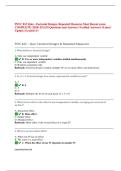
PSYC 815 Quiz - Factorial Designs, Repeated Measures Most Recent exam
COMPLETE (2026) EXAM Questions and Answers (Verified Answers) (Latest
Update) Graded A+
PSYC 815 – Quiz: Factorial Designs & Repeated Measures
1. What defines a factorial design?
A. Only one independent variable
B. Two or more independent variables studied simultaneously
C. Only one dependent variable
D. Random assignment only
Rationale: Factorial designs examine multiple IVs to see main effects and interactions.
2. In a 2 × 3 factorial design, how many experimental conditions exist?
A. 2
B. 6
C. 3
D. 5
Rationale: Multiply the levels of each factor (2 × 3 = 6).
3. Which term refers to the effect of one independent variable, averaging across levels of
another?
A. Interaction effect
B. Main effect
C. Simple effect
D. Marginal effect
Rationale: Main effect is the overall effect of a single IV.
4. What is an interaction effect?
A. When one IV has no effect
B. The same as a main effect
C. When the effect of one IV depends on another IV
EXAMPREPMASTER
,D. The sum of main effects
Rationale: Interaction occurs when the impact of one IV changes across levels of another IV.
5. In a repeated measures design:
A. Each participant is in only one condition
B. Each participant experiences all conditions
C. Participants are randomly assigned to groups
D. Each group is independent
Rationale: Repeated measures test the same participants across multiple conditions.
6. A benefit of repeated measures designs is:
A. Increased error variance
B. Reduced error variance
C. Less statistical power
D. Fewer comparisons
Rationale: Within-subjects designs reduce variability due to individual differences.
7. Which type of factorial design is completely within-subjects?
A. Mixed factorial
B. Fully repeated measures
C. Between-subjects only
D. Nested factorial
Rationale: All factors are manipulated within the same participants.
8. A 2 × 2 factorial design has the following pattern of results:
A. Only main effects
B. Only interaction effects
C. Main effects, interaction, or both
D. No effects
Rationale: Both main and interaction effects can occur in a factorial design.
9. Why counterbalancing is used in repeated measures designs:
A. To randomize participants
B. To reduce selection bias
C. To control order effects
EXAMPREPMASTER
,D. To manipulate the IV
Rationale: Counterbalancing prevents confounding due to order of conditions.
10. Which is an example of a mixed factorial design?
A. All IVs within-subjects
B. One IV within-subjects, one IV between-subjects
C. Only one IV
D. No IVs
Rationale: Mixed designs combine within- and between-subject factors.
11. What is a carryover effect?
A. Random sampling error
B. When prior conditions affect performance in later conditions
C. Measurement error
D. Main effect
Rationale: Carryover occurs when experience in one condition influences performance in another.
12. Latin square designs help control:
A. Individual differences
B. Between-subject variability
C. Order effects
D. Main effects
Rationale: Latin square counterbalances the order of conditions efficiently.
13. Which ANOVA is used for a 2 × 3 factorial repeated measures design?
A. One-way ANOVA
B. Independent t-test
C. Two-way repeated measures ANOVA
D. Chi-square
Rationale: Two-way RM ANOVA analyzes main effects and interaction for repeated factors.
14. Which scenario demonstrates an interaction effect?
A. Drug A works better than Drug B across all age groups
B. Older participants always perform better than younger participants
C. Drug A works better for young participants, Drug B works better for older
participants
EXAMPREPMASTER
, D. No difference in performance
Rationale: The effect of drug depends on age group, showing an interaction.
15. A potential drawback of repeated measures designs is:
A. Reduced power
B. Order or practice effects
C. Increased error variance
D. Fewer participants needed
Rationale: Participants’ experience in prior conditions can bias later performance.
16. In factorial ANOVA, simple effects refer to:
A. Overall effect of an IV
B. Combined effect of IVs
C. Effect of one IV at a specific level of another IV
D. Residual variance
Rationale: Simple effects analyze how one IV affects DV at each level of another IV.
17. In a 3 × 2 repeated measures design, how many conditions will each participant
experience?
A. 2
B. 6
C. 3
D. 5
Rationale: Multiply the levels of each factor (3 × 2 = 6).
18. Which type of variance is reduced in repeated measures ANOVA?
A. Between-subject variance
B. Error variance due to individual differences
C. Within-subject variance
D. Interaction variance
Rationale: Within-subjects designs control for variability among participants.
19. A 2 × 2 × 2 factorial design allows analysis of:
A. One main effect only
B. Two-way interactions only
C. Three main effects, three two-way interactions, one three-way interaction
EXAMPREPMASTER
COMPLETE (2026) EXAM Questions and Answers (Verified Answers) (Latest
Update) Graded A+
PSYC 815 – Quiz: Factorial Designs & Repeated Measures
1. What defines a factorial design?
A. Only one independent variable
B. Two or more independent variables studied simultaneously
C. Only one dependent variable
D. Random assignment only
Rationale: Factorial designs examine multiple IVs to see main effects and interactions.
2. In a 2 × 3 factorial design, how many experimental conditions exist?
A. 2
B. 6
C. 3
D. 5
Rationale: Multiply the levels of each factor (2 × 3 = 6).
3. Which term refers to the effect of one independent variable, averaging across levels of
another?
A. Interaction effect
B. Main effect
C. Simple effect
D. Marginal effect
Rationale: Main effect is the overall effect of a single IV.
4. What is an interaction effect?
A. When one IV has no effect
B. The same as a main effect
C. When the effect of one IV depends on another IV
EXAMPREPMASTER
,D. The sum of main effects
Rationale: Interaction occurs when the impact of one IV changes across levels of another IV.
5. In a repeated measures design:
A. Each participant is in only one condition
B. Each participant experiences all conditions
C. Participants are randomly assigned to groups
D. Each group is independent
Rationale: Repeated measures test the same participants across multiple conditions.
6. A benefit of repeated measures designs is:
A. Increased error variance
B. Reduced error variance
C. Less statistical power
D. Fewer comparisons
Rationale: Within-subjects designs reduce variability due to individual differences.
7. Which type of factorial design is completely within-subjects?
A. Mixed factorial
B. Fully repeated measures
C. Between-subjects only
D. Nested factorial
Rationale: All factors are manipulated within the same participants.
8. A 2 × 2 factorial design has the following pattern of results:
A. Only main effects
B. Only interaction effects
C. Main effects, interaction, or both
D. No effects
Rationale: Both main and interaction effects can occur in a factorial design.
9. Why counterbalancing is used in repeated measures designs:
A. To randomize participants
B. To reduce selection bias
C. To control order effects
EXAMPREPMASTER
,D. To manipulate the IV
Rationale: Counterbalancing prevents confounding due to order of conditions.
10. Which is an example of a mixed factorial design?
A. All IVs within-subjects
B. One IV within-subjects, one IV between-subjects
C. Only one IV
D. No IVs
Rationale: Mixed designs combine within- and between-subject factors.
11. What is a carryover effect?
A. Random sampling error
B. When prior conditions affect performance in later conditions
C. Measurement error
D. Main effect
Rationale: Carryover occurs when experience in one condition influences performance in another.
12. Latin square designs help control:
A. Individual differences
B. Between-subject variability
C. Order effects
D. Main effects
Rationale: Latin square counterbalances the order of conditions efficiently.
13. Which ANOVA is used for a 2 × 3 factorial repeated measures design?
A. One-way ANOVA
B. Independent t-test
C. Two-way repeated measures ANOVA
D. Chi-square
Rationale: Two-way RM ANOVA analyzes main effects and interaction for repeated factors.
14. Which scenario demonstrates an interaction effect?
A. Drug A works better than Drug B across all age groups
B. Older participants always perform better than younger participants
C. Drug A works better for young participants, Drug B works better for older
participants
EXAMPREPMASTER
, D. No difference in performance
Rationale: The effect of drug depends on age group, showing an interaction.
15. A potential drawback of repeated measures designs is:
A. Reduced power
B. Order or practice effects
C. Increased error variance
D. Fewer participants needed
Rationale: Participants’ experience in prior conditions can bias later performance.
16. In factorial ANOVA, simple effects refer to:
A. Overall effect of an IV
B. Combined effect of IVs
C. Effect of one IV at a specific level of another IV
D. Residual variance
Rationale: Simple effects analyze how one IV affects DV at each level of another IV.
17. In a 3 × 2 repeated measures design, how many conditions will each participant
experience?
A. 2
B. 6
C. 3
D. 5
Rationale: Multiply the levels of each factor (3 × 2 = 6).
18. Which type of variance is reduced in repeated measures ANOVA?
A. Between-subject variance
B. Error variance due to individual differences
C. Within-subject variance
D. Interaction variance
Rationale: Within-subjects designs control for variability among participants.
19. A 2 × 2 × 2 factorial design allows analysis of:
A. One main effect only
B. Two-way interactions only
C. Three main effects, three two-way interactions, one three-way interaction
EXAMPREPMASTER