Criminal Law Notes
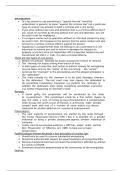
Introduction
To a lay person to say something is “against the law” would be
understood, in general, to mean “against the criminal law” but a particular
type of conduct can amount to both a criminal and a civil wrong:
If you drive without due care and attention that is a criminal offence but if
you cause an accident by driving without due care and attention, you will
be sued in tort for negligence.
If a surgeon carries out an operation without an informed consent he may
be sued in tort, (for trespass to the person) but the same conduct will also
amount to a serious criminal offence against the person.
Squatting in a property that does not belong to you could lead to a civil
injunction to remove you and an action in damages for trespass to
property (civil) but since 1st September 2012 (Legal Aid, Sentencing and
Punishment Act 2012, s. 144), it is also a criminal offence.
There are two types of civil wrong:
1. Breach of Contract - Remedy for losses arising from breach of contract
2. Tort - Remedy for losses arising from breach of duty
In both types of cases the court action to enforce remedy for wrongdoing
may be taken only by the “victim” of the civil wrong, - the “victim”
becomes the “claimant” in the proceedings and the alleged wrongdoer is
the “defendant”.
The main remedy for the claimant is to be paid damages (money)
by the defendant. The civil court may also require the defendant to
do something (mandatory injunction e.g. perform the contract) or
prohibit the defendant from doing something (prohibited injunction
e.g. further trespassing on claimant’s land).
Remedy:
If found guilty the perpetrator will be sentenced by the state
to a punishment. This punishment could be a fine (which means to
pay the state a sum of money by way of punishment), a compensation
order (to pay the victim a sum of money), a community order penalty
(unpaid work with one of a number of extra orders e.g. attend
treatment for alcohol addiction) or a period of imprisonment.
Prosecutions:
The vast majority of prosecutions are started by the state through
the Crown Prosecution Service (“CPS”) but it is possible for a private
individual to bring a private prosecution against another individual or
company-
Costly, hard to accumulate evidence + DPP has power under section
6(2) Prosecution of Offences Act 1985 to take over private
prosecutions.
Padfield adopts Andrew Ashworth’s four principles of criminal law:
1. Should only be used to censure substantial wrongdoing
2. Should be enforced with respect for equal treatment and proportionality
3. Persons charged should have (at least) the protections afforded by articles
6.2 and 6.3 of ECHR
4. Sentences should be proportionate to the seriousness of the wrongdoing
Herring:
, Stresses that what is criminal should change over time in response
to political and social factors and says “It is the censure and
punishment that are attached to a criminal conviction that can
explain the difference between civil and criminal proceedings. A fine
carries with it moral blame, while an award of damages may signify
that a person is responsible for the loss but does not carry the
sense of condemnation that a criminal sanction does.”
Criminal procedure vs Civil proceeding:
Criminal procedure has certain very distinct aspects which reflect the
status of a crime as a public wrong and not simply a private wrong
against the person(s) directly affected.
Criminal prosecutions (apart from private prosecutions) are brought by the
CPS on behalf of the state. The head of the CPS is the Director does not, of
course, take a personal decision on whether to prosecute every crime but
they hold the overall legal responsibility for all state prosecutions. The
Director is appointed by the Attorney General. The office of the DPP and
the CPS itself was created by the Prosecution of Offences Act 1985. The
Attorney General is the Chief Law Officer of the Crown in England and
Wales.
Legal burden of proof- on prosecution: Woolmington v DPP [1935] AC 462
Criminal-Must prove guilt of D is beyond reasonable doubt. Civil- Balance
of probabilities.
Appeals- Civil route: County court→ CofA (Civil Division)→ Supreme court.
Criminal route: Magistrates court→ Crown court→ CofA (Criminal Division)
→ Supreme Court. Both cases, Supreme court only hear matters of law not
fact.
The Criminal Cases Review Commission has, since 1997, been available to
review serious criminal convictions and refer them back to the Court of
Appeal to be re-heard on appeal on the grounds that an argument or
evidence was not heard in the original appeal or that there are exceptional
reasons for a re-hearing.
Introduction
To a lay person to say something is “against the law” would be
understood, in general, to mean “against the criminal law” but a particular
type of conduct can amount to both a criminal and a civil wrong:
If you drive without due care and attention that is a criminal offence but if
you cause an accident by driving without due care and attention, you will
be sued in tort for negligence.
If a surgeon carries out an operation without an informed consent he may
be sued in tort, (for trespass to the person) but the same conduct will also
amount to a serious criminal offence against the person.
Squatting in a property that does not belong to you could lead to a civil
injunction to remove you and an action in damages for trespass to
property (civil) but since 1st September 2012 (Legal Aid, Sentencing and
Punishment Act 2012, s. 144), it is also a criminal offence.
There are two types of civil wrong:
1. Breach of Contract - Remedy for losses arising from breach of contract
2. Tort - Remedy for losses arising from breach of duty
In both types of cases the court action to enforce remedy for wrongdoing
may be taken only by the “victim” of the civil wrong, - the “victim”
becomes the “claimant” in the proceedings and the alleged wrongdoer is
the “defendant”.
The main remedy for the claimant is to be paid damages (money)
by the defendant. The civil court may also require the defendant to
do something (mandatory injunction e.g. perform the contract) or
prohibit the defendant from doing something (prohibited injunction
e.g. further trespassing on claimant’s land).
Remedy:
If found guilty the perpetrator will be sentenced by the state
to a punishment. This punishment could be a fine (which means to
pay the state a sum of money by way of punishment), a compensation
order (to pay the victim a sum of money), a community order penalty
(unpaid work with one of a number of extra orders e.g. attend
treatment for alcohol addiction) or a period of imprisonment.
Prosecutions:
The vast majority of prosecutions are started by the state through
the Crown Prosecution Service (“CPS”) but it is possible for a private
individual to bring a private prosecution against another individual or
company-
Costly, hard to accumulate evidence + DPP has power under section
6(2) Prosecution of Offences Act 1985 to take over private
prosecutions.
Padfield adopts Andrew Ashworth’s four principles of criminal law:
1. Should only be used to censure substantial wrongdoing
2. Should be enforced with respect for equal treatment and proportionality
3. Persons charged should have (at least) the protections afforded by articles
6.2 and 6.3 of ECHR
4. Sentences should be proportionate to the seriousness of the wrongdoing
Herring:
, Stresses that what is criminal should change over time in response
to political and social factors and says “It is the censure and
punishment that are attached to a criminal conviction that can
explain the difference between civil and criminal proceedings. A fine
carries with it moral blame, while an award of damages may signify
that a person is responsible for the loss but does not carry the
sense of condemnation that a criminal sanction does.”
Criminal procedure vs Civil proceeding:
Criminal procedure has certain very distinct aspects which reflect the
status of a crime as a public wrong and not simply a private wrong
against the person(s) directly affected.
Criminal prosecutions (apart from private prosecutions) are brought by the
CPS on behalf of the state. The head of the CPS is the Director does not, of
course, take a personal decision on whether to prosecute every crime but
they hold the overall legal responsibility for all state prosecutions. The
Director is appointed by the Attorney General. The office of the DPP and
the CPS itself was created by the Prosecution of Offences Act 1985. The
Attorney General is the Chief Law Officer of the Crown in England and
Wales.
Legal burden of proof- on prosecution: Woolmington v DPP [1935] AC 462
Criminal-Must prove guilt of D is beyond reasonable doubt. Civil- Balance
of probabilities.
Appeals- Civil route: County court→ CofA (Civil Division)→ Supreme court.
Criminal route: Magistrates court→ Crown court→ CofA (Criminal Division)
→ Supreme Court. Both cases, Supreme court only hear matters of law not
fact.
The Criminal Cases Review Commission has, since 1997, been available to
review serious criminal convictions and refer them back to the Court of
Appeal to be re-heard on appeal on the grounds that an argument or
evidence was not heard in the original appeal or that there are exceptional
reasons for a re-hearing.