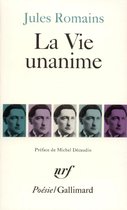
The Self-Prison Created by the Unanime
In his essay, Dominique Bauer examines the deeper philosophical design in the poems of
Jules Romains, that is created through details of what his characters surround themselves with in
the world they live. By detailing the world in his writings, Romains create spatial imagery where
the audience can walk around a three-dimensional space, outside the bedroom of the postal
worker, for example. The author references this motion as the unanime. Bauer explains the
unanime as the collective body movement that occurs during large gatherings, such as traffic
jams, where the mass groups of people move simultaneously from one point to another, creating
a one-minded body. Since large gatherings often occur in big cities, he attributes the origin of the
unanime to the post-Second-Industrial-Revolution. Quoting Romains’ own words, Bauer argues
that the one-minded body created by the unanime resists the deformed perspectives created by
individualistic points of view. Bauer believes that the unanime’s forceful existence side by side
with reality is what shapes Romains’ work. The author argues that Jules Romains’ characters are
in a constant search to find their spot in the one-minded body of society without losing their
unique identity. According to Bauer, Jules Romains accomplishes this feeling through three
interconnected steps.
First, there is the poetic strategy. It is the role of the poet and the initial position of the
isolated individual; where the poet is the person that is in the search of their place in the
unanime, in Romains’ works. While there are various other poets that believe the current society
is only a transitional solution as we look for ways to constantly change and evolve further, Bauer
argues Romains’ society is a product of the past instinctual movements that continues to evolve
with the participation of everyone. Their pasts, presents and beyond in the unanime, shapes the
society as it moves forward.
In his essay, Dominique Bauer examines the deeper philosophical design in the poems of
Jules Romains, that is created through details of what his characters surround themselves with in
the world they live. By detailing the world in his writings, Romains create spatial imagery where
the audience can walk around a three-dimensional space, outside the bedroom of the postal
worker, for example. The author references this motion as the unanime. Bauer explains the
unanime as the collective body movement that occurs during large gatherings, such as traffic
jams, where the mass groups of people move simultaneously from one point to another, creating
a one-minded body. Since large gatherings often occur in big cities, he attributes the origin of the
unanime to the post-Second-Industrial-Revolution. Quoting Romains’ own words, Bauer argues
that the one-minded body created by the unanime resists the deformed perspectives created by
individualistic points of view. Bauer believes that the unanime’s forceful existence side by side
with reality is what shapes Romains’ work. The author argues that Jules Romains’ characters are
in a constant search to find their spot in the one-minded body of society without losing their
unique identity. According to Bauer, Jules Romains accomplishes this feeling through three
interconnected steps.
First, there is the poetic strategy. It is the role of the poet and the initial position of the
isolated individual; where the poet is the person that is in the search of their place in the
unanime, in Romains’ works. While there are various other poets that believe the current society
is only a transitional solution as we look for ways to constantly change and evolve further, Bauer
argues Romains’ society is a product of the past instinctual movements that continues to evolve
with the participation of everyone. Their pasts, presents and beyond in the unanime, shapes the
society as it moves forward.