ECMO Specialist Exam – Questions & Accurate
Answers
Save
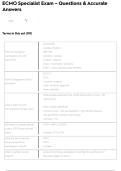
Terms in this set (101)
CS-MODE
Cardiac Rhythm
How to recognize SBP <90
cardiogenic shock? Markers- cardiac
(acronym) Output- oliguria
Drips - Inotropes/ pressers
Exam - cool, clammy, resp distress
(ECLS )
ECG
How to diagnose shock (
Consult- surgeon
acronym)
Labs- lactates, abgs etc.
Swan catheter
differentiates between the LV/RV disfunction, if low = RV
dysfunction
what is PAPI score?
PAPi= (sPAP-dPAP)/RA
Formula and normal value
it is the pa sys - the pa dyastolic / right atrial pressure-
can get these numbers from swan
normal is >1.0
Formula for cardiac power CPO= MAP x CO/451
output (CPO) and normal
value normal = 0.7 to 1 W
what are the three key PAPI
measurements for CPO
cardiogenic shock? Lactate
what is cardiac power amount of energy available to maintain the perfusion of
output? the vital organs in shock
, what does lactate in the anerobic metabolism is occurring
blood mean and normal
value? normal is 0.9 to 1.7
what are the two goals of restore adequate end organ perfusion
mechanical circulatory
support? ventricular unloading
drains at LV and returns at the aortic arch
how does the impella CP
work as an LV vent?
provides 3-3.5 LPM of flow
1. augmented cardiac output
what are the 5 factors 2. leaky capillaries
affecting pharmacokinetics 3. volume resusitation
with critical illness? 4. end-organ perfusion
5. altered protein binding
what is the bodys biological response to the drug
pharmacodynamics?
1. augmented cardiac output
what are the factors 5 2. leaky capillaries
affecting pharmacokinetics 3. end-organ perfusion
with ECMO? 4. hemodilution
5. drug sequestration
which drugs should you benzos!!! lipophillic and sequester in the tubing
avoid with ecmo?
blood contacts the ecmo circuit causing a sirs response
and leads to:
why do we need
inflammation/vasodilation
anticoagulation on ecmo?
coagulation
altered fibrinolysis
Activates antithrombin III -> inactivates thrombin, factor
how does heparin work?
IXa, & factor Xa.
1. Mild- pf ratio is 200-300 mmhg w/peep or CPAP > 5
what are the 3 definitions of
2. moderate - pf ratio is 100 - 200 mmhg w/ peep or
ards and how are they
CPAP > 5
defined?
3. severe- pf ratio is <100 mmhg with peep > 5
what are the 3 1. impaired gas exchange
consequences of lung 2. decreased compliance
injury with ards? 3. increased pulmonary arterial pressure
Answers
Save
Terms in this set (101)
CS-MODE
Cardiac Rhythm
How to recognize SBP <90
cardiogenic shock? Markers- cardiac
(acronym) Output- oliguria
Drips - Inotropes/ pressers
Exam - cool, clammy, resp distress
(ECLS )
ECG
How to diagnose shock (
Consult- surgeon
acronym)
Labs- lactates, abgs etc.
Swan catheter
differentiates between the LV/RV disfunction, if low = RV
dysfunction
what is PAPI score?
PAPi= (sPAP-dPAP)/RA
Formula and normal value
it is the pa sys - the pa dyastolic / right atrial pressure-
can get these numbers from swan
normal is >1.0
Formula for cardiac power CPO= MAP x CO/451
output (CPO) and normal
value normal = 0.7 to 1 W
what are the three key PAPI
measurements for CPO
cardiogenic shock? Lactate
what is cardiac power amount of energy available to maintain the perfusion of
output? the vital organs in shock
, what does lactate in the anerobic metabolism is occurring
blood mean and normal
value? normal is 0.9 to 1.7
what are the two goals of restore adequate end organ perfusion
mechanical circulatory
support? ventricular unloading
drains at LV and returns at the aortic arch
how does the impella CP
work as an LV vent?
provides 3-3.5 LPM of flow
1. augmented cardiac output
what are the 5 factors 2. leaky capillaries
affecting pharmacokinetics 3. volume resusitation
with critical illness? 4. end-organ perfusion
5. altered protein binding
what is the bodys biological response to the drug
pharmacodynamics?
1. augmented cardiac output
what are the factors 5 2. leaky capillaries
affecting pharmacokinetics 3. end-organ perfusion
with ECMO? 4. hemodilution
5. drug sequestration
which drugs should you benzos!!! lipophillic and sequester in the tubing
avoid with ecmo?
blood contacts the ecmo circuit causing a sirs response
and leads to:
why do we need
inflammation/vasodilation
anticoagulation on ecmo?
coagulation
altered fibrinolysis
Activates antithrombin III -> inactivates thrombin, factor
how does heparin work?
IXa, & factor Xa.
1. Mild- pf ratio is 200-300 mmhg w/peep or CPAP > 5
what are the 3 definitions of
2. moderate - pf ratio is 100 - 200 mmhg w/ peep or
ards and how are they
CPAP > 5
defined?
3. severe- pf ratio is <100 mmhg with peep > 5
what are the 3 1. impaired gas exchange
consequences of lung 2. decreased compliance
injury with ards? 3. increased pulmonary arterial pressure