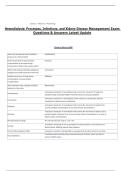
Hemodialysis: Processes, Infections, and Kidney Disease Management Exam Questions & Answers
Latest Update
Science Medicine Nephrology
Terms in this set (488)
what is the process that uses hydrostatic ultrafiltration
pressure to remove fluid?
Fluid moves from an area of lower Osmosis
concentration to an area of high
concentration. What is this process called?
What is the process whereby solutes are Convection
dragged across SMP membrane with fluid?
Particles move from an high solutes Diffusion
concentration to lower solute
concentration
What substance helps regulate acid/base Bicarbonate
balance in the body
A transport mechanism in hemodialysis that involves the movement of water and
Ultrafiltration
solutes through a semipermeable membrane due to a pressure gradient.
A transport mechanism in hemodialysis where solutes are carried along with the
Convection
movement of water across a membrane.
A transport mechanism in hemodialysis that involves the movement of solutes from
Diffusion
an area of higher concentration to an area of lower concentration.
A transport mechanism in hemodialysis that involves the movement of water across a
Osmosis semipermeable membrane from an area of lower solute concentration to an area of
higher solute concentration.
Normal blood pH range The normal blood pH range is 7.35-7.45.
A condition resulting from the accumulation of waste products in the blood due to
Uremia
kidney failure, affecting various body systems.
Chronic Kidney Disease (CKD) A long-term condition characterized by a gradual loss of kidney function over time.
A condition where the body has an abnormal amount of fluids, which can lead to
Fluid imbalance
various health issues.
Hemodialysis: Processes, Infections, and Kidney Disease Management Exam Questions & Answers
Latest Update
,Hemodialysis: Processes, Infections, and Kidney Disease Management Exam Questions & Answers
Latest Update
The maintenance of appropriate sodium levels in the body, which is crucial for fluid
Sodium balance
balance and overall health.
A condition where the muscle wall of the heart's left ventricle thickens, often due to
Left Ventricular Hypertrophy
high blood pressure or fluid overload.
An inflammation of the pericardium, the fibrous sac surrounding the heart, which can
Pericarditis
cause chest pain and other symptoms.
A condition where patients with CKD have lower levels of hemoglobin due to
Anemia in Chronic Kidney Disease
reduced erythropoietin production or other factors.
A condition associated with chronic kidney disease that affects bone metabolism and
CKD-Mineral Bone Disorder (MBD)
mineral balance.
A sudden decrease in kidney function, which can be caused by various factors
Acute Kidney Injury (AKI)
including pre-renal, intra-renal, and post-renal conditions.
Factors that lead to decreased blood flow to the kidneys, such as dehydration or
Pre-renal causes of AKI
heart failure.
Intra-renal causes of AKI Conditions that cause direct damage to the kidneys, such as infections or toxins.
Obstructions in the urinary tract that prevent urine from leaving the kidneys, such as
Post-renal causes of AKI
kidney stones or tumors.
Elevated potassium levels in the blood, which can cause muscle weakness, fatigue,
Signs and symptoms of Hyperkalemia
and cardiac arrhythmias.
Low potassium levels in the blood, which can lead to muscle cramps, weakness, and
Signs and symptoms of Hypokalemia
irregular heart rhythms.
To slow the progression of kidney disease, manage symptoms, and prevent
Treatment goals for CKD
complications.
The wide-ranging impacts of chronic kidney disease on various body systems,
Systemic effects of CKD
including cardiovascular, neurological, and gastrointestinal systems.
Providing information and support to patients to help them manage their condition
Patient education for CKD
and maintain their health.
AKI Acute Kidney Injury, a rapid decline in kidney function.
CKD Chronic Kidney Disease, a gradual loss of kidney function over time.
Vascular Access The method used to access the bloodstream for dialysis treatment.
Complications of AKI Infection, fluid overload, electrolyte imbalances, and metabolic acidosis.
Occupational Safety and Health Administration, sets safety standards for workplace
OSHA
health.
Centers for Medicare & Medicaid Services, regulates healthcare providers and
CMS
ensures safety standards.
Survey tags used by CMS to identify specific regulatory requirements and
V-tags
deficiencies.
Hemodialysis: Processes, Infections, and Kidney Disease Management Exam Questions & Answers
Latest Update
, Hemodialysis: Processes, Infections, and Kidney Disease Management Exam Questions & Answers
Latest Update
Use soap and water for hand washing, as alcohol-based hand sanitizers are
Hand Hygiene Technique for C-diff
ineffective.
Infectious Complication in Hemodialysis Access site infections are the most common infectious complications.
Common Organism in Hemodialysis Staphylococcus aureus is the most common organism causing infections.
Infections
Hemodialysis: Processes, Infections, and Kidney Disease Management Exam Questions & Answers
Latest Update
Latest Update
Science Medicine Nephrology
Terms in this set (488)
what is the process that uses hydrostatic ultrafiltration
pressure to remove fluid?
Fluid moves from an area of lower Osmosis
concentration to an area of high
concentration. What is this process called?
What is the process whereby solutes are Convection
dragged across SMP membrane with fluid?
Particles move from an high solutes Diffusion
concentration to lower solute
concentration
What substance helps regulate acid/base Bicarbonate
balance in the body
A transport mechanism in hemodialysis that involves the movement of water and
Ultrafiltration
solutes through a semipermeable membrane due to a pressure gradient.
A transport mechanism in hemodialysis where solutes are carried along with the
Convection
movement of water across a membrane.
A transport mechanism in hemodialysis that involves the movement of solutes from
Diffusion
an area of higher concentration to an area of lower concentration.
A transport mechanism in hemodialysis that involves the movement of water across a
Osmosis semipermeable membrane from an area of lower solute concentration to an area of
higher solute concentration.
Normal blood pH range The normal blood pH range is 7.35-7.45.
A condition resulting from the accumulation of waste products in the blood due to
Uremia
kidney failure, affecting various body systems.
Chronic Kidney Disease (CKD) A long-term condition characterized by a gradual loss of kidney function over time.
A condition where the body has an abnormal amount of fluids, which can lead to
Fluid imbalance
various health issues.
Hemodialysis: Processes, Infections, and Kidney Disease Management Exam Questions & Answers
Latest Update
,Hemodialysis: Processes, Infections, and Kidney Disease Management Exam Questions & Answers
Latest Update
The maintenance of appropriate sodium levels in the body, which is crucial for fluid
Sodium balance
balance and overall health.
A condition where the muscle wall of the heart's left ventricle thickens, often due to
Left Ventricular Hypertrophy
high blood pressure or fluid overload.
An inflammation of the pericardium, the fibrous sac surrounding the heart, which can
Pericarditis
cause chest pain and other symptoms.
A condition where patients with CKD have lower levels of hemoglobin due to
Anemia in Chronic Kidney Disease
reduced erythropoietin production or other factors.
A condition associated with chronic kidney disease that affects bone metabolism and
CKD-Mineral Bone Disorder (MBD)
mineral balance.
A sudden decrease in kidney function, which can be caused by various factors
Acute Kidney Injury (AKI)
including pre-renal, intra-renal, and post-renal conditions.
Factors that lead to decreased blood flow to the kidneys, such as dehydration or
Pre-renal causes of AKI
heart failure.
Intra-renal causes of AKI Conditions that cause direct damage to the kidneys, such as infections or toxins.
Obstructions in the urinary tract that prevent urine from leaving the kidneys, such as
Post-renal causes of AKI
kidney stones or tumors.
Elevated potassium levels in the blood, which can cause muscle weakness, fatigue,
Signs and symptoms of Hyperkalemia
and cardiac arrhythmias.
Low potassium levels in the blood, which can lead to muscle cramps, weakness, and
Signs and symptoms of Hypokalemia
irregular heart rhythms.
To slow the progression of kidney disease, manage symptoms, and prevent
Treatment goals for CKD
complications.
The wide-ranging impacts of chronic kidney disease on various body systems,
Systemic effects of CKD
including cardiovascular, neurological, and gastrointestinal systems.
Providing information and support to patients to help them manage their condition
Patient education for CKD
and maintain their health.
AKI Acute Kidney Injury, a rapid decline in kidney function.
CKD Chronic Kidney Disease, a gradual loss of kidney function over time.
Vascular Access The method used to access the bloodstream for dialysis treatment.
Complications of AKI Infection, fluid overload, electrolyte imbalances, and metabolic acidosis.
Occupational Safety and Health Administration, sets safety standards for workplace
OSHA
health.
Centers for Medicare & Medicaid Services, regulates healthcare providers and
CMS
ensures safety standards.
Survey tags used by CMS to identify specific regulatory requirements and
V-tags
deficiencies.
Hemodialysis: Processes, Infections, and Kidney Disease Management Exam Questions & Answers
Latest Update
, Hemodialysis: Processes, Infections, and Kidney Disease Management Exam Questions & Answers
Latest Update
Use soap and water for hand washing, as alcohol-based hand sanitizers are
Hand Hygiene Technique for C-diff
ineffective.
Infectious Complication in Hemodialysis Access site infections are the most common infectious complications.
Common Organism in Hemodialysis Staphylococcus aureus is the most common organism causing infections.
Infections
Hemodialysis: Processes, Infections, and Kidney Disease Management Exam Questions & Answers
Latest Update