
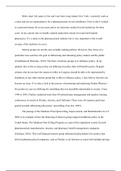
Hello class! My name is Eric and I am from Long Island, New York. I currently work as a sales and service representative for a pharmaceutical reverse distributor. Prior to this I worked as a personal trainer for seven years and as an electronic medical record technician for three years. In my current role we handle expired medication returns for retail and hospital pharmacies. It’s a niche in the pharmaceutical industry but is very important to the overall revenue of the facilities we serve. Interest groups are not the ones actually making policies. However, they focus on a particular issue and have the goal of influencing and educating policy makers and the public (Teitelbaum & Wilensky, 2019). The basis of interest groups is to influence policy. In my opinion, this is fine as long as they are lobbying for policy that will benefit society. Regular citizens who do not have the means to lobby in Congress should be able to be represented by healthcare or any other interest group that is able to influence policy. I also believe that this can become an issue. If we take a look at the process of promoting and marketing Purdue Pharma’s Oxycontin we can see lobbying for something that was incredibly detrimental to society. From 1996 to 2001, Purdue conducted more than 40 national pain-management and speaker-training conferences at resorts in Florida, Arizona, and California. These were all expenses paid trips geared towards influencing physicians’ prescribing (Van Zee, 2007). The passage of the Medicare Prescription Drug, Improvement, and Modernization Act of 2003 is an example of how the financing of interest groups impacts healthcare policy in the United States. The Medicare Part D Drug Program as a part of this legislation overtly favored pharmaceutical manufacturers, insurers, and pharmacy benefit management companies (Fincham, 2010). This well financed interest group influenced policymakers for a policy that allowed pharmaceutical companies, such as Purdue, to do business as usual with multiple pricing
Preview 1 out of 3 pages
Essay
IHP 610 Module 1 Discussion
Preview 1 out of 3 pages
First, briefly introduce yourself to your classmates and describe your current or previous healthcare setting. Second, consider the role of interest groups in the policy-making process, which often involves a wide range of stakeholders. In your opinion, what role should healthcare interest groups have in setting healthcare policy at the local and national levels? How does the financing of interest groups impact healthcare policy in the United States? Do healthcare interest groups have too much, too little, or the appropriate amount of influence on healthcare policy?
Content preview
Document information
- Uploaded on
- January 26, 2021
- Number of pages
- 3
- Written in
- 2020/2021
- Type
- Essay
- Professor(s)
- Unknown
- Grade
- A
$3.49
Wrong document? Swap it for free
Within 14 days of purchase and before downloading, you can choose a different document. You can simply spend the amount again.
Written by students who passed
Immediately available after payment
Read online or as PDF

Reputation scores are based on the amount of documents a seller has sold for a fee and the reviews they have received for those documents. There are three levels: Bronze, Silver and Gold. The better the reputation, the more your can rely on the quality of the sellers work.
Available in package deal
Package deal
IHP 610 Master Bundle

