
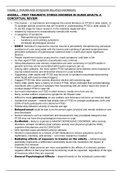
THEME 2: TRAUMA AND STRESSOR RELATED DISORDERS
AVERILL – POST TRAUMATIC STRESS DISORDER IN OLDER ADULTS: A
CONCEPTUAL REVIEW
• This review – 1) Summarize and integrate the extant literature on PTSD in older adults; 2)
To spotlight special concerns that are involved in understanding PTSD in older adults; 3)
To set the stage for future research in the relatively neglected area.
• Initiated by exposure to extraordinarily stressful life events
• 3 categories of symptoms
• Reexperiencing Symptoms
• Avoidance and numbing symptoms
• Increased physiological arousal
• DSM-5: Individual is exposed to trauma; trauma is persistently reexperiencing; pervasive
avoidance of cues associated with the trauma and numbing of general responsiveness;
persistent symptoms of hyperarousal; lasted at least 1 month and cause significant
distress.
• People experience trauma young tend to ‘mask symptoms’ until later in life.
• As they aged PTSD symptoms exacerbation was common
• Sleep disturbances and memory impairment are seen commonly in OLDER adults in
general and may not be associated with trauma exposure per se.
• Among older veterans, the most salient PTSD symptoms were distress when exposed to
trauma-related events and diminished interest in usual activities.
• Suggesting, older adults with PTSD may be prone to symptom exacerbation/worsening
when faced with trauma-related triggers.
• Suggest PTSD like other anxiety disorders decline with advancing age
• Some older adults have a history of chronic PTSD, others indicated that symptomatology
resurfaced after a period of symptom-free functioning and yet others report the onset of
combat-related PTSD in later life
• Not much information on PTSD in older women, mostly men from war etc.
• Many combat soldiers experience symptoms 40-50years later
• Difficult to study prevalence on war soldiers and holocaust survivors as most are dead
• Scotland air disaster – elderly had similar rate of PTSD to younger participants; 84% and
100% of both participants met criteria for PTSD
• Relationship between severity of trauma and age
• Delayed-onset could be due to as the person ages, physical and mental resilience over
time decreases
• Normal stressors such as retirement and bereavement may precipitate delayed onset
PTSD may not have the psychological resources to cope
• Co-Morbid – likely to experience MAJOR DEPRESSIVE DISORDER, other anxiety
disorders, somatic conditions (feel extreme anxiety over physical symptoms SSD),
cognitive disturbances and ALCOHOLISM
• 53% reported cases alcoholism among veterans
• Alcohol is rationalized as a means of self-medication to reduce symptoms such as
nightmares, insomnia, and anxiety - a lot more research is needed
• Radiating effects of exposure to trauma on the elderly – Advancing age
potentially represents a differential vulnerability factor that moderates the impact of
exposure to a stressor
• Presumably if older persons are more susceptible to the effects of a stressor, greater
negative effects of their psychosocial functioning could be expected, regardless of the type
of trauma to which they are exposed
• General Psychological Effects – depend heavily on the individual’s premorbid
AVERILL – POST TRAUMATIC STRESS DISORDER IN OLDER ADULTS: A
CONCEPTUAL REVIEW
• This review – 1) Summarize and integrate the extant literature on PTSD in older adults; 2)
To spotlight special concerns that are involved in understanding PTSD in older adults; 3)
To set the stage for future research in the relatively neglected area.
• Initiated by exposure to extraordinarily stressful life events
• 3 categories of symptoms
• Reexperiencing Symptoms
• Avoidance and numbing symptoms
• Increased physiological arousal
• DSM-5: Individual is exposed to trauma; trauma is persistently reexperiencing; pervasive
avoidance of cues associated with the trauma and numbing of general responsiveness;
persistent symptoms of hyperarousal; lasted at least 1 month and cause significant
distress.
• People experience trauma young tend to ‘mask symptoms’ until later in life.
• As they aged PTSD symptoms exacerbation was common
• Sleep disturbances and memory impairment are seen commonly in OLDER adults in
general and may not be associated with trauma exposure per se.
• Among older veterans, the most salient PTSD symptoms were distress when exposed to
trauma-related events and diminished interest in usual activities.
• Suggesting, older adults with PTSD may be prone to symptom exacerbation/worsening
when faced with trauma-related triggers.
• Suggest PTSD like other anxiety disorders decline with advancing age
• Some older adults have a history of chronic PTSD, others indicated that symptomatology
resurfaced after a period of symptom-free functioning and yet others report the onset of
combat-related PTSD in later life
• Not much information on PTSD in older women, mostly men from war etc.
• Many combat soldiers experience symptoms 40-50years later
• Difficult to study prevalence on war soldiers and holocaust survivors as most are dead
• Scotland air disaster – elderly had similar rate of PTSD to younger participants; 84% and
100% of both participants met criteria for PTSD
• Relationship between severity of trauma and age
• Delayed-onset could be due to as the person ages, physical and mental resilience over
time decreases
• Normal stressors such as retirement and bereavement may precipitate delayed onset
PTSD may not have the psychological resources to cope
• Co-Morbid – likely to experience MAJOR DEPRESSIVE DISORDER, other anxiety
disorders, somatic conditions (feel extreme anxiety over physical symptoms SSD),
cognitive disturbances and ALCOHOLISM
• 53% reported cases alcoholism among veterans
• Alcohol is rationalized as a means of self-medication to reduce symptoms such as
nightmares, insomnia, and anxiety - a lot more research is needed
• Radiating effects of exposure to trauma on the elderly – Advancing age
potentially represents a differential vulnerability factor that moderates the impact of
exposure to a stressor
• Presumably if older persons are more susceptible to the effects of a stressor, greater
negative effects of their psychosocial functioning could be expected, regardless of the type
of trauma to which they are exposed
• General Psychological Effects – depend heavily on the individual’s premorbid


