
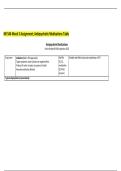
NR 546 Week 3 Assignment; Antipsychotic Medications Table
Antipsychotic Medications
Kristin Reddy NR 546 September 2022
Drug name Indication (Bold = FDA approved) Half-life Notable side effects (associate to pathway or NT)
Target symptoms: state if positive or negative effect (T1/2),
Potency (if noted. receptor occupancy if noted) metabolism
Neurotransmitter(s) affected (CYP 450
enzyme)
Typical antipsychotics (conventional)
,Haloperidol Indication: Half Life ▪ Neuroleptic-induced deficit syndrome – Blocking of
▪ Manifestations of psychotic disorders (oral, Oral: dopamine two receptors excessively in the
immediate-release injection) Approximatel mesocortical and mesolimbic dopamine pathways,
▪ Tics and vocal utterances in Tourette’s syndrome (oral, y 12-38 specially at high doses, it can cause worsening of
immediate-release injection) hours negative and cognitive symptoms
▪ Second-line treatment of severe behavior problems in ▪ Akathisia - Acute blockade of dopamine 2 receptors
children of combative, explosive hyperexcitability Decanoate: in the striatum
(oral) approximatel ▪ Drug-induced parkinsonism - Acute blockade of
▪ Second-line short-term treatment of hyperactive y 3 weeks dopamine 2 receptors in the striatum
children (oral) ▪ Tardive dyskinesia, tardive dystonia – Chronic and
▪ Treatment of schizophrenic patients who require acute blockade of dopamine 2 receptors in the
prolonged parenteral antipsychotic therapy (depot striatum
Metabolized
intramuscular decanoate) ▪ Risk of potentially irreversible involuntary
by CYP450 -
▪ Bipolar disorder dyskinetic movements may increase with
2D6, 3A4,
▪ Behavioral disturbances in dementias cumulative dose and treatment duration
3A5
▪ Delirium (with lorazepam) ▪ Galactorrhea, amenorrhea – Blocking of dopamine
Target symptoms: 2 receptors in the pituitary can cause elevations in
▪ Positive symptoms of psychosis prolactin
▪ Violent or aggressive behavior ▪ Dizziness, sedation – Blocking of alpha 1 adrenergic
Potency: High receptors
Neurotransmitter(s) affected: ▪ Dry mouth, constipation, urinary retention,
▪ Blocks dopamine 2 receptors, reducing positive blurred vision, decreased sweating – Blockade of
symptoms of psychosis and possibly combative, muscarinic cholinergic receptors
explosive, and hyperactive behaviors ▪ Hypotension, tachycardia, hypertension – Blocking
of alpha 1 adrenergic receptors
▪ Blocks dopamine 2 receptors in the nigrostriatal
pathway, improving tics and other symptoms in ▪ Weight gain - Mechanism of weight gain and any
Tourette’s syndrome possible increased incidence of diabetes or
dyslipidemia with unconventional antipsychotics is
currently unknown
Thioridazine Indication: Half Life ▪ Neuroleptic-induced deficit syndrome – Blocking of
, ▪ Schizophrenic patients who fail to respond to 21–24 hours dopamine 2 receptors excessively in the
treatment with other antipsychotic drugs mesocortical and mesolimbic dopamine pathways,
Target symptoms: especially at high doses, it can cause worsening of
▪ Positive symptoms of psychosis in patients who fail to Metabolized negative and cognitive symptoms
respond to treatment with other antipsychotics Primarily by ▪ Akathisia - Acute blockade of dopamine 2 receptors
▪ Motor and autonomic hyperactivity in patients who fail CYP450 - 2D6 in the striatum
to respond to treatment with other antipsychotics ▪ Priapism – Blocking of alpha 1 adrenergic receptors
Potency: Low ▪ Drug-induced parkinsonism - Acute blockade of
Neurotransmitter(s) affected: dopamine 2 receptors in the striatum
▪ Blocks dopamine 2 receptors, reducing positive ▪ Tardive dyskinesia - Chronic blockade of dopamine
symptoms of psychosis 2 receptors in the striatum
▪ Risk of potentially irreversible involuntary
dyskinetic movements may increase with
cumulative dose and treatment duration
▪ Galactorrhea, amenorrhea - Blocking of dopamine
2 receptors in the pituitary
▪ Pigmentary retinopathy at high doses – may be
due to blockade of retinal D2/D4 receptors
▪ Dizziness, sedation - Antihistaminic actions,
blocking of alpha 1 adrenergic receptors
▪ Dry mouth, constipation, blurred vision, decreased
sweating, paralytic ileus – Blocking of muscarinic
cholinergic receptors
▪ Sexual dysfunction - Blockade of dopamine D2
receptors in the tuberoinfundibular pathway
▪ Hypotension – Blocking of alpha 1 adrenergic
receptors
▪ Weight gain - Antihistaminic actions
▪ Mechanism of weight gain and any possible
increased incidence of diabetes or dyslipidemia
with conventional antipsychotics is unknown
▪ Mechanism of potentially dangerous QTc
prolongation may be related to actions at ion
channels
Thiothixene Indication: Half Life: ▪ Neuroleptic-induced deficit syndrome - Blocking of
▪ Schizophrenia Initial dopamine 2 receptors excessively in the
▪ Other psychotic disorders elimination: mesocortical and mesolimbic dopamine pathways,
▪ Bipolar disorder approximatel especially at high doses, can cause worsening of
Target symptoms: y 3.4 hours negative and cognitive symptoms
Antipsychotic Medications
Kristin Reddy NR 546 September 2022
Drug name Indication (Bold = FDA approved) Half-life Notable side effects (associate to pathway or NT)
Target symptoms: state if positive or negative effect (T1/2),
Potency (if noted. receptor occupancy if noted) metabolism
Neurotransmitter(s) affected (CYP 450
enzyme)
Typical antipsychotics (conventional)
,Haloperidol Indication: Half Life ▪ Neuroleptic-induced deficit syndrome – Blocking of
▪ Manifestations of psychotic disorders (oral, Oral: dopamine two receptors excessively in the
immediate-release injection) Approximatel mesocortical and mesolimbic dopamine pathways,
▪ Tics and vocal utterances in Tourette’s syndrome (oral, y 12-38 specially at high doses, it can cause worsening of
immediate-release injection) hours negative and cognitive symptoms
▪ Second-line treatment of severe behavior problems in ▪ Akathisia - Acute blockade of dopamine 2 receptors
children of combative, explosive hyperexcitability Decanoate: in the striatum
(oral) approximatel ▪ Drug-induced parkinsonism - Acute blockade of
▪ Second-line short-term treatment of hyperactive y 3 weeks dopamine 2 receptors in the striatum
children (oral) ▪ Tardive dyskinesia, tardive dystonia – Chronic and
▪ Treatment of schizophrenic patients who require acute blockade of dopamine 2 receptors in the
prolonged parenteral antipsychotic therapy (depot striatum
Metabolized
intramuscular decanoate) ▪ Risk of potentially irreversible involuntary
by CYP450 -
▪ Bipolar disorder dyskinetic movements may increase with
2D6, 3A4,
▪ Behavioral disturbances in dementias cumulative dose and treatment duration
3A5
▪ Delirium (with lorazepam) ▪ Galactorrhea, amenorrhea – Blocking of dopamine
Target symptoms: 2 receptors in the pituitary can cause elevations in
▪ Positive symptoms of psychosis prolactin
▪ Violent or aggressive behavior ▪ Dizziness, sedation – Blocking of alpha 1 adrenergic
Potency: High receptors
Neurotransmitter(s) affected: ▪ Dry mouth, constipation, urinary retention,
▪ Blocks dopamine 2 receptors, reducing positive blurred vision, decreased sweating – Blockade of
symptoms of psychosis and possibly combative, muscarinic cholinergic receptors
explosive, and hyperactive behaviors ▪ Hypotension, tachycardia, hypertension – Blocking
of alpha 1 adrenergic receptors
▪ Blocks dopamine 2 receptors in the nigrostriatal
pathway, improving tics and other symptoms in ▪ Weight gain - Mechanism of weight gain and any
Tourette’s syndrome possible increased incidence of diabetes or
dyslipidemia with unconventional antipsychotics is
currently unknown
Thioridazine Indication: Half Life ▪ Neuroleptic-induced deficit syndrome – Blocking of
, ▪ Schizophrenic patients who fail to respond to 21–24 hours dopamine 2 receptors excessively in the
treatment with other antipsychotic drugs mesocortical and mesolimbic dopamine pathways,
Target symptoms: especially at high doses, it can cause worsening of
▪ Positive symptoms of psychosis in patients who fail to Metabolized negative and cognitive symptoms
respond to treatment with other antipsychotics Primarily by ▪ Akathisia - Acute blockade of dopamine 2 receptors
▪ Motor and autonomic hyperactivity in patients who fail CYP450 - 2D6 in the striatum
to respond to treatment with other antipsychotics ▪ Priapism – Blocking of alpha 1 adrenergic receptors
Potency: Low ▪ Drug-induced parkinsonism - Acute blockade of
Neurotransmitter(s) affected: dopamine 2 receptors in the striatum
▪ Blocks dopamine 2 receptors, reducing positive ▪ Tardive dyskinesia - Chronic blockade of dopamine
symptoms of psychosis 2 receptors in the striatum
▪ Risk of potentially irreversible involuntary
dyskinetic movements may increase with
cumulative dose and treatment duration
▪ Galactorrhea, amenorrhea - Blocking of dopamine
2 receptors in the pituitary
▪ Pigmentary retinopathy at high doses – may be
due to blockade of retinal D2/D4 receptors
▪ Dizziness, sedation - Antihistaminic actions,
blocking of alpha 1 adrenergic receptors
▪ Dry mouth, constipation, blurred vision, decreased
sweating, paralytic ileus – Blocking of muscarinic
cholinergic receptors
▪ Sexual dysfunction - Blockade of dopamine D2
receptors in the tuberoinfundibular pathway
▪ Hypotension – Blocking of alpha 1 adrenergic
receptors
▪ Weight gain - Antihistaminic actions
▪ Mechanism of weight gain and any possible
increased incidence of diabetes or dyslipidemia
with conventional antipsychotics is unknown
▪ Mechanism of potentially dangerous QTc
prolongation may be related to actions at ion
channels
Thiothixene Indication: Half Life: ▪ Neuroleptic-induced deficit syndrome - Blocking of
▪ Schizophrenia Initial dopamine 2 receptors excessively in the
▪ Other psychotic disorders elimination: mesocortical and mesolimbic dopamine pathways,
▪ Bipolar disorder approximatel especially at high doses, can cause worsening of
Target symptoms: y 3.4 hours negative and cognitive symptoms


