Basic Nursing Skills Final Review – Comprehensive
Exam Study Guide (Updated)
The Nursing Process
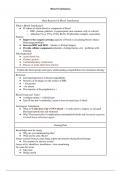
Maslow’s Hierarchy of Needs
This Photo by Unknown Author is licensed under CC BY-SA
Data Collections o
Objective/subjective data o
Primary data: pt. provides info
o Secondary data: obtained info from fam members, friends, and the pt. chart
ADPIE: Assessment, Nursing Diagnosis, Planning, Interventions/Implementation, and Evaluation
Chapter 5: Documentation
Guidelines for Electronic Documentation
◦ include avoiding shortcuts, such as copy and paste, using only approved abbreviations, and being accurate
and objective
Guidelines for Paper Documentation:
◦ Use black or blue ink.
◦ Write neatly and legibly.
◦ Sign each entry
,- (ex. C. Davis, SVN)
, ◦ Include date and time with each entry.
- Use military time to decrease confusion on a.m. and p.m.
◦ Follow chronological order
- Start at beginning of shift and continue from there.
◦ Make entries in a timely manner.
- Safety: document all assessment findings and care provided ASAP after occurrence. If unable,
write note including time and pertinent details. Then transcribe the info. to pt.’s chart ASAP.
◦ Be succinct.
- Make entries brief, concise, and to the point.
◦ Use punctuation.
◦ Don’t leave blank lines.
◦ Use continued notes.
◦ Correct mistaken entries.
- Mark a line through the statement and write “mistaken entry” and write your initials above the
incorrect words.
- Safety: never use correction fluid or tape
◦ Keep the medical record intact. Safety: never delete any part of the chart.
- If a page becomes saturated with fluid don’t discard, rewrite it. Keep damaged copy in patients’
chart and make a reference to the copied page
Chapter 12: Patient Teaching
Learning Styles
Visual: seeing, reading, and watching
Auditory: hearing and listening
Kinesthetic: touching and doing
Factors That Affect Learning
◦ Environment o
Quiet
o Free of Distraction
o Offers Privacy
◦ Comfort o Ensure before
beginning
◦ Readiness o Establish what
they know
o Able to hear and understand
◦ Language o Arrange for a certified interpreter, preferably one that knows medical terms.
o DO NOT use a child for an interpreter o Look at the patient when speaking o
Use general terms not medical
◦ Senses
o Need to see and hear what you are saying
o Read your lips
◦ Cultural or religious beliefs or practices o
Incorporate patient's specific cultural background
o Religious beliefs
o Ask if anyone needs to join the session
Repetition
◦ Introduce, explain, and reinforce
◦ Patient teaching should begin upon meeting patient (day of admission)
, Purposes of Patient Teaching
1. Instruct pt. on health promotion and wellness strategies
Health promotion: exercise, drinking more water
Wellness strategies: changing unhealthy habits
2. Explain disease processes, treatments, and care
Teaching
- Teachable moments occur when patients ask you questions about their illness or treatment, hear, or observe
misinformation or incorrect procedure technique, and when you point out cause-and-effect connections
- Use the nursing process to develop a teaching plan
- Evaluate the effectiveness by having the pt. restate what was taught or demonstrate the procedure shown
Documentation of Teaching
- Required by joint commission
- Some EHR have pt. teaching forms
- Specific descriptions are required for Medicare and Medicaid services
Teaching About Internet Resources
- Use sites ending in .edu, .gov, or .org (mayo health or NIH)
- Check date, time, and credentials for up-to-date accurate information
*Patient Teaching should never be delegated*
Chapter 13: Safety
National Patient Safety Goals
Joint Commission: organization responsible for evaluating and accrediting health care orgs and programs in the
U.S.
◦ Identify patient correctly, medication safety, use of alarms, infection prevention, safety risks, etc.
Factors Contributing to an Unsafe Patient Environment Age
and Ability to Understand
◦ Older pt. with cognitive disabilities, medications, and unfamiliar surroundings at a high risk for falls
Impaired Mobility
◦ Pt unsteady or unable to bear weight on feet
◦ Equipment, cords, and tubes
Communication
◦ Pt who does not speak English
Pain and Discomfort
◦ Irritable and anxious
◦ Disregard safety precautions to become more comfortable
Ex: pt. with a full bladder on bed rest may attempt to get up on their own
Delayed Assistance
◦ Staff must make rapid response to requests for assistance a high priority
Promoting Patient Safety
Preventing Falls
Fall Assessment Rating Scale: give a numerical rating for each patient’s risk for falls Morse
Fall Scale >51 = strict fall
Exam Study Guide (Updated)
The Nursing Process
Maslow’s Hierarchy of Needs
This Photo by Unknown Author is licensed under CC BY-SA
Data Collections o
Objective/subjective data o
Primary data: pt. provides info
o Secondary data: obtained info from fam members, friends, and the pt. chart
ADPIE: Assessment, Nursing Diagnosis, Planning, Interventions/Implementation, and Evaluation
Chapter 5: Documentation
Guidelines for Electronic Documentation
◦ include avoiding shortcuts, such as copy and paste, using only approved abbreviations, and being accurate
and objective
Guidelines for Paper Documentation:
◦ Use black or blue ink.
◦ Write neatly and legibly.
◦ Sign each entry
,- (ex. C. Davis, SVN)
, ◦ Include date and time with each entry.
- Use military time to decrease confusion on a.m. and p.m.
◦ Follow chronological order
- Start at beginning of shift and continue from there.
◦ Make entries in a timely manner.
- Safety: document all assessment findings and care provided ASAP after occurrence. If unable,
write note including time and pertinent details. Then transcribe the info. to pt.’s chart ASAP.
◦ Be succinct.
- Make entries brief, concise, and to the point.
◦ Use punctuation.
◦ Don’t leave blank lines.
◦ Use continued notes.
◦ Correct mistaken entries.
- Mark a line through the statement and write “mistaken entry” and write your initials above the
incorrect words.
- Safety: never use correction fluid or tape
◦ Keep the medical record intact. Safety: never delete any part of the chart.
- If a page becomes saturated with fluid don’t discard, rewrite it. Keep damaged copy in patients’
chart and make a reference to the copied page
Chapter 12: Patient Teaching
Learning Styles
Visual: seeing, reading, and watching
Auditory: hearing and listening
Kinesthetic: touching and doing
Factors That Affect Learning
◦ Environment o
Quiet
o Free of Distraction
o Offers Privacy
◦ Comfort o Ensure before
beginning
◦ Readiness o Establish what
they know
o Able to hear and understand
◦ Language o Arrange for a certified interpreter, preferably one that knows medical terms.
o DO NOT use a child for an interpreter o Look at the patient when speaking o
Use general terms not medical
◦ Senses
o Need to see and hear what you are saying
o Read your lips
◦ Cultural or religious beliefs or practices o
Incorporate patient's specific cultural background
o Religious beliefs
o Ask if anyone needs to join the session
Repetition
◦ Introduce, explain, and reinforce
◦ Patient teaching should begin upon meeting patient (day of admission)
, Purposes of Patient Teaching
1. Instruct pt. on health promotion and wellness strategies
Health promotion: exercise, drinking more water
Wellness strategies: changing unhealthy habits
2. Explain disease processes, treatments, and care
Teaching
- Teachable moments occur when patients ask you questions about their illness or treatment, hear, or observe
misinformation or incorrect procedure technique, and when you point out cause-and-effect connections
- Use the nursing process to develop a teaching plan
- Evaluate the effectiveness by having the pt. restate what was taught or demonstrate the procedure shown
Documentation of Teaching
- Required by joint commission
- Some EHR have pt. teaching forms
- Specific descriptions are required for Medicare and Medicaid services
Teaching About Internet Resources
- Use sites ending in .edu, .gov, or .org (mayo health or NIH)
- Check date, time, and credentials for up-to-date accurate information
*Patient Teaching should never be delegated*
Chapter 13: Safety
National Patient Safety Goals
Joint Commission: organization responsible for evaluating and accrediting health care orgs and programs in the
U.S.
◦ Identify patient correctly, medication safety, use of alarms, infection prevention, safety risks, etc.
Factors Contributing to an Unsafe Patient Environment Age
and Ability to Understand
◦ Older pt. with cognitive disabilities, medications, and unfamiliar surroundings at a high risk for falls
Impaired Mobility
◦ Pt unsteady or unable to bear weight on feet
◦ Equipment, cords, and tubes
Communication
◦ Pt who does not speak English
Pain and Discomfort
◦ Irritable and anxious
◦ Disregard safety precautions to become more comfortable
Ex: pt. with a full bladder on bed rest may attempt to get up on their own
Delayed Assistance
◦ Staff must make rapid response to requests for assistance a high priority
Promoting Patient Safety
Preventing Falls
Fall Assessment Rating Scale: give a numerical rating for each patient’s risk for falls Morse
Fall Scale >51 = strict fall