10/30/25, 6:16 PM NSG 3450 Exam 4 questions with accurate answers Flashcards | Quizlet
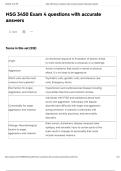
NSG 3450 Exam 4 questions with accurate
answers
Save
Terms in this set (232)
An emotional response to frustration of desires, threat
Anger
to one's needs (emotional or physical), or a challenge.
Action or behavior that results in verbal or physical
Aggression
attack. It is not okay to be aggressive.
Which units see the most Psychiatric units, geriatric units, and intensive care
violence from patients? units, Emergency Room.
Risk Factors for Anger, Hypertension and cardiovascular disease including
Aggression, and Violence. myocardial infarctions and ischemic strokes.
Individuals with PTSD and substances abuse have
issues with aggression. Individuals with bipolar
Comorbidity for anger, disorder have difficulty with anger and aggression
aggression, and violence during remission. It coexists in individuals with
depression, anxiety, psychosis, and personality
disorders.
Brain tumors, Alzheimers, disease, temporal lobe
Etiology: Neurobiological
epilepsy, and traumatic injury to certain parts of the
factors to anger,
brain result in changes to personality that could
aggression, and violence
include increased violence.
https://quizlet.com/1100990094/nsg-3450-exam-4-questions-with-accurate-answers-flash-cards/?new 1/22
,10/30/25, 6:16 PM NSG 3450 Exam 4 questions with accurate answers Flashcards | Quizlet
The limbic system which is located beneath the
Which area of the brain is cerebrum on both sides of the thalamus. It is
associated with responsible for combining higher mental functions
aggression? and primitive emotions into one system, learning, and
the formation of memories.
The amygdala! it helps evaluate the emotional content
What is the emotional of experiences. It helps the brain to recognize
center of the brain? potential threats and whether to activate the fight or
flight response.
The prefrontal cortex is the area of the brain that is
responsible for executive functions. Executive
Which cortex is an
functions allows us to distinguish between good and
important role in
bad, consequences of actions, goal-directed
aggressive behavior?
behaviors, and suppressing socially unacceptable
activities.
Serotonin can both inhibit and stimulate aggressive
behavior, depending on the part of the brain being
measured.
Dopamine's impact on reward-seeking behaviors may
Which neurotransmitters
increase aggression. Serotonin and dopamine can
play a role in anger and
sometimes enhance aggression and sometimes
aggression?
reduce impulsivity that leads to aggression. GABA the
main inhibitory neurotransmitter may reduce
aggressiveness, its absence may increase impulsivity
and aggressive responses.
Anger Behavioral Theory Is a learned response to environmental stimuli.
Researchers demonstrated that children learn
Anger Social Learning
aggression by observing and imitating behaviors of
Theory
others, especially if that that behavior is rewarded.
https://quizlet.com/1100990094/nsg-3450-exam-4-questions-with-accurate-answers-flash-cards/?new 2/22
, 10/30/25, 6:16 PM NSG 3450 Exam 4 questions with accurate answers Flashcards | Quizlet
Hyperactivity: most important predictor of imminent
violence (pacing or restlessness). Increase anxiety
and tension, clenched jaw or fist, rigid posture, fixed
or tense facial expression, mumbling to self (patient
may have shortness of breath, sweating, and rapid
pulse). Verbal abuse: profanity, argumentativeness.
Loud voice, change of pitch, or very soft voice,
Predictors of Violence forcing others to strain to hear. Stone silence. Intense
(Signs and Symptoms) eye contact or avoidance of eye contact. Recent acts
of violence, including property violence. Alcohol or
drug intoxication. Possession of a weapon or object
that may be used as a weapon (fork or knife). Isolation
that is uncharacteristic. Milieu characteristics
conducive to violence: Overcrowding, staff
inexperience, provocative or controlling staff, poor
limit setting, arbitrary revocation of privileges.
Patient will exhibit increased demands, irritability,
frowning, redness in the face, pacing, twisting of the
General Assessment for a
hands, or clenching and unclenching of the fists are all
patient experiencing
signs of irritation. Speech may either be increased in
anger.
rate and volume or may be slowed, pointed, and
quite.
It is based on the notion that disruptive patients often
have histories that include violence and victimizations.
Trauma-informed Care This care focuses on the patients past experiences of
violence or trauma and on the role these experiences
currently play in their lives.
https://quizlet.com/1100990094/nsg-3450-exam-4-questions-with-accurate-answers-flash-cards/?new 3/22
NSG 3450 Exam 4 questions with accurate
answers
Save
Terms in this set (232)
An emotional response to frustration of desires, threat
Anger
to one's needs (emotional or physical), or a challenge.
Action or behavior that results in verbal or physical
Aggression
attack. It is not okay to be aggressive.
Which units see the most Psychiatric units, geriatric units, and intensive care
violence from patients? units, Emergency Room.
Risk Factors for Anger, Hypertension and cardiovascular disease including
Aggression, and Violence. myocardial infarctions and ischemic strokes.
Individuals with PTSD and substances abuse have
issues with aggression. Individuals with bipolar
Comorbidity for anger, disorder have difficulty with anger and aggression
aggression, and violence during remission. It coexists in individuals with
depression, anxiety, psychosis, and personality
disorders.
Brain tumors, Alzheimers, disease, temporal lobe
Etiology: Neurobiological
epilepsy, and traumatic injury to certain parts of the
factors to anger,
brain result in changes to personality that could
aggression, and violence
include increased violence.
https://quizlet.com/1100990094/nsg-3450-exam-4-questions-with-accurate-answers-flash-cards/?new 1/22
,10/30/25, 6:16 PM NSG 3450 Exam 4 questions with accurate answers Flashcards | Quizlet
The limbic system which is located beneath the
Which area of the brain is cerebrum on both sides of the thalamus. It is
associated with responsible for combining higher mental functions
aggression? and primitive emotions into one system, learning, and
the formation of memories.
The amygdala! it helps evaluate the emotional content
What is the emotional of experiences. It helps the brain to recognize
center of the brain? potential threats and whether to activate the fight or
flight response.
The prefrontal cortex is the area of the brain that is
responsible for executive functions. Executive
Which cortex is an
functions allows us to distinguish between good and
important role in
bad, consequences of actions, goal-directed
aggressive behavior?
behaviors, and suppressing socially unacceptable
activities.
Serotonin can both inhibit and stimulate aggressive
behavior, depending on the part of the brain being
measured.
Dopamine's impact on reward-seeking behaviors may
Which neurotransmitters
increase aggression. Serotonin and dopamine can
play a role in anger and
sometimes enhance aggression and sometimes
aggression?
reduce impulsivity that leads to aggression. GABA the
main inhibitory neurotransmitter may reduce
aggressiveness, its absence may increase impulsivity
and aggressive responses.
Anger Behavioral Theory Is a learned response to environmental stimuli.
Researchers demonstrated that children learn
Anger Social Learning
aggression by observing and imitating behaviors of
Theory
others, especially if that that behavior is rewarded.
https://quizlet.com/1100990094/nsg-3450-exam-4-questions-with-accurate-answers-flash-cards/?new 2/22
, 10/30/25, 6:16 PM NSG 3450 Exam 4 questions with accurate answers Flashcards | Quizlet
Hyperactivity: most important predictor of imminent
violence (pacing or restlessness). Increase anxiety
and tension, clenched jaw or fist, rigid posture, fixed
or tense facial expression, mumbling to self (patient
may have shortness of breath, sweating, and rapid
pulse). Verbal abuse: profanity, argumentativeness.
Loud voice, change of pitch, or very soft voice,
Predictors of Violence forcing others to strain to hear. Stone silence. Intense
(Signs and Symptoms) eye contact or avoidance of eye contact. Recent acts
of violence, including property violence. Alcohol or
drug intoxication. Possession of a weapon or object
that may be used as a weapon (fork or knife). Isolation
that is uncharacteristic. Milieu characteristics
conducive to violence: Overcrowding, staff
inexperience, provocative or controlling staff, poor
limit setting, arbitrary revocation of privileges.
Patient will exhibit increased demands, irritability,
frowning, redness in the face, pacing, twisting of the
General Assessment for a
hands, or clenching and unclenching of the fists are all
patient experiencing
signs of irritation. Speech may either be increased in
anger.
rate and volume or may be slowed, pointed, and
quite.
It is based on the notion that disruptive patients often
have histories that include violence and victimizations.
Trauma-informed Care This care focuses on the patients past experiences of
violence or trauma and on the role these experiences
currently play in their lives.
https://quizlet.com/1100990094/nsg-3450-exam-4-questions-with-accurate-answers-flash-cards/?new 3/22