FINAL EXAM BIO 253 – Questions With Detailed
Solutions
Save
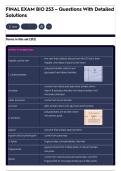
Terms in this set (212)
INTRO TO DIGESTION
the vein that collects blood from the GI tract, then
hepatic portal vein
hepatic vein takes it back to the heart
polysaccharides (starch and
glycogen) and disaccharides
1. carbohydrates
comes from saliva and pancreas; breaks down
amylase starch & polysaccharides into disaccharides (not
monosaccharides)
other enzymes come from brush border
sucrose gets broken down into glucose and fructose
polypeptides are broken down
into amino acids
2. proteins
pepsin enzyme that breaks apart proteins
trypsin and chymotrypsin come from pancreas
3. lipids triglycerides, phospholipids, steroids
glycerol bound to 3 fatty acids; no brush border
triglyceride
enzymes
come from oral mucosa and pancreas; converts
lipase
triglyceride to monoglyceride plus 2 fatty acids
, retention of osmotically active particles in the
intestines results in inadequate fluid absorption,
osmotic diarrhea
water is not being absorbed (lactose intolerance,
some laxatives)
excessive mucosal secretion by intestinal cells
secretory diarrhea
produces large-volume diarrhea (cholera toxin)
layers of the digestive
tract ⬇️
serosa (visceral covers organs of abdominal cavity
peritoneum)
mesothelium secretes serous fluids
muscularis externa thick layer of smooth muscle
controls peristalsis and other contractions of
myenteric plexus
muscularis externa
connective tissue containing capillaries, lymph
submucosa
vessels
mucosa innermost mucous membrane
submucosal plexus controls glandular secretion of mucosa
the nervous system of the digestive tract that
enteric nervous system
operates independently of CNS
REGULATION OF GI
PROCESSES
stretch, change in osmolarity, change in pH, specific
stimuli⬇️
molecules
mediators⬇️ long reflexes, short reflexes, hormones
responses motility changes, peristalsis, relaxation, constriction
long reflexes involves CNS, uses parasympathetic motor neurons
do not involve CNS, enteric neurons in the wall of
short reflexes
GI tract
hormones pass through the blood to find their target
produces H+, contains pepsin, mucus,
stomach
contraction/relaxation of pyloric sphincter
, secretion of HCO3- and enzymes from the
small intestine
pancreas, secretion of bile (from gallbladder)
large intestine motility, propulsion and moving fecal material out
brain prepares stomach for the arrival of food;
1. cephalic phase
increases secretion and motility
stomach regulates itself, stimulated by food;
2. gastric phase
enhances secretion and motility
duodenum limits stomach activity and stimulates
3. intestinal phase
intestinal motility, monitors downstream
HORMONES
acidifies stomach, promotes motility in stomach,
gastrin (stomach)
small & large intestine
inhibits stomach H+ production, stimulates HCO3-
secretin (duodenum)
from pancreatic ducts
inhibits stomach H+ production, stimulates enzyme
CCK (duodenum) production from acinar cells (pancreas) and
gallbladder contraction
GIP (duodenum) stimulates insulin secretion
molecules that stimulates insulin secretion and
"incretin"
enhances insulin response
SECRETION
what causes a high pH in food
the stomach?
when pH is high... stomach releases gastrin and histamine
histamine paracrine factor (signaling molecule)
as the pH of the stomach the venous blood from the stomach becomes more
lumen becomes more basic
acidic...
Solutions
Save
Terms in this set (212)
INTRO TO DIGESTION
the vein that collects blood from the GI tract, then
hepatic portal vein
hepatic vein takes it back to the heart
polysaccharides (starch and
glycogen) and disaccharides
1. carbohydrates
comes from saliva and pancreas; breaks down
amylase starch & polysaccharides into disaccharides (not
monosaccharides)
other enzymes come from brush border
sucrose gets broken down into glucose and fructose
polypeptides are broken down
into amino acids
2. proteins
pepsin enzyme that breaks apart proteins
trypsin and chymotrypsin come from pancreas
3. lipids triglycerides, phospholipids, steroids
glycerol bound to 3 fatty acids; no brush border
triglyceride
enzymes
come from oral mucosa and pancreas; converts
lipase
triglyceride to monoglyceride plus 2 fatty acids
, retention of osmotically active particles in the
intestines results in inadequate fluid absorption,
osmotic diarrhea
water is not being absorbed (lactose intolerance,
some laxatives)
excessive mucosal secretion by intestinal cells
secretory diarrhea
produces large-volume diarrhea (cholera toxin)
layers of the digestive
tract ⬇️
serosa (visceral covers organs of abdominal cavity
peritoneum)
mesothelium secretes serous fluids
muscularis externa thick layer of smooth muscle
controls peristalsis and other contractions of
myenteric plexus
muscularis externa
connective tissue containing capillaries, lymph
submucosa
vessels
mucosa innermost mucous membrane
submucosal plexus controls glandular secretion of mucosa
the nervous system of the digestive tract that
enteric nervous system
operates independently of CNS
REGULATION OF GI
PROCESSES
stretch, change in osmolarity, change in pH, specific
stimuli⬇️
molecules
mediators⬇️ long reflexes, short reflexes, hormones
responses motility changes, peristalsis, relaxation, constriction
long reflexes involves CNS, uses parasympathetic motor neurons
do not involve CNS, enteric neurons in the wall of
short reflexes
GI tract
hormones pass through the blood to find their target
produces H+, contains pepsin, mucus,
stomach
contraction/relaxation of pyloric sphincter
, secretion of HCO3- and enzymes from the
small intestine
pancreas, secretion of bile (from gallbladder)
large intestine motility, propulsion and moving fecal material out
brain prepares stomach for the arrival of food;
1. cephalic phase
increases secretion and motility
stomach regulates itself, stimulated by food;
2. gastric phase
enhances secretion and motility
duodenum limits stomach activity and stimulates
3. intestinal phase
intestinal motility, monitors downstream
HORMONES
acidifies stomach, promotes motility in stomach,
gastrin (stomach)
small & large intestine
inhibits stomach H+ production, stimulates HCO3-
secretin (duodenum)
from pancreatic ducts
inhibits stomach H+ production, stimulates enzyme
CCK (duodenum) production from acinar cells (pancreas) and
gallbladder contraction
GIP (duodenum) stimulates insulin secretion
molecules that stimulates insulin secretion and
"incretin"
enhances insulin response
SECRETION
what causes a high pH in food
the stomach?
when pH is high... stomach releases gastrin and histamine
histamine paracrine factor (signaling molecule)
as the pH of the stomach the venous blood from the stomach becomes more
lumen becomes more basic
acidic...