

MDC 1 Exam 1 Study Guide
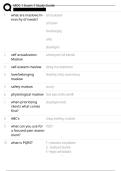
1. what are maslows hi- self actualization
erarchy of needs?
self esteem
love/belonging
safety
physiological
2. self actualization achieving one's full potential
Maslow
3. self-esteem maslow feeling of accomplishment
4. love/belonging friendship, family, sexual intimacy
maslow
5. safety maslow security
6. physiological maslow food, water, shelter, warmth
7. when prioritizing physiological needs
clients what comes
first?
8. ABC's airway, breathing, circulation
9. what can you use for PQRST
a focused pain assess-
ment?
10. what is PQRST P - provocation and palliation
Q - Quality and Quantity
R - Region and Radiation
, MDC 1 Exam 1 Study Guide
S - Severity and Scale
T - Timing and Onset
11. pain is subjective and numerical scale, Wong-baker FACES or verbal rating scale
can be measured by
12. pain is the? 5th vital sign
13. nocioceptive pain the result of actual or potential tissue damage or inflammation and is often
categorized as being somatic or visceral
14. visceral pain type of nociceptive pain in the ORGANS and linings of body cavitites
15. somatic pain can be cutaneous (superficial) or deep (bone, muscles, CT)
16. neuropathic pain results from an injury of one or more nerves with or without tissue damage
17. radiating pain starts at an origin but EXTENDS to other locations
18. referred pain occurs in an area distant from the site of origin example: feeling heart
attack in the left arm
19. Physiology of Nocicep- arises from damage to or inflammation of tissue, which is noxious stimulus
tive Pain that triggers pain receptors and causes throbbing, localized, aching pain;
can be somatic, visceral or cutaneous
20. what are some exam- transduction
ples of the physiology transmission
of nociceptive pain? pain threshold
pain tolerance
preception or awareness of pain
modulation
21. transduction
, MDC 1 Exam 1 Study Guide
the conversion of painful stimuli to an electrical impulse through periph-
eral nerve fibers (NOCICEPTORS)
22. transmission occurs as the electrical impulse travels along the nerve fibers where
neurotransmitters regulate it
23. pain threshold the point at which a person feels pain
24. pain tolerance point beyond which a person is no longer willing to endure pain
25. modulation occurs in the spinal cord; causing muscles to contract reflexively moving
the body away from painful stimuli
26. types of nociceptive somatic
pain visceral
cutaneous
27. what are some sus- substance P
btances that increase prostaglandins
pain transmission? bradykinin
histamine
28. what are some sub- serotonin and endorphins
stances that decrease
pain transmission
29. nonpharmacological transcutaneous electrical nerve stimulation (TENS)
strategies for pain
management
30. examples of opioid morphine, fentanyl, codeine, oxycodone
analgesics for pain
management
1. what are maslows hi- self actualization
erarchy of needs?
self esteem
love/belonging
safety
physiological
2. self actualization achieving one's full potential
Maslow
3. self-esteem maslow feeling of accomplishment
4. love/belonging friendship, family, sexual intimacy
maslow
5. safety maslow security
6. physiological maslow food, water, shelter, warmth
7. when prioritizing physiological needs
clients what comes
first?
8. ABC's airway, breathing, circulation
9. what can you use for PQRST
a focused pain assess-
ment?
10. what is PQRST P - provocation and palliation
Q - Quality and Quantity
R - Region and Radiation
, MDC 1 Exam 1 Study Guide
S - Severity and Scale
T - Timing and Onset
11. pain is subjective and numerical scale, Wong-baker FACES or verbal rating scale
can be measured by
12. pain is the? 5th vital sign
13. nocioceptive pain the result of actual or potential tissue damage or inflammation and is often
categorized as being somatic or visceral
14. visceral pain type of nociceptive pain in the ORGANS and linings of body cavitites
15. somatic pain can be cutaneous (superficial) or deep (bone, muscles, CT)
16. neuropathic pain results from an injury of one or more nerves with or without tissue damage
17. radiating pain starts at an origin but EXTENDS to other locations
18. referred pain occurs in an area distant from the site of origin example: feeling heart
attack in the left arm
19. Physiology of Nocicep- arises from damage to or inflammation of tissue, which is noxious stimulus
tive Pain that triggers pain receptors and causes throbbing, localized, aching pain;
can be somatic, visceral or cutaneous
20. what are some exam- transduction
ples of the physiology transmission
of nociceptive pain? pain threshold
pain tolerance
preception or awareness of pain
modulation
21. transduction
, MDC 1 Exam 1 Study Guide
the conversion of painful stimuli to an electrical impulse through periph-
eral nerve fibers (NOCICEPTORS)
22. transmission occurs as the electrical impulse travels along the nerve fibers where
neurotransmitters regulate it
23. pain threshold the point at which a person feels pain
24. pain tolerance point beyond which a person is no longer willing to endure pain
25. modulation occurs in the spinal cord; causing muscles to contract reflexively moving
the body away from painful stimuli
26. types of nociceptive somatic
pain visceral
cutaneous
27. what are some sus- substance P
btances that increase prostaglandins
pain transmission? bradykinin
histamine
28. what are some sub- serotonin and endorphins
stances that decrease
pain transmission
29. nonpharmacological transcutaneous electrical nerve stimulation (TENS)
strategies for pain
management
30. examples of opioid morphine, fentanyl, codeine, oxycodone
analgesics for pain
management

