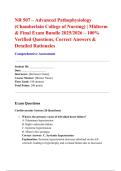
NR 507 – Advanced Pathophysiology
(Chamberlain College of Nursing) | Midterm
& Final Exam Bundle 2025/2026 – 100%
Verified Questions, Correct Answers &
Detailed Rationales
Comprehensive Assessment
Student ID: _________________
Date: _________________
Instructor: [Instructor Name]
Course Mentor: [Mentor Name]
Time Limit: 180 minutes
Total Points: 200 points
Exam Questions
Cardiovascular System (20 Questions)
1. What is the primary cause of left-sided heart failure?
A. Pulmonary hypertension
B. Right ventricular failure
C. Systemic hypertension
D. Mitral valve prolapse
Correct Answer: C. Systemic hypertension
Explanation: Systemic hypertension increases afterload on the left
ventricle, leading to hypertrophy and eventual failure due to increased
, workload and reduced cardiac output.
2. Which condition is most likely to cause cardiogenic shock?
A. Hypovolemia
B. Massive myocardial infarction
C. Sepsis
D. Pulmonary embolism
Correct Answer: B. Massive myocardial infarction
Explanation: A massive myocardial infarction impairs the heart’s ability to
pump blood, reducing cardiac output and leading to systemic hypoperfusion.
3. What is the primary physiological mechanism of atherosclerosis?
A. Smooth muscle relaxation in arterial walls
B. Endothelial injury and lipid accumulation
C. Decreased platelet aggregation
D. Increased nitric oxide production
Correct Answer: B. Endothelial injury and lipid accumulation
Explanation: Atherosclerosis begins with endothelial injury, followed by
lipid infiltration and plaque formation, which narrows arteries and restricts
blood flow.
4. What is the hallmark sign of aortic stenosis?
A. Wide pulse pressure
B. Systolic murmur
C. Diastolic murmur
D. Peripheral edema
Correct Answer: B. Systolic murmur
Explanation: Aortic stenosis causes turbulent blood flow during systole,
producing a characteristic systolic murmur heard over the aortic area.
5. Which electrolyte imbalance is most associated with arrhythmias?
A. Hypercalcemia
B. Hypokalemia
C. Hyponatremia
D. Hyperphosphatemia
, Correct Answer: B. Hypokalemia
Explanation: Hypokalemia disrupts the cardiac membrane potential,
increasing the risk of arrhythmias by altering repolarization.
6. What is the primary compensatory mechanism in early heart failure?
A. Decreased sympathetic activity
B. Increased renin secretion
C. Ventricular hypertrophy
D. Vasodilation
Correct Answer: C. Ventricular hypertrophy
Explanation: Ventricular hypertrophy occurs as the heart compensates for
increased workload by increasing muscle mass to maintain cardiac output.
7. What is the primary cause of secondary hypertension?
A. Essential hypertension
B. Renal artery stenosis
C. Stress
D. High sodium intake
Correct Answer: B. Renal artery stenosis
Explanation: Renal artery stenosis reduces renal perfusion, activating the
renin-angiotensin-aldosterone system, which increases blood pressure.
8. Which condition is associated with a widened pulse pressure?
A. Aortic regurgitation
B. Mitral stenosis
C. Heart failure
D. Pericarditis
Correct Answer: A. Aortic regurgitation
Explanation: Aortic regurgitation allows blood to flow back into the left
ventricle, increasing systolic pressure and decreasing diastolic pressure,
widening the pulse pressure.
9. What is the primary effect of chronic hypertension on the heart?
A. Decreased preload
B. Left ventricular hypertrophy
(Chamberlain College of Nursing) | Midterm
& Final Exam Bundle 2025/2026 – 100%
Verified Questions, Correct Answers &
Detailed Rationales
Comprehensive Assessment
Student ID: _________________
Date: _________________
Instructor: [Instructor Name]
Course Mentor: [Mentor Name]
Time Limit: 180 minutes
Total Points: 200 points
Exam Questions
Cardiovascular System (20 Questions)
1. What is the primary cause of left-sided heart failure?
A. Pulmonary hypertension
B. Right ventricular failure
C. Systemic hypertension
D. Mitral valve prolapse
Correct Answer: C. Systemic hypertension
Explanation: Systemic hypertension increases afterload on the left
ventricle, leading to hypertrophy and eventual failure due to increased
, workload and reduced cardiac output.
2. Which condition is most likely to cause cardiogenic shock?
A. Hypovolemia
B. Massive myocardial infarction
C. Sepsis
D. Pulmonary embolism
Correct Answer: B. Massive myocardial infarction
Explanation: A massive myocardial infarction impairs the heart’s ability to
pump blood, reducing cardiac output and leading to systemic hypoperfusion.
3. What is the primary physiological mechanism of atherosclerosis?
A. Smooth muscle relaxation in arterial walls
B. Endothelial injury and lipid accumulation
C. Decreased platelet aggregation
D. Increased nitric oxide production
Correct Answer: B. Endothelial injury and lipid accumulation
Explanation: Atherosclerosis begins with endothelial injury, followed by
lipid infiltration and plaque formation, which narrows arteries and restricts
blood flow.
4. What is the hallmark sign of aortic stenosis?
A. Wide pulse pressure
B. Systolic murmur
C. Diastolic murmur
D. Peripheral edema
Correct Answer: B. Systolic murmur
Explanation: Aortic stenosis causes turbulent blood flow during systole,
producing a characteristic systolic murmur heard over the aortic area.
5. Which electrolyte imbalance is most associated with arrhythmias?
A. Hypercalcemia
B. Hypokalemia
C. Hyponatremia
D. Hyperphosphatemia
, Correct Answer: B. Hypokalemia
Explanation: Hypokalemia disrupts the cardiac membrane potential,
increasing the risk of arrhythmias by altering repolarization.
6. What is the primary compensatory mechanism in early heart failure?
A. Decreased sympathetic activity
B. Increased renin secretion
C. Ventricular hypertrophy
D. Vasodilation
Correct Answer: C. Ventricular hypertrophy
Explanation: Ventricular hypertrophy occurs as the heart compensates for
increased workload by increasing muscle mass to maintain cardiac output.
7. What is the primary cause of secondary hypertension?
A. Essential hypertension
B. Renal artery stenosis
C. Stress
D. High sodium intake
Correct Answer: B. Renal artery stenosis
Explanation: Renal artery stenosis reduces renal perfusion, activating the
renin-angiotensin-aldosterone system, which increases blood pressure.
8. Which condition is associated with a widened pulse pressure?
A. Aortic regurgitation
B. Mitral stenosis
C. Heart failure
D. Pericarditis
Correct Answer: A. Aortic regurgitation
Explanation: Aortic regurgitation allows blood to flow back into the left
ventricle, increasing systolic pressure and decreasing diastolic pressure,
widening the pulse pressure.
9. What is the primary effect of chronic hypertension on the heart?
A. Decreased preload
B. Left ventricular hypertrophy