
Natural Science Biology Exam #1
Study online at https://quizlet.com/_58dfe8
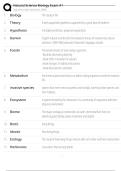
1. Biology The study of life
2. Theory A well supported hypothesis supported by a great deal of evidence
3. Hypothesis A testable prediction, proposed explanation
4. Darwin English natural scientist who formulated a theory of evolution by natural
selection (1809-1882)naturalist Observed Galapagos Islands
5. Fossils Preserved remains of once-living organisms.
-Illustrate decreasing diversity
-show shifts in location for species
-show changes in habitat and species
-show what species coexisted.
6. Metabolism the chemical processes that occur within a living organism in order to maintain
life.
7. invasive species species that enter new ecosystems and multiply, harming native species and
their habitats
8. Ecosystem A system formed by the interaction of a community of organisms with their
physical environment
9. Biome The major ecological communities of earth. (terrestrial’rain forest or
desert/aquatic’salinity, water movement and depth)
10. Biotic living things
11. Abiotic Non-living things
12. Ecology The study of how living things interact with each other and their environment
13. Herbivores Consumers that eat only plants
1/5
, Natural Science Biology Exam #1
Study online at https://quizlet.com/_58dfe8
14. Carnivores Consumers that eat only animals
15. Omnivores Consumers that eat both plants and animals.
16. Decomposers Organisms that break down the dead remains of other organisms
17. Succession The series of predictable changes that occur in a community over time
18. Homeostasis process by which organisms maintain a relatively stable internal environment
19. competitive exclu- the case in which two species battle for resources in the same niche until the
sion more efficient of the two wins and the other is driven to extinction in that
location... red squirrels in Britain....killer bees.
20. Symbiosis A close relationship between two species that benefits at least one of the
species.
21. Parasitism A relationship between two organisms of different species where one benefits
and the other is harmed
22. Commensalism A relationship between two organisms in which one organism benefits and
the other is unaffected
23. Mutualism A relationship between two species in which both species benefit
24. Mimicry The resemblance of one species to another species
25. Photosynthesis Two arrangements of light-absorbing pigments, including chlorophyll, within
the chloroplast that capture energy from the sun and transform it first into the
energy of excited electrons and ultimately into ATP and high-energy electron
carriers such as NADPH.
26. Ecotourism tourism directed toward exotic, often threatened, natural environments, espe-
cially to support conservation efforts and observe wildlife
2/5
Study online at https://quizlet.com/_58dfe8
1. Biology The study of life
2. Theory A well supported hypothesis supported by a great deal of evidence
3. Hypothesis A testable prediction, proposed explanation
4. Darwin English natural scientist who formulated a theory of evolution by natural
selection (1809-1882)naturalist Observed Galapagos Islands
5. Fossils Preserved remains of once-living organisms.
-Illustrate decreasing diversity
-show shifts in location for species
-show changes in habitat and species
-show what species coexisted.
6. Metabolism the chemical processes that occur within a living organism in order to maintain
life.
7. invasive species species that enter new ecosystems and multiply, harming native species and
their habitats
8. Ecosystem A system formed by the interaction of a community of organisms with their
physical environment
9. Biome The major ecological communities of earth. (terrestrial’rain forest or
desert/aquatic’salinity, water movement and depth)
10. Biotic living things
11. Abiotic Non-living things
12. Ecology The study of how living things interact with each other and their environment
13. Herbivores Consumers that eat only plants
1/5
, Natural Science Biology Exam #1
Study online at https://quizlet.com/_58dfe8
14. Carnivores Consumers that eat only animals
15. Omnivores Consumers that eat both plants and animals.
16. Decomposers Organisms that break down the dead remains of other organisms
17. Succession The series of predictable changes that occur in a community over time
18. Homeostasis process by which organisms maintain a relatively stable internal environment
19. competitive exclu- the case in which two species battle for resources in the same niche until the
sion more efficient of the two wins and the other is driven to extinction in that
location... red squirrels in Britain....killer bees.
20. Symbiosis A close relationship between two species that benefits at least one of the
species.
21. Parasitism A relationship between two organisms of different species where one benefits
and the other is harmed
22. Commensalism A relationship between two organisms in which one organism benefits and
the other is unaffected
23. Mutualism A relationship between two species in which both species benefit
24. Mimicry The resemblance of one species to another species
25. Photosynthesis Two arrangements of light-absorbing pigments, including chlorophyll, within
the chloroplast that capture energy from the sun and transform it first into the
energy of excited electrons and ultimately into ATP and high-energy electron
carriers such as NADPH.
26. Ecotourism tourism directed toward exotic, often threatened, natural environments, espe-
cially to support conservation efforts and observe wildlife
2/5

