Robbins & Cotran 10th Ed. Pathology Test Bank | Chapter-
by-Chapter Questions & Verified Solutions
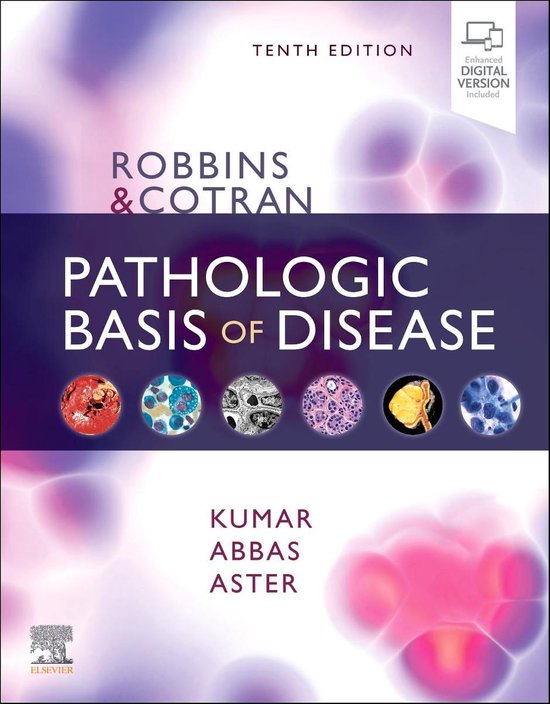
Robbins & Cotran Pathologic Basis of Disease
10th Edition
• Author(s)Vinay Kumar; Abul K. Abbas; Jon C. Aster
The Genome & Epigenetics
1. Chapter 1: The Genome
A 45-year-old female is diagnosed with a malignancy. Research into the cancer's biology
shows that a specific type of long noncoding RNA (lncRNA) is overexpressed, leading to
the silencing of a tumor suppressor gene on one chromosome. Which of the following
mechanisms is most likely involved in this gene silencing?
A. XIST-mediated chromatin condensation and repression of an autosomal chromosome
B. miRNA-mediated degradation of mRNA transcripts from the tumor suppressor gene
C. lncRNA binding to chromatin to restrict RNA polymerase access to a gene segment
D. Sirtuin-mediated deacetylation of histones leading to heterochromatin formation
Correct Answer: C
Rationale for Correct Answer: Long noncoding RNAs (lncRNAs) can bind directly to
chromatin and modify its structure, often recruiting histone-modifying complexes that
restrict access to DNA and silence gene expression without changing the DNA sequence
itself . This is a key epigenetic mechanism.
Rationale for Incorrect Answers: (A) XIST is a specific lncRNA that inactivates one X
,chromosome, not an autosome. (B) miRNA primarily functions by binding to and
inhibiting mRNA translation or promoting its degradation in the cytoplasm, not by
direct chromatin silencing. (D) Sirtuins are enzymes involved in metabolic regulation and
aging through deacetylation, but they are not directly recruited by lncRNAs for targeted
gene silencing in this manner.
Teaching Point: lncRNAs epigenetically silence genes by altering chromatin structure
and limiting DNA access.
2. Chapter 1: The Genome
A patient with a complex inflammatory disease is found to have a specific single-
nucleotide polymorphism (SNP) in a non-coding region of their genome. Which of the
following best explains how this variation most likely contributes to disease
susceptibility?
A. It alters the amino acid sequence of a key regulatory protein.
B. It changes the copy number of a gene involved in immune response.
C. It modifies the regulatory control of gene expression.
D. It causes a truncation mutation in a cell surface receptor.
Correct Answer: C
Rationale for Correct Answer: The vast majority of the human genome is non-coding
and contains regulatory sequences. SNPs in these regions can influence when, where,
and how much a gene is expressed, which can affect an individual's susceptibility to
multifactorial diseases .
Rationale for Incorrect Answers: (A) An SNP that alters a protein sequence would be
located within a coding exon, not a non-coding region. (B) A change in gene copy
number is a Copy Number Variation (CNV), which is a different type of genetic alteration
than an SNP. (D) A truncation mutation is a significant structural change, not a single
nucleotide substitution.
Teaching Point: SNPs in non-coding DNA often influence disease risk by disrupting
gene regulation.
,🧬 Cellular Housekeeping
3. Chapter 1: Cellular Housekeeping
A patient with congestive heart failure develops a chronic cough with rust-colored
sputum. Cytological examination of the sputum reveals numerous macrophages filled
with golden-yellow, intracellular pigment. The accumulation of this pigment,
hemosiderin, is primarily due to the activity of which cellular component?
A. Rough Endoplasmic Reticulum
B. Golgi Apparatus
C. Lysosome
D. Proteasome
Correct Answer: C
Rationale for Correct Answer: Hemosiderin is an iron-storage complex that
accumulates in macrophages following the phagocytosis and breakdown of red blood
cells. This degradation process occurs when phagocytosed material fuses with
lysosomes, which contain enzymes to break down the hemoglobin .
Rationale for Incorrect Answers: (A) and (B) The RER and Golgi apparatus are involved
in the synthesis and processing of proteins, not the degradation of phagocytosed
material. (D) Proteasomes are primarily responsible for degrading ubiquitin-tagged
cytosolic proteins, not entire organelles or phagocytosed red blood cells.
Teaching Point: Lysosomes are essential for the degradation of phagocytosed material,
such as red blood cells in heart failure cells.
4. Chapter 1: Cellular Housekeeping
Laboratory experiments on cells exposed to a toxic chemical show an accumulation of
misfolded proteins in the cytosol. These proteins are tagged with a specific peptide for
destruction. Which of the following substances directly binds to the denatured proteins
to target them for degradation by proteasomes?
A. Caspase
, B. Ubiquitin
C. Hyaluronan
D. Actin
Correct Answer: B
Rationale for Correct Answer: Ubiquitin is a small protein that covalently binds to
damaged or misfolded proteins. This ubiquitin tag serves as a signal for the protein to
be transported to and degraded by a proteasome .
Rationale for Incorrect Answers: (A) Caspases are enzymes that play a key role in
executing apoptosis (programmed cell death). (C) Hyaluronan is an extracellular matrix
component involved in tissue lubrication and hydration. (D) Actin is a cytoskeletal
filament involved in cell structure and movement.
Teaching Point: Ubiquitin-proteasome system targets misfolded cytosolic proteins for
degradation.
🔋 Cellular Metabolism and Mitochondrial Function
5. Chapter 1: Cellular Metabolism and Mitochondrial Function
A patient has a rare genetic disorder that causes severe muscle weakness and fatigue
upon exertion. A muscle biopsy reveals abnormal mitochondria. Which of the following
cellular functions is most directly impaired in this patient?
A. Synthesis of structural proteins
B. Generation of ATP via oxidative phosphorylation
C. Detoxification of reactive oxygen species
D. Regulation of cytosolic calcium levels
Correct Answer: B
Rationale for Correct Answer: The primary function of mitochondria is to generate the
majority of the cell's ATP through the process of oxidative phosphorylation . Defective
by-Chapter Questions & Verified Solutions
Robbins & Cotran Pathologic Basis of Disease
10th Edition
• Author(s)Vinay Kumar; Abul K. Abbas; Jon C. Aster
The Genome & Epigenetics
1. Chapter 1: The Genome
A 45-year-old female is diagnosed with a malignancy. Research into the cancer's biology
shows that a specific type of long noncoding RNA (lncRNA) is overexpressed, leading to
the silencing of a tumor suppressor gene on one chromosome. Which of the following
mechanisms is most likely involved in this gene silencing?
A. XIST-mediated chromatin condensation and repression of an autosomal chromosome
B. miRNA-mediated degradation of mRNA transcripts from the tumor suppressor gene
C. lncRNA binding to chromatin to restrict RNA polymerase access to a gene segment
D. Sirtuin-mediated deacetylation of histones leading to heterochromatin formation
Correct Answer: C
Rationale for Correct Answer: Long noncoding RNAs (lncRNAs) can bind directly to
chromatin and modify its structure, often recruiting histone-modifying complexes that
restrict access to DNA and silence gene expression without changing the DNA sequence
itself . This is a key epigenetic mechanism.
Rationale for Incorrect Answers: (A) XIST is a specific lncRNA that inactivates one X
,chromosome, not an autosome. (B) miRNA primarily functions by binding to and
inhibiting mRNA translation or promoting its degradation in the cytoplasm, not by
direct chromatin silencing. (D) Sirtuins are enzymes involved in metabolic regulation and
aging through deacetylation, but they are not directly recruited by lncRNAs for targeted
gene silencing in this manner.
Teaching Point: lncRNAs epigenetically silence genes by altering chromatin structure
and limiting DNA access.
2. Chapter 1: The Genome
A patient with a complex inflammatory disease is found to have a specific single-
nucleotide polymorphism (SNP) in a non-coding region of their genome. Which of the
following best explains how this variation most likely contributes to disease
susceptibility?
A. It alters the amino acid sequence of a key regulatory protein.
B. It changes the copy number of a gene involved in immune response.
C. It modifies the regulatory control of gene expression.
D. It causes a truncation mutation in a cell surface receptor.
Correct Answer: C
Rationale for Correct Answer: The vast majority of the human genome is non-coding
and contains regulatory sequences. SNPs in these regions can influence when, where,
and how much a gene is expressed, which can affect an individual's susceptibility to
multifactorial diseases .
Rationale for Incorrect Answers: (A) An SNP that alters a protein sequence would be
located within a coding exon, not a non-coding region. (B) A change in gene copy
number is a Copy Number Variation (CNV), which is a different type of genetic alteration
than an SNP. (D) A truncation mutation is a significant structural change, not a single
nucleotide substitution.
Teaching Point: SNPs in non-coding DNA often influence disease risk by disrupting
gene regulation.
,🧬 Cellular Housekeeping
3. Chapter 1: Cellular Housekeeping
A patient with congestive heart failure develops a chronic cough with rust-colored
sputum. Cytological examination of the sputum reveals numerous macrophages filled
with golden-yellow, intracellular pigment. The accumulation of this pigment,
hemosiderin, is primarily due to the activity of which cellular component?
A. Rough Endoplasmic Reticulum
B. Golgi Apparatus
C. Lysosome
D. Proteasome
Correct Answer: C
Rationale for Correct Answer: Hemosiderin is an iron-storage complex that
accumulates in macrophages following the phagocytosis and breakdown of red blood
cells. This degradation process occurs when phagocytosed material fuses with
lysosomes, which contain enzymes to break down the hemoglobin .
Rationale for Incorrect Answers: (A) and (B) The RER and Golgi apparatus are involved
in the synthesis and processing of proteins, not the degradation of phagocytosed
material. (D) Proteasomes are primarily responsible for degrading ubiquitin-tagged
cytosolic proteins, not entire organelles or phagocytosed red blood cells.
Teaching Point: Lysosomes are essential for the degradation of phagocytosed material,
such as red blood cells in heart failure cells.
4. Chapter 1: Cellular Housekeeping
Laboratory experiments on cells exposed to a toxic chemical show an accumulation of
misfolded proteins in the cytosol. These proteins are tagged with a specific peptide for
destruction. Which of the following substances directly binds to the denatured proteins
to target them for degradation by proteasomes?
A. Caspase
, B. Ubiquitin
C. Hyaluronan
D. Actin
Correct Answer: B
Rationale for Correct Answer: Ubiquitin is a small protein that covalently binds to
damaged or misfolded proteins. This ubiquitin tag serves as a signal for the protein to
be transported to and degraded by a proteasome .
Rationale for Incorrect Answers: (A) Caspases are enzymes that play a key role in
executing apoptosis (programmed cell death). (C) Hyaluronan is an extracellular matrix
component involved in tissue lubrication and hydration. (D) Actin is a cytoskeletal
filament involved in cell structure and movement.
Teaching Point: Ubiquitin-proteasome system targets misfolded cytosolic proteins for
degradation.
🔋 Cellular Metabolism and Mitochondrial Function
5. Chapter 1: Cellular Metabolism and Mitochondrial Function
A patient has a rare genetic disorder that causes severe muscle weakness and fatigue
upon exertion. A muscle biopsy reveals abnormal mitochondria. Which of the following
cellular functions is most directly impaired in this patient?
A. Synthesis of structural proteins
B. Generation of ATP via oxidative phosphorylation
C. Detoxification of reactive oxygen species
D. Regulation of cytosolic calcium levels
Correct Answer: B
Rationale for Correct Answer: The primary function of mitochondria is to generate the
majority of the cell's ATP through the process of oxidative phosphorylation . Defective