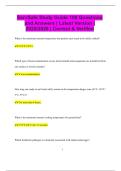
ServSafe Food Handler Test Questions
and Answers | Latest Version |
2025/2026 | Correct & Verified
Why must food handlers report symptoms like vomiting, diarrhea, or jaundice to their manager?
✔✔ To prevent foodborne illness outbreaks.
Why is it important to avoid storing personal items near food prep areas?
✔✔ They can contaminate food with bacteria or chemicals.
Which practices help maintain good personal hygiene for food handlers?
✔✔ Regular handwashing, wearing clean clothing, and keeping hair restrained.
Why should food handlers not work if they have a sore throat with fever?
✔✔ They could spread bacteria or viruses to food.
Which type of footwear is recommended for food handlers?
✔✔ Closed-toe, non-slip shoes that protect against spills and falls.
1
,How should food handlers handle cleaning chemicals in the kitchen?
✔✔ Store them separately from food and use them according to instructions.
Why is it important for food handlers to follow all health department regulations?
✔✔ To protect customers from foodborne illnesses and ensure safe food handling.
Which foods require extra care from food handlers to prevent contamination?
✔✔ Ready-to-eat foods like salads, deli meats, and fresh fruits.
What is the correct procedure if a food handler has a small cut on their finger?
✔✔ Clean it, cover with a waterproof bandage, and wear a glove if handling food.
What is the most important step a food handler can take to prevent foodborne illness?
✔✔ Proper handwashing with soap and warm water.
How long should food handlers scrub their hands during handwashing?
✔✔ At least 20 seconds.
2
, When must food handlers wash their hands?
✔✔ Before handling food, after using the restroom, after touching face or hair, and after
handling raw meat or seafood.
How should a food handler deal with a runny nose while working?
✔✔ Stop working with food, wash hands, and use a tissue or take a break.
Why is it important for food handlers to keep fingernails short and free of nail polish?
✔✔ To reduce the risk of bacteria hiding under nails.
What should food handlers do before putting on gloves?
✔✔ Wash hands thoroughly.
Which food handling practices help prevent cross-contamination?
✔✔ Using separate cutting boards, storing raw food below ready-to-eat foods, and cleaning
surfaces.
Why should food handlers avoid touching their mouths, noses, or hair while preparing food?
3
and Answers | Latest Version |
2025/2026 | Correct & Verified
Why must food handlers report symptoms like vomiting, diarrhea, or jaundice to their manager?
✔✔ To prevent foodborne illness outbreaks.
Why is it important to avoid storing personal items near food prep areas?
✔✔ They can contaminate food with bacteria or chemicals.
Which practices help maintain good personal hygiene for food handlers?
✔✔ Regular handwashing, wearing clean clothing, and keeping hair restrained.
Why should food handlers not work if they have a sore throat with fever?
✔✔ They could spread bacteria or viruses to food.
Which type of footwear is recommended for food handlers?
✔✔ Closed-toe, non-slip shoes that protect against spills and falls.
1
,How should food handlers handle cleaning chemicals in the kitchen?
✔✔ Store them separately from food and use them according to instructions.
Why is it important for food handlers to follow all health department regulations?
✔✔ To protect customers from foodborne illnesses and ensure safe food handling.
Which foods require extra care from food handlers to prevent contamination?
✔✔ Ready-to-eat foods like salads, deli meats, and fresh fruits.
What is the correct procedure if a food handler has a small cut on their finger?
✔✔ Clean it, cover with a waterproof bandage, and wear a glove if handling food.
What is the most important step a food handler can take to prevent foodborne illness?
✔✔ Proper handwashing with soap and warm water.
How long should food handlers scrub their hands during handwashing?
✔✔ At least 20 seconds.
2
, When must food handlers wash their hands?
✔✔ Before handling food, after using the restroom, after touching face or hair, and after
handling raw meat or seafood.
How should a food handler deal with a runny nose while working?
✔✔ Stop working with food, wash hands, and use a tissue or take a break.
Why is it important for food handlers to keep fingernails short and free of nail polish?
✔✔ To reduce the risk of bacteria hiding under nails.
What should food handlers do before putting on gloves?
✔✔ Wash hands thoroughly.
Which food handling practices help prevent cross-contamination?
✔✔ Using separate cutting boards, storing raw food below ready-to-eat foods, and cleaning
surfaces.
Why should food handlers avoid touching their mouths, noses, or hair while preparing food?
3