

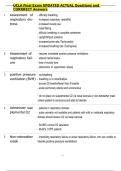
UCLA Final Exam UPDATED ACTUAL Questions and
CORRRECT Answers
1. Assessment of - diflculty breathing
respiratory dis- - increased respiratory rate/effort
tress - increased muscle use
- nasal flaring
- diflculty breathing in complete sentences
- upright/tripod postions
- increased pulse rate (Tachycardia)
- increased breathing rate (Tachypnea)
2. Assessment of - requires immediate positive pressure ventilations
respiratory fail- - altered mental status
ure - loss of muscle tone
- obstruction of upper/lower airway
3. positive pressure - no breathing
ventilation (BVM) - breathing is to slow/shallow
- exceed 28 breaths/fewer than 8 breaths
- acute pulmonary edema and unconscious
* do not place on supplemental O2 via nasal cannula or non-rebreather mask
unless patient is conscious and able to tolerate
4. Administer sup- - patients in respiratory distress
plemental O2 - pulse oximetry not available and patients with mild or moderate respiratory
distress should receive O2 via nasal cannula
- 94-98% normal O2 saturation
- 88-92% COPD patients
5. Non-rebreather - impending respiratory failure or actual respiratory failure, who are unable to
mask tolerate positive-pressure ventilations
, UCLA Final Exam UPDATED ACTUAL Questions and
CORRRECT Answers
- suspected or confirmed exposure to toxins
- patients with a traumatic brain injury
6. Nasal cannula - initial treatment for patients with mild/moderate respiratory distress
- patient vomiting
- patients who need O2 but can't tolerate mask
7. High-flow O2 - severe respiratory distress
via non-re- - shock
breather mask - poor tissue perfusion
- CO2 poisoning
- traumatic brain injury
- diving emergencies
8. Hypoxia - insuflcient O2 delivery to the body cells which may lead to organ ischemia and
eventually death
- signs/symptoms
- increased respiratory rate
- increased HR
- changes in level of consciousness
- restlessness
- irritability
- cyanosis
9. Respiratory rates Adult: 12-20
Child: 15-30
Infant: 25-50
10. Snoring breath - upper airway obstruction, usually caused by the tongue or foreign body
sounds
, UCLA Final Exam UPDATED ACTUAL Questions and
CORRRECT Answers
11. Wheezing breath - obstruction or narrowing of lower airways
sounds
12. Wheezing - high pitched, whistling sound, most heard on expiration
13. Crackles - wet, crackling breath sounds, heard on both inhale and exhale
- may indicate fluid in lungs
14. Rhonchi - mucus in the lungs
- low pitched noisy sound on exhale
- reports productive cough
15. Stridor - upper airway obstruction
- neck/upper part of chest
- high pitched sound on inhale and exhale
16. Epiglottitis - bacterial infection of the epiglottis
- stridor (late sign)
- sore throat
- high fever
- tripod postion
- drooling
- common cold
(Treatment)
- keep them in a position of comfort
- give them high-flow O2
- do not lay them supine
- do not put anything in the mouth
17. Pneumonia - an infectious disease of the lung that damage lung tissue
- begins after a sore throat or cough
CORRRECT Answers
1. Assessment of - diflculty breathing
respiratory dis- - increased respiratory rate/effort
tress - increased muscle use
- nasal flaring
- diflculty breathing in complete sentences
- upright/tripod postions
- increased pulse rate (Tachycardia)
- increased breathing rate (Tachypnea)
2. Assessment of - requires immediate positive pressure ventilations
respiratory fail- - altered mental status
ure - loss of muscle tone
- obstruction of upper/lower airway
3. positive pressure - no breathing
ventilation (BVM) - breathing is to slow/shallow
- exceed 28 breaths/fewer than 8 breaths
- acute pulmonary edema and unconscious
* do not place on supplemental O2 via nasal cannula or non-rebreather mask
unless patient is conscious and able to tolerate
4. Administer sup- - patients in respiratory distress
plemental O2 - pulse oximetry not available and patients with mild or moderate respiratory
distress should receive O2 via nasal cannula
- 94-98% normal O2 saturation
- 88-92% COPD patients
5. Non-rebreather - impending respiratory failure or actual respiratory failure, who are unable to
mask tolerate positive-pressure ventilations
, UCLA Final Exam UPDATED ACTUAL Questions and
CORRRECT Answers
- suspected or confirmed exposure to toxins
- patients with a traumatic brain injury
6. Nasal cannula - initial treatment for patients with mild/moderate respiratory distress
- patient vomiting
- patients who need O2 but can't tolerate mask
7. High-flow O2 - severe respiratory distress
via non-re- - shock
breather mask - poor tissue perfusion
- CO2 poisoning
- traumatic brain injury
- diving emergencies
8. Hypoxia - insuflcient O2 delivery to the body cells which may lead to organ ischemia and
eventually death
- signs/symptoms
- increased respiratory rate
- increased HR
- changes in level of consciousness
- restlessness
- irritability
- cyanosis
9. Respiratory rates Adult: 12-20
Child: 15-30
Infant: 25-50
10. Snoring breath - upper airway obstruction, usually caused by the tongue or foreign body
sounds
, UCLA Final Exam UPDATED ACTUAL Questions and
CORRRECT Answers
11. Wheezing breath - obstruction or narrowing of lower airways
sounds
12. Wheezing - high pitched, whistling sound, most heard on expiration
13. Crackles - wet, crackling breath sounds, heard on both inhale and exhale
- may indicate fluid in lungs
14. Rhonchi - mucus in the lungs
- low pitched noisy sound on exhale
- reports productive cough
15. Stridor - upper airway obstruction
- neck/upper part of chest
- high pitched sound on inhale and exhale
16. Epiglottitis - bacterial infection of the epiglottis
- stridor (late sign)
- sore throat
- high fever
- tripod postion
- drooling
- common cold
(Treatment)
- keep them in a position of comfort
- give them high-flow O2
- do not lay them supine
- do not put anything in the mouth
17. Pneumonia - an infectious disease of the lung that damage lung tissue
- begins after a sore throat or cough

