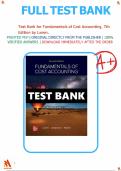
TEST BANK FOR FUNDAMENTALS
OF COST ACCOUNTING 7TH
EDITION WILLIAM LANEN
2025/2026 A+
1
,TABLE OF CONTENTS
INTRODUCTION AND OVERVIEW
1: Cost Accounting: Information for Decision Making
2: Cost Concepts and Behavior
COST ANALYSIS AND ESTIMATION
3: Fundamentals of Cost-Volume-Profit Analysis
4: Fundamentals of Cost Analysis for Decision Making
5: Cost Estimation
COST MANAGEMENT SYSTEMS
6: Fundamentals of Product and Service Costing
7: Job Costing
8: Process Costing
9: Activity-Based Costing
10: Fundamentals of Cost Management
11: Service Department and Joint Cost Allocation
MANAGEMENT CONTROL SYSTEMS
12: Fundamentals of Management Control Systems
13: Planning and Budgeting
14: Business Unit Performance Measurement
15: Transfer Pricing
16: Fundamentals of Variance Analysis
17: Additional Topics in Variance Analysis
18: Performance Measurement to Support Business Strategy
2 Fundamentals of Cost Accounting, 7e
© McGraw Hill LLC. All rights reserved. No reproduction or distribution without the prior
written consent of McGraw Hill LLC.
,Solution Manual For
Fundamentals Of Cost Accounting 7th Edition William Lanen
1
Cost Accounting: Information For Decision Making
SOLUTIONS TO REVIEW QUESTIONS
1-1.
Among The Goals Of An Organization, A Central One Is To Create And Increase Value. Cost
Accounting Systems Are Designed To Provide Information To Decision Makers In The Organization
With The Information They Need To Accomplish This Goal. Therefore, The Designers Of The Cost
Accounting System Need To Understand How Value Is Created In The Organization To Design
Systems For Their Organization.
1-2.
Financial Accounting Is Designed To Provide Information About The Firm To External Users.
External Users Include Investors, Creditors, Government Authorities, Regulators, Customers,
Competitors, Suppliers, Labor Unions, And So On. Cost Accounting Systems Are Designed To
Provide Information To Internal Users (Managers).
This Difference Is Important, Because It Affects The Design Of The Systems. Financial Accounting
Systems Are Based On Standards Or Rules. This Allows The User To Compare The Results Of
Different Firms. Managerial Accounting Systems Do Not Require Rules. Each Firm Is Free To
Develop Managerial Accounting Systems That Best Serve The Needs Of The Decision Makers
(Managers).
1-3.
B Providing Cost Information For Financial Reporting A
Identifying The Best Store In A Chain
3
, C Determining Which Plant To Use For Production
1-4.
The Value Chain Is The Set Of Activities That Transforms Raw Resources Into The Goods And
Services End Users Purchase And Consume. The Supply Chain Includes The Set Of Firms And
Individuals That Sells Goods And Services To The Firm. The Distribution Chain Is The Set Of Firms
And Individuals That Buys And Distributes Goods And Services From The Firm.
1-5.
The Customers Of Cost Accounting Are Managers, From Plant Managers To The Ceo.
1-6.
Value-Added Activities Are Activities That Customers Perceive As Adding Utility To The Goods Or
Services They Purchase. Nonvalue-Added Activities Do Not Add Value To The Goods Or Services.
By Classifying Costs This Way, The Cost Accounting System Can Help The Manager Identify Areas
(Processes) That Can Be Improved, Lowering Costs And Adding Value To The Organization.
1-7.
Answers Will Vary, But Should Include Some Of The Following:
Title Major Responsibilities And Major Duties Chief
Financial Officer (Cfo) ....
Treasurer.................................
Conducts Business With Banks And Other
Financial Institutions
Oversees Public Issues Of Stock And Debt
Controller.................................
Systems
Internal Auditor ........................ Laws, Regulations, And
Company Policies And Procedures
Provides Consulting And Auditing Services Within The
Firm
Cost Accountant ......................
Costs
Works With Financial And Operational Manager To
4 Fundamentals of Cost Accounting, 7e
© McGraw Hill LLC. All rights reserved. No reproduction or distribution without the prior
written consent of McGraw Hill LLC.
OF COST ACCOUNTING 7TH
EDITION WILLIAM LANEN
2025/2026 A+
1
,TABLE OF CONTENTS
INTRODUCTION AND OVERVIEW
1: Cost Accounting: Information for Decision Making
2: Cost Concepts and Behavior
COST ANALYSIS AND ESTIMATION
3: Fundamentals of Cost-Volume-Profit Analysis
4: Fundamentals of Cost Analysis for Decision Making
5: Cost Estimation
COST MANAGEMENT SYSTEMS
6: Fundamentals of Product and Service Costing
7: Job Costing
8: Process Costing
9: Activity-Based Costing
10: Fundamentals of Cost Management
11: Service Department and Joint Cost Allocation
MANAGEMENT CONTROL SYSTEMS
12: Fundamentals of Management Control Systems
13: Planning and Budgeting
14: Business Unit Performance Measurement
15: Transfer Pricing
16: Fundamentals of Variance Analysis
17: Additional Topics in Variance Analysis
18: Performance Measurement to Support Business Strategy
2 Fundamentals of Cost Accounting, 7e
© McGraw Hill LLC. All rights reserved. No reproduction or distribution without the prior
written consent of McGraw Hill LLC.
,Solution Manual For
Fundamentals Of Cost Accounting 7th Edition William Lanen
1
Cost Accounting: Information For Decision Making
SOLUTIONS TO REVIEW QUESTIONS
1-1.
Among The Goals Of An Organization, A Central One Is To Create And Increase Value. Cost
Accounting Systems Are Designed To Provide Information To Decision Makers In The Organization
With The Information They Need To Accomplish This Goal. Therefore, The Designers Of The Cost
Accounting System Need To Understand How Value Is Created In The Organization To Design
Systems For Their Organization.
1-2.
Financial Accounting Is Designed To Provide Information About The Firm To External Users.
External Users Include Investors, Creditors, Government Authorities, Regulators, Customers,
Competitors, Suppliers, Labor Unions, And So On. Cost Accounting Systems Are Designed To
Provide Information To Internal Users (Managers).
This Difference Is Important, Because It Affects The Design Of The Systems. Financial Accounting
Systems Are Based On Standards Or Rules. This Allows The User To Compare The Results Of
Different Firms. Managerial Accounting Systems Do Not Require Rules. Each Firm Is Free To
Develop Managerial Accounting Systems That Best Serve The Needs Of The Decision Makers
(Managers).
1-3.
B Providing Cost Information For Financial Reporting A
Identifying The Best Store In A Chain
3
, C Determining Which Plant To Use For Production
1-4.
The Value Chain Is The Set Of Activities That Transforms Raw Resources Into The Goods And
Services End Users Purchase And Consume. The Supply Chain Includes The Set Of Firms And
Individuals That Sells Goods And Services To The Firm. The Distribution Chain Is The Set Of Firms
And Individuals That Buys And Distributes Goods And Services From The Firm.
1-5.
The Customers Of Cost Accounting Are Managers, From Plant Managers To The Ceo.
1-6.
Value-Added Activities Are Activities That Customers Perceive As Adding Utility To The Goods Or
Services They Purchase. Nonvalue-Added Activities Do Not Add Value To The Goods Or Services.
By Classifying Costs This Way, The Cost Accounting System Can Help The Manager Identify Areas
(Processes) That Can Be Improved, Lowering Costs And Adding Value To The Organization.
1-7.
Answers Will Vary, But Should Include Some Of The Following:
Title Major Responsibilities And Major Duties Chief
Financial Officer (Cfo) ....
Treasurer.................................
Conducts Business With Banks And Other
Financial Institutions
Oversees Public Issues Of Stock And Debt
Controller.................................
Systems
Internal Auditor ........................ Laws, Regulations, And
Company Policies And Procedures
Provides Consulting And Auditing Services Within The
Firm
Cost Accountant ......................
Costs
Works With Financial And Operational Manager To
4 Fundamentals of Cost Accounting, 7e
© McGraw Hill LLC. All rights reserved. No reproduction or distribution without the prior
written consent of McGraw Hill LLC.