
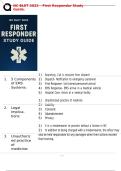
NC BLET 2022 – First Responder Study
Guide.
1) Reporting- Call is received from dispatch
1. 5 Components 2) Dispatch- Notification to emergency personnel
of EMS 3) First Response- 1st trained personnel arrival
Systems: 4) EMS Response- EMS arrive in a medical vehicle
5) Hospital Care- Arrive at a medical facility
1) Unauthorized practice of medicine
2) Liability
2. Legal 3) Consent
Implica-
4) Abandonment
tions:
5) Privacy
1) it is a misdemeanor to practice without a license in NC
2) In addition to being charged with a misdemeanor, the oflcer may
also be held responsible for any damages when their actions exceed
3. Unauthoriz
ed practice their training.
of
medicine:
, NC BLET 2022 – First Responder Study
Guide.
4. Liability: Providing care to the level of your training and to the best of your ability
paramount.
5. An officer the plaintitt must prove gross negligence, wanton conduct, or intentional
should realize wrong- doing.
that if sued
[after pro-
viding emer-
gency
medical care]:
-There is a reasonable expectation of prompt decisions and action in
6. First Aid
medical care, AND
(Good
Samaritan -The necessity of immediate medical care or the delay in rendering medical
Law): care, would seriously worsen the physical condition or endanger the life
of the person.
Be liable for any injuries alleged to have been sustained by the person
7. [Under the or death of the person alleged to have occurred by an act or omission
Good in the rendering of
Samaritan
law,]
, NC BLET 2022 – First Responder Study
Guide.
the person the treatment UNLESS it is established that the injuries or death was
shall NOT: caused by gross negligence, wanton conduct or intentional wrongdoing
on the part of the person rendering the treatment.
8. Types of -Actual
Con- sent:
-Implied
9. Actual Consent: If a person is conscious and the person's judgment appears unimpaire
you
should obtain his/her consent before treatment.
If an individual were to refuse treatment and the oflcer was to provide care,
the oflcer may be considered to have committed an assault upon the
individual (and may be held responsible for any damages that resulted
from their treatment).
10. Implied Consent: If an individual is unconscious or the individual's judgment and
ability to respond is impaired, medical care should NOT be delayed
for lack of consent because the law presumes that the individual
consents to be treated in those circumstances.
However, if anyone present is authorized to give consent, such as next of kin, it
may be best practice to act and work with EMS personnel to obtain
consent.
Either way, DOCUMENT that consent was given.
11. Abandonment: If an oflcer responds to a medical emergency, the oflcer should not
leave the
individual until relieved by someone with equal or greater training.
Leaving beforehand may constitute abandonment and may result in legal
action being brought against the oflcer.
12. Health Insur- ance Portability and Accountabili- ty Act
, NC BLET 2022 – First Responder Study
Guide.
(HIPAA): Addresses the prohibitions against the release of individual information
by health care providers and similar entities.
Guide.
1) Reporting- Call is received from dispatch
1. 5 Components 2) Dispatch- Notification to emergency personnel
of EMS 3) First Response- 1st trained personnel arrival
Systems: 4) EMS Response- EMS arrive in a medical vehicle
5) Hospital Care- Arrive at a medical facility
1) Unauthorized practice of medicine
2) Liability
2. Legal 3) Consent
Implica-
4) Abandonment
tions:
5) Privacy
1) it is a misdemeanor to practice without a license in NC
2) In addition to being charged with a misdemeanor, the oflcer may
also be held responsible for any damages when their actions exceed
3. Unauthoriz
ed practice their training.
of
medicine:
, NC BLET 2022 – First Responder Study
Guide.
4. Liability: Providing care to the level of your training and to the best of your ability
paramount.
5. An officer the plaintitt must prove gross negligence, wanton conduct, or intentional
should realize wrong- doing.
that if sued
[after pro-
viding emer-
gency
medical care]:
-There is a reasonable expectation of prompt decisions and action in
6. First Aid
medical care, AND
(Good
Samaritan -The necessity of immediate medical care or the delay in rendering medical
Law): care, would seriously worsen the physical condition or endanger the life
of the person.
Be liable for any injuries alleged to have been sustained by the person
7. [Under the or death of the person alleged to have occurred by an act or omission
Good in the rendering of
Samaritan
law,]
, NC BLET 2022 – First Responder Study
Guide.
the person the treatment UNLESS it is established that the injuries or death was
shall NOT: caused by gross negligence, wanton conduct or intentional wrongdoing
on the part of the person rendering the treatment.
8. Types of -Actual
Con- sent:
-Implied
9. Actual Consent: If a person is conscious and the person's judgment appears unimpaire
you
should obtain his/her consent before treatment.
If an individual were to refuse treatment and the oflcer was to provide care,
the oflcer may be considered to have committed an assault upon the
individual (and may be held responsible for any damages that resulted
from their treatment).
10. Implied Consent: If an individual is unconscious or the individual's judgment and
ability to respond is impaired, medical care should NOT be delayed
for lack of consent because the law presumes that the individual
consents to be treated in those circumstances.
However, if anyone present is authorized to give consent, such as next of kin, it
may be best practice to act and work with EMS personnel to obtain
consent.
Either way, DOCUMENT that consent was given.
11. Abandonment: If an oflcer responds to a medical emergency, the oflcer should not
leave the
individual until relieved by someone with equal or greater training.
Leaving beforehand may constitute abandonment and may result in legal
action being brought against the oflcer.
12. Health Insur- ance Portability and Accountabili- ty Act
, NC BLET 2022 – First Responder Study
Guide.
(HIPAA): Addresses the prohibitions against the release of individual information
by health care providers and similar entities.

