European law
Inhoudsopgave
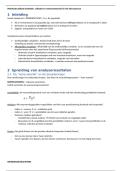
Lecture week 1 Judicial protection against the EU institutions............................................2
Tutorial................................................................................................................................................. 6
Lecture week 2 Judicial Protection against the EU Member States.....................................11
Tutorial............................................................................................................................................... 16
Lecture week 3 Regulating the Internal Market................................................................19
Tutorial............................................................................................................................................... 23
Probleem: Vrij verkeer wint bijna altijd van fundamentele rechten.................................................26
Waarom is dit zo?............................................................................................................................ 26
Gevolgen: Wat is het probleem?..................................................................................................... 26
Oplossingen: Hoe kan het beter?.................................................................................................... 26
Conclusie: Wat moet er gebeuren?.................................................................................................26
Het probleem: de huidige benadering van het Hof..........................................................................27
Gevolgen van dit probleem............................................................................................................. 27
De oplossing die het artikel voorstelt..............................................................................................27
Conclusie......................................................................................................................................... 28
Lecture week 4 Free movement of persons and EU citizenship..........................................28
Tutorial............................................................................................................................................... 31
Lecture week 5 Criminal EU law.......................................................................................34
Tutorial............................................................................................................................................... 38
Lecture week 6 Environment law.....................................................................................40
Tutorial............................................................................................................................................... 42
Lecture week 7 Competition law......................................................................................46
Tutorial............................................................................................................................................... 48
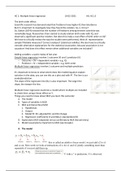
Waarom milieubescherming wel mee moet tellen in mededingingsrecht(drie argumenten): 1.
Juridisch argument: Het Verdrag verplicht het....................................................................................52
2. Governance-argument: Interne markt & milieu moeten samen werken......................................52
3. Economisch argument: Milieu kan deel zijn van efficiëntie.........................................................52
Belangrijk uitgangspunt: Proportionaliteit Milieubescherming mag mededingingsregels
beperken, maar alleen als het proportioneel is. Dus: het moet een geschikt en noodzakelijk middel
zijn, niet overdreven zwaar................................................................................................................ 52
, Lecture week 1 Judicial protection against the EU institutions
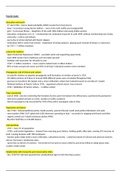
The central player in the legal protection against the EU: the CJEU: one institution consisting of two
separates.
The court of justice of the European union (cjeu)
European Court of Justice ECJ Senior Body of the CJEU
- 27 judges dealing inter alia with 263 actions from certain privileged applicants, appeal cases from
the General court and with 258 actions against the MS
General Court GC Junior Body of the CJEU
- 54 judges dealing inter alia with 263 actions from non-privileged applicants
EU power; fundamental rights, the rule of law and access to justice
The history of fundamental rights protection in the EU
General principles of EU law art 6 lid 3 TEU
The charter of fundamental rights art 6 lid 1 TEU
EU fundamental rights always apply to the EU
- And to the EU member states when they implement EU law, see art 51 lid 1 CFR
EU accession to the ECHR art 6 lid 2 TEU
But what good are EU human rights if you cannot access an independent court to enforce them
upon the EU Institutions (human rights are pointless without the rule of law /and the rule of law is
pointless without human rights)
EU non accession to the ECHR
EU is not a party, the members are
Yet, all EU MS are parties to the ECHR
The EU is ‘Inspired’ by the ECHR (‘General Principles’; art 6 (3) TEU)
But not legally Bound!
The EU, the rule of law and fundamental rights
A key Provision in which it all comes together is Article 47 of the EU Charter of Fundamental rights:
“Everyone is entitled to a fair and public hearing within a reasonable time by an independent and impartial
tribunal previously established by law”
the question of this week: does the EU itself live up to its own rule of artikel 47 CFR
How to challenge in a court the legality of EU acts?
I. Direct Actions:
I.a. Action for Annulment (art. 263 TFEU)
I.b Action for Failure to Act (art. 265 TFEU) (more or less mirroring 263 TFEU)
,I.c Action for Damages (art. 268 in conjunction with 340 TFEU)
* Against the EU, not against the EU MSF
And yet: the same conditions apply in principle (see Francovich /Brasserie de Pecheur /Bergaderm)
II Indirect Action - Preliminary References
Incidental Recourse / incidental actions
- Both Always connected to (incidental to) a direct recourse
A Plea of illegality (277 TFEU)
B. Asking the (President of the) ECJ or (President of the) GC for Interim Measures ( TFEU)
EU regulation based on the wrong legal basis: invalid commission decision based on the invalid EU
regulations
Challenging the legality of EU acts via national courts: The Preliminary Reference Procedure (267 TFEU)
National Courts asking the ECJ a question on the legality of an EU act in the course of national
proceedings
Justified doubts on the legality of the EU act? The Member State Court MUST refer the question
(Foto Frost) you can declare EU act valid but never invalid
See UPA (C-50/00 P), par 40: ‘the Treaty has established a complete system of legal remedies and
procedures designed to ensure judicial review of the legality of acts of the institutions’
The Big Question for this week: is this true?
The action for Annulment
It gets you directly before the CJEU (263 TFEU) to challenge an EU act
On what grounds can ‘Luxemburg’ annul the EU Act?
- Lack of competence
- Infringement of an essential procedural requirement
- Infringement of the Treaties or of any rule of law relating to their application
- Abuse of power
Lid 6 art 263 TFEU Deadline: 2 Months risking non-admissibility of the action, e.g. Germany v EP and
Council (‘Tobacco Case’)
Action for Annulment II
What EU Acts are reviewable under 263 TFEU?
All acts of the EU Institutions (Council, EP, Commission), intended to produce legal effects The ‘label’ is not
decisive (e.g. case 60/81 IBM)
Not reviewable are:
A. preparatory measures (eg ‘decisions’ by COREPER); see also again IBM).
B. Acts of the EU Member States (see for that next week)
- national acts
- international acts (Bangladesh case; ‘EU- Turkey Deal’ from 2016)
- Primary EU Law (that too is law emanating from the MS)
Action for Annulment III
EU Acts intended to produce legal effects: could also include
European Council acts (with legal consequences for third parties)
European Parliament acts (with legal consequences for third parties; see les Verts)
AND: ‘Bodies, Offices and Agencies of the EU; E.g. the EUIPO in Alicante on EU Trademarks etc. or the EMA
in Amsterdam
Action for Annulment IV
Legal Consequences: 264 TFEU
, Annulment is ex tunc and erga omnes
Unless the CJEU decides otherwise (264, second sentence, TFEU)
Example: The Student Directive Case in which the EP successfully had the Student Directive annulled (but
did not want to hurt students).
Action for Annulment V; Locus Standi
Locus Standi = admissibility of the litigant / plaintiff
Under 263 TFEU there are ‘Haves’ and Have-Nots’
1. ‘The Haves’ (privileged applicants):the 27 EU MS, the Council, the Commission, The European
Parliament
‘1,5’ The ‘in between’ category of the semi-privileged: The European Central Bank, The Court of
Auditors and the Committee of the Regions (‘safeguarding their prerogatives’)
2. The ‘Have-Nots’ (non-privileged applicants): Citizens and Businesses in the EU (the general public)
Action for Annulment: ‘The Haves’
The CJEU is always open to them (respecting the 2 month’s time though)
Litigative interest is not a requirement
E.g.; can a MS Government challenge an act it had supported earlier in the EU Council of Ministers?
Who exactly are ‘EU Member States’ for the purposes of Art. 263 TFEU?
Action for Annulment; ‘The ‘Have-nots’’ I
The non-privileged plaintiffs: private persons, businesses, (environmental) NGO’s
Read art. 263, section 4, TFEU: your action against an EU act is admissible IF: :
- You are its addressee
OR:
- You are Not its addressee, but the act concerns you DIRECTLY and INDIVIDUALLY.
- This could be:
- an EU act addressed to another (legal) person, e.g. to a Member State
- an EU Act addressed to everyone (addressed to an ‘open group’ of subjects)
- an EU act that qualifies as a ‘regulatory act not entailing implementing measures’ and that
affects you directly (but NOT individually) (the ‘Lisbon test’)
When are you ‘directly concerned’ by an EU act?
1. Is there an ‘intermediary player’ between you and the EU act (e.g. your Member State)?
2. Does that intermediary player have discretionary powers of its own?
3. Is your problem really with the EU or with how that intermediary player used its discretionary
power?
When are you ‘directly concerned’ by an EU act?
Imagine Herr Plaumann cannot import clementines cheaply because the German Government decided to
not use an option granted to it by the EU Commission
Directly concerned?
Commission Decision addressed to Germany: you can increase tariffs for clementines or not!
German implementing act: we increase the tariffs for clementines
Plauman must pay higher tariffs for his clementines
Inhoudsopgave
Lecture week 1 Judicial protection against the EU institutions............................................2
Tutorial................................................................................................................................................. 6
Lecture week 2 Judicial Protection against the EU Member States.....................................11
Tutorial............................................................................................................................................... 16
Lecture week 3 Regulating the Internal Market................................................................19
Tutorial............................................................................................................................................... 23
Probleem: Vrij verkeer wint bijna altijd van fundamentele rechten.................................................26
Waarom is dit zo?............................................................................................................................ 26
Gevolgen: Wat is het probleem?..................................................................................................... 26
Oplossingen: Hoe kan het beter?.................................................................................................... 26
Conclusie: Wat moet er gebeuren?.................................................................................................26
Het probleem: de huidige benadering van het Hof..........................................................................27
Gevolgen van dit probleem............................................................................................................. 27
De oplossing die het artikel voorstelt..............................................................................................27
Conclusie......................................................................................................................................... 28
Lecture week 4 Free movement of persons and EU citizenship..........................................28
Tutorial............................................................................................................................................... 31
Lecture week 5 Criminal EU law.......................................................................................34
Tutorial............................................................................................................................................... 38
Lecture week 6 Environment law.....................................................................................40
Tutorial............................................................................................................................................... 42
Lecture week 7 Competition law......................................................................................46
Tutorial............................................................................................................................................... 48
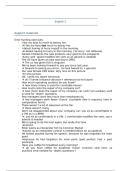
Waarom milieubescherming wel mee moet tellen in mededingingsrecht(drie argumenten): 1.
Juridisch argument: Het Verdrag verplicht het....................................................................................52
2. Governance-argument: Interne markt & milieu moeten samen werken......................................52
3. Economisch argument: Milieu kan deel zijn van efficiëntie.........................................................52
Belangrijk uitgangspunt: Proportionaliteit Milieubescherming mag mededingingsregels
beperken, maar alleen als het proportioneel is. Dus: het moet een geschikt en noodzakelijk middel
zijn, niet overdreven zwaar................................................................................................................ 52
, Lecture week 1 Judicial protection against the EU institutions
The central player in the legal protection against the EU: the CJEU: one institution consisting of two
separates.
The court of justice of the European union (cjeu)
European Court of Justice ECJ Senior Body of the CJEU
- 27 judges dealing inter alia with 263 actions from certain privileged applicants, appeal cases from
the General court and with 258 actions against the MS
General Court GC Junior Body of the CJEU
- 54 judges dealing inter alia with 263 actions from non-privileged applicants
EU power; fundamental rights, the rule of law and access to justice
The history of fundamental rights protection in the EU
General principles of EU law art 6 lid 3 TEU
The charter of fundamental rights art 6 lid 1 TEU
EU fundamental rights always apply to the EU
- And to the EU member states when they implement EU law, see art 51 lid 1 CFR
EU accession to the ECHR art 6 lid 2 TEU
But what good are EU human rights if you cannot access an independent court to enforce them
upon the EU Institutions (human rights are pointless without the rule of law /and the rule of law is
pointless without human rights)
EU non accession to the ECHR
EU is not a party, the members are
Yet, all EU MS are parties to the ECHR
The EU is ‘Inspired’ by the ECHR (‘General Principles’; art 6 (3) TEU)
But not legally Bound!
The EU, the rule of law and fundamental rights
A key Provision in which it all comes together is Article 47 of the EU Charter of Fundamental rights:
“Everyone is entitled to a fair and public hearing within a reasonable time by an independent and impartial
tribunal previously established by law”
the question of this week: does the EU itself live up to its own rule of artikel 47 CFR
How to challenge in a court the legality of EU acts?
I. Direct Actions:
I.a. Action for Annulment (art. 263 TFEU)
I.b Action for Failure to Act (art. 265 TFEU) (more or less mirroring 263 TFEU)
,I.c Action for Damages (art. 268 in conjunction with 340 TFEU)
* Against the EU, not against the EU MSF
And yet: the same conditions apply in principle (see Francovich /Brasserie de Pecheur /Bergaderm)
II Indirect Action - Preliminary References
Incidental Recourse / incidental actions
- Both Always connected to (incidental to) a direct recourse
A Plea of illegality (277 TFEU)
B. Asking the (President of the) ECJ or (President of the) GC for Interim Measures ( TFEU)
EU regulation based on the wrong legal basis: invalid commission decision based on the invalid EU
regulations
Challenging the legality of EU acts via national courts: The Preliminary Reference Procedure (267 TFEU)
National Courts asking the ECJ a question on the legality of an EU act in the course of national
proceedings
Justified doubts on the legality of the EU act? The Member State Court MUST refer the question
(Foto Frost) you can declare EU act valid but never invalid
See UPA (C-50/00 P), par 40: ‘the Treaty has established a complete system of legal remedies and
procedures designed to ensure judicial review of the legality of acts of the institutions’
The Big Question for this week: is this true?
The action for Annulment
It gets you directly before the CJEU (263 TFEU) to challenge an EU act
On what grounds can ‘Luxemburg’ annul the EU Act?
- Lack of competence
- Infringement of an essential procedural requirement
- Infringement of the Treaties or of any rule of law relating to their application
- Abuse of power
Lid 6 art 263 TFEU Deadline: 2 Months risking non-admissibility of the action, e.g. Germany v EP and
Council (‘Tobacco Case’)
Action for Annulment II
What EU Acts are reviewable under 263 TFEU?
All acts of the EU Institutions (Council, EP, Commission), intended to produce legal effects The ‘label’ is not
decisive (e.g. case 60/81 IBM)
Not reviewable are:
A. preparatory measures (eg ‘decisions’ by COREPER); see also again IBM).
B. Acts of the EU Member States (see for that next week)
- national acts
- international acts (Bangladesh case; ‘EU- Turkey Deal’ from 2016)
- Primary EU Law (that too is law emanating from the MS)
Action for Annulment III
EU Acts intended to produce legal effects: could also include
European Council acts (with legal consequences for third parties)
European Parliament acts (with legal consequences for third parties; see les Verts)
AND: ‘Bodies, Offices and Agencies of the EU; E.g. the EUIPO in Alicante on EU Trademarks etc. or the EMA
in Amsterdam
Action for Annulment IV
Legal Consequences: 264 TFEU
, Annulment is ex tunc and erga omnes
Unless the CJEU decides otherwise (264, second sentence, TFEU)
Example: The Student Directive Case in which the EP successfully had the Student Directive annulled (but
did not want to hurt students).
Action for Annulment V; Locus Standi
Locus Standi = admissibility of the litigant / plaintiff
Under 263 TFEU there are ‘Haves’ and Have-Nots’
1. ‘The Haves’ (privileged applicants):the 27 EU MS, the Council, the Commission, The European
Parliament
‘1,5’ The ‘in between’ category of the semi-privileged: The European Central Bank, The Court of
Auditors and the Committee of the Regions (‘safeguarding their prerogatives’)
2. The ‘Have-Nots’ (non-privileged applicants): Citizens and Businesses in the EU (the general public)
Action for Annulment: ‘The Haves’
The CJEU is always open to them (respecting the 2 month’s time though)
Litigative interest is not a requirement
E.g.; can a MS Government challenge an act it had supported earlier in the EU Council of Ministers?
Who exactly are ‘EU Member States’ for the purposes of Art. 263 TFEU?
Action for Annulment; ‘The ‘Have-nots’’ I
The non-privileged plaintiffs: private persons, businesses, (environmental) NGO’s
Read art. 263, section 4, TFEU: your action against an EU act is admissible IF: :
- You are its addressee
OR:
- You are Not its addressee, but the act concerns you DIRECTLY and INDIVIDUALLY.
- This could be:
- an EU act addressed to another (legal) person, e.g. to a Member State
- an EU Act addressed to everyone (addressed to an ‘open group’ of subjects)
- an EU act that qualifies as a ‘regulatory act not entailing implementing measures’ and that
affects you directly (but NOT individually) (the ‘Lisbon test’)
When are you ‘directly concerned’ by an EU act?
1. Is there an ‘intermediary player’ between you and the EU act (e.g. your Member State)?
2. Does that intermediary player have discretionary powers of its own?
3. Is your problem really with the EU or with how that intermediary player used its discretionary
power?
When are you ‘directly concerned’ by an EU act?
Imagine Herr Plaumann cannot import clementines cheaply because the German Government decided to
not use an option granted to it by the EU Commission
Directly concerned?
Commission Decision addressed to Germany: you can increase tariffs for clementines or not!
German implementing act: we increase the tariffs for clementines
Plauman must pay higher tariffs for his clementines