

Escrito por estudiantes que aprobaron Inmediatamente disponible después del pago Leer en línea o como PDF ¿Documento equivocado? Cámbialo gratis 4,6 TrustPilot
logo-home
Document preview thumbnail
Vista previa 3 fuera de 16 páginas
Examen

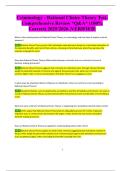
Criminology - Rational Choice Theory Test- Comprehensive Review *Q&A* (100% Correct) 2025/2026 |VERIFIED|

Document preview thumbnail
Vista previa 3 fuera de 16 páginas

Criminology - Rational Choice Theory Test- Comprehensive Review *Q&A* (100% Correct) 2025/2026 |VERIFIED| What is the central premise of Rational Choice Theory in criminology, and how does it explain criminal behavior? Rational Choice Theory posits that individuals make decisions based on a calculated evaluation of the potential benefits and risks of their actions, choosing criminal behavior when they perceive the rewards outweigh the costs. How does Rational Choice Theory differentiate between criminals and non-criminals in terms of decision-making processes? Rational Choice Theory suggests that criminals are individuals who, through rational thinking, weigh the potential rewards of criminal acts against the perceived risks, while non-criminals may perceive higher risks or moral considerations that deter them from engaging in crime. In what ways do situational factors influence an individual's choice to commit a crime according to Rational Choice Theory? Situational factors, such as opportunity, surveillance, and the immediate environment, are seen as crucial in Rational Choice Theory, as they directly affect the perceived costs and benefits of committing a crime. What are some criticisms of Rational Choice Theory in explaining the motivations behind violent crime? Critics argue that Rational Choice Theory fails to adequately account for crimes of passion, impulsive acts, or crimes driven by emotions like anger or fear, which may not involve calculated decision-making processes. How can Rational Choice Theory be applied to understanding white-collar crime? Rational Choice Theory applies to white-collar crime by suggesting that individuals involved in these crimes weigh the perceived rewards (such as financial gain) against the potential consequences (such as getting caught), often concluding the benefits outweigh the risks. 1 Explain how the concept of "bounded rationality" challenges the assumptions of Rational Choice Theory. Bounded rationality argues that individuals do not always have the cognitive resources to make fully rational decisions and may be influenced by limited information, biases, and emotional factors, challenging the notion of perfect decision-making in Rational Choice Theory. How does Rational Choice Theory account for the role of social and environmental influences in criminal decision-making? While Rational Choice Theory primarily focuses on individual decision-making, it acknowledges that environmental and social factors (like peer pressure or lack of opportunities) can influence the choices an individual perceives as rational. What is the relationship between Rational Choice Theory and the concept of deterrence in crime prevention strategies? Rational Choice Theory aligns with deterrence theory, asserting that the certainty, swiftness, and severity of punishment influence an individual's decision to commit crime by making the perceived costs of crime outweigh the potential benefits. Can Rational Choice Theory explain the persistence of crime in areas with high levels of surveillance and policing? Rational Choice Theory suggests that crime persists in highly surveilled areas if individuals believe they can successfully avoid detection, or if the perceived rewards continue to outweigh the risks despite increased surveillance. In the context of Rational Choice Theory, how does an individual's perceived "utility" of committing a crime shape their decision? An individual's perceived utility refers to the subjective value they place on the outcomes of committing a crime, which can include financial gain, revenge, or personal satisfaction, and directly influences their decision to engage in criminal behavior. How does Rational Choice Theory intersect with the concept of "routine activities theory" in explaining crime? Rational Choice Theory complements routine activities theory by emphasizing that crime occurs when a motivated offender, a suitable target, and a lack of capable guardianship converge in a particular context, allowing the offender to weigh the benefits of crime against the risks. 2 How do early childhood experiences challenge the assumptions of Rational Choice Theory regarding free will and decision-making? Early childhood experiences, including exposure to abuse, neglect, or trauma, can impair cognitive development and emotional regulation, challenging the Rational Choice Theory assumption that individuals always make rational decisions based on free will. What role does opportunity play in Rational Choice Theory, and how does it contribute to crime occurrence? Opportunity is a critical factor in Rational Choice Theory, as individuals may choose to commit a crime when they perceive an available, low-risk opportunity that offers substantial rewards with minimal chance of detection or punishment. What is the role of "cost-benefit analysis" in the context of Rational Choice Theory, and how does it impact criminal decisions? Cost-benefit analysis in Rational Choice Theory involves an individual weighing the potential rewards of a crime against the risks or costs (such as legal consequences, social repercussions, or personal harm) to determine whether engaging in criminal behavior is worthwhile. How does Rational Choice Theory account for the role of emotions or psychological states in decision making during criminal behavior? Rational Choice Theory traditionally emphasizes rational decision-making, but it also acknowledges that emotions or psychological states (such as anger, stress, or fear) can influence an individual's perception of rewards and risks, potentially altering their calculations. What are the limitations of Rational Choice Theory in explaining crimes driven by mental illness or irrationality? Rational Choice Theory struggles to explain crimes committed under the influence of mental illness, compulsions, or irrational thinking, where the individual's decision-making may not follow the logical cost-benefit analysis the theory assumes. In what ways can Rational Choice Theory inform the development of crime prevention policies? 3 Rational Choice Theory can guide crime prevention policies by focusing on reducing opportunities for crime, increasing the perceived risks of getting caught (through surveillance or harsher punishments), and altering the benefits of crime through social interventions. How does Rational Choice Theory explain the decision to engage in gang violence or criminal organizations? Rational Choice Theory explains gang violence as a choice made when individuals perceive the benefits of belonging to a gang (such as protection, status, or financial gain) as outweighing the risks, which may include punishment or harm. Can Rational Choice Theory explain all forms of deviant behavior, or are there specific types of crime where it is less applicable? Rational Choice Theory is more applicable to crimes where the individual has the opportunity to weigh costs and benefits, such as property crime or fraud, but less applicable to spontaneous or impulsive crimes, such as violent acts or crimes of passion. How can Rational Choice Theory fully explain the decision to commit property crimes like theft or burglary? Rational Choice Theory explains that property crimes are committed when an individual evaluates the rewards (financial gain, material goods) as more substantial than the perceived risks (getting caught or punished). How does the concept of "marginal deterrence" in Rational Choice Theory impact an individual's decision to commit crime? Marginal deterrence suggests that the severity of punishment must outweigh the benefits of a crime for deterrence to be effective. If the punishment for more serious crimes does not significantly differ from lesser crimes, it can lead to an increase in serious offenses. How does Rational Choice Theory apply to cybercrime, particularly regarding hacking or online fraud? Rational Choice Theory would suggest that individuals engaging in cybercrime weigh the perceived rewards (such as financial gain, anonymity, or minimal physical risk) against the potential risks (such as legal consequences and detection). 4 How does Rational Choice Theory explain the varying motivations behind white-collar crimes, such as embezzlement or insider trading? Rational Choice Theory suggests white-collar criminals weigh the financial benefits of crimes like embezzlement or insider trading as outweighing the legal risks, particularly when the opportunities for committing such crimes are abundant in their professional environments. How does Rational Choice Theory apply to cybercrimes involving hacking or data breaches? Rational Choice Theory explains cybercrimes by highlighting how the perceived rewards (financial gain, intellectual challenge, anonymity) outweigh the perceived risks (legal consequences, detection), especially when opportunities for hacking are readily available. How does Rational Choice Theory explain the participation of individuals in street-level drug dealing? Rational Choice Theory posits that individuals involved in street-level drug dealing assess the perceived rewards (quick cash, status) as outweighing the risks (arrest, violence), particularly in environments where legitimate opportunities are scarce. How can Rational Choice Theory be applied to explain the decision-making process in environmental crimes such as illegal logging or poaching? Rational Choice Theory explains environmental crimes by suggesting that individuals involved in illegal logging or poaching may rationalize their actions by perceiving the financial rewards as outweighing the legal and ethical risks, especially when regulations are weak or enforcement is limited. How does Rational Choice Theory address the behavior of individuals involved in human trafficking or exploitation? Rational Choice Theory explains that those involved in human trafficking may weigh the perceived rewards (profit, control, power) as outweighing the legal and moral risks, especially in environments where exploitation is seen as a viable means of economic survival. What role does risk perception play in the decision-making process according to Rational Choice Theory? Risk perception plays a central role in Rational Choice Theory, as individuals assess the likelihood and severity of punishment or harm when deciding whether to engage in criminal behavior, with those perceiving lower risks more likely to commit crime. How does Rational Choice Theory explain the behavior of serial killers or other violent criminals? 5 Rational Choice Theory posits that serial killers or violent criminals often engage in their crimes after carefully calculating the potential rewards (power, control, psychological satisfaction) and perceiving the risks (detection, punishment) as manageable or inconsequential. How can Rational Choice Theory explain the actions of individuals committing crimes during times of economic instability or recession? During times of economic instability, Rational Choice Theory suggests that individuals may perceive the rewards of crime (financial gain, survival) as outweighing the risks, especially when legitimate economic opportunities are limited or inaccessible. How does Rational Choice Theory explain the phenomenon of "crime displacement" when crime is driven out of one area? Crime displacement occurs when crime is driven out of one area but continues in another, which Rational Choice Theory explains by suggesting criminals adjust their behavior and locations based on perceived opportunities and risks, relocating their activities to areas with lower risks and higher rewards. How does Rational Choice Theory explain criminal behavior in the context of organized gangs or criminal syndicates? Rational Choice Theory explains that individuals in gangs or criminal syndicates assess the benefits (money, protection, social belonging) as outweighing the risks (legal consequences, violence, retaliation), especially in an environment where illegal opportunities are abundant and social ties are strong. What are the limitations of Rational Choice Theory in explaining crimes committed under extreme emotional stress or duress? Rational Choice Theory assumes rational calculation of risks and rewards, but it may struggle to explain crimes committed under extreme emotional stress or duress, where decisions are more impulsive or driven by emotional triggers rather than logical assessments of costs and benefits. How does Rational Choice Theory address the role of societal norms and values in criminal decision making? Societal norms and values influence the decision-making process by shaping an individual’s understanding of acceptable behavior. Rational Choice Theory suggests that individuals weigh these norms against potential rewards and risks, adjusting their behavior based on how much they value social conformity or deviance. 6 How does Rational Choice Theory explain the behavior of individuals involved in organized crime or drug cartels? Rational Choice Theory posits that individuals involved in organized crime or drug cartels engage in criminal activities because they perceive the rewards (large profits, status, power) as outweighing the risks (punishment, death), especially when the opportunities for crime are well-organized and controlled. How can Rational Choice Theory explain the rise in criminal activity during times of social unrest or political instability? Rational Choice Theory explains that during social unrest or political instability, individuals may perceive the risks of committing crimes as lower due to reduced law enforcement, while the rewards (protest, survival, access to resources) may seem more substantial. What impact does Rational Choice Theory have on understanding the motivations behind hate crimes or terrorism? Rational Choice Theory suggests that individuals may commit hate crimes or acts of terrorism after rationalizing their actions as serving a higher cause or ideological belief, where the perceived benefits (social power, political change) outweigh the risks (punishment, societal rejection). How does Rational Choice Theory apply to crimes committed by "opportunistic offenders," such as shoplifting or petty theft? Opportunistic offenders are guided by Rational Choice Theory, which explains that they engage in crime when the perceived rewards (easy access to goods, financial gain) outweigh the risks (detection, punishment), especially in environments where opportunities for crime arise spontaneously. How does Rational Choice Theory explain the engagement of individuals in street-level prostitution or sex work? Rational Choice Theory suggests that individuals in street-level prostitution or sex work may weigh the immediate rewards (money, survival) against the risks (violence, legal consequences), rationalizing that the benefits outweigh the potential harm. How does Rational Choice Theory apply to crimes of passion, where individuals act impulsively due to emotional triggers? Rational Choice Theory may struggle to fully explain crimes of passion, as these offenses often occur without a calculated cost-benefit analysis, but they can be understood as individuals acting on heightened emotions while momentarily perceiving fewer risks or ignoring consequences. 7 How does Rational Choice Theory explain the decision-making process behind cyberbullying or online harassment? Rational Choice Theory suggests that cyberbullies or online harassers may rationalize their actions by perceiving the benefits (social power, emotional release, anonymity) as outweighing the perceived risks (exposure, social backlash, legal consequences). How does Rational Choice Theory explain the occurrence of “crime waves” or spikes in criminal activity within specific communities? Crime waves or spikes in criminal activity can be explained by Rational Choice Theory, as changes in the community’s social and economic environment may alter the perceived rewards and risks of criminal behavior, leading more individuals to engage in crime during times of opportunity. How can Rational Choice Theory be used to design more effective policing strategies in crime-prone areas? Rational Choice Theory can inform policing strategies by focusing on increasing the perceived risks of crime (e.g., surveillance, community engagement) while reducing opportunities for criminal behavior through environmental design, thereby altering criminals' cost-benefit calculations. How does Rational Choice Theory address the concept of "collective action" in relation to crimes committed by groups, such as riots or protests that turn violent? Rational Choice Theory applies to collective action by suggesting that individuals may join riots or violent protests when they perceive the benefits (social solidarity, ideological expression, excitement) as outweighing the risks (injury, arrest), particularly in situations where the group dynamic influences decision-making. What are the limitations of Rational Choice Theory in explaining crimes committed by individuals who exhibit pathological behaviors, such as compulsive offenders? Rational Choice Theory may struggle to explain crimes committed by compulsive offenders or those with pathological tendencies, as these individuals may not engage in a rational cost-benefit analysis and may act on impulses or internal drives that override logical decision-making. How does Rational Choice Theory explain the commission of fraud in the financial sector, such as Ponzi schemes or accounting fraud? 8 Rational Choice Theory explains that individuals involved in financial fraud perceive the potential rewards (large profits, power) as outweighing the risks (discovery, legal consequences), especially when the opportunities for deception are prevalent in financial systems. How does Rational Choice Theory apply to crimes related to intellectual property theft or piracy? Rational Choice Theory suggests that individuals involved in intellectual property theft or piracy rationalize their actions based on the perceived rewards (financial gain, access to materials) and relatively low risks (difficulty in detection, low punishment). How does Rational Choice Theory address the phenomenon of "desensitization" in individuals involved in repeated violent crime? Desensitization is explained by Rational Choice Theory as individuals becoming less sensitive to the perceived risks of violence as they repeatedly engage in violent behavior, adjusting their cost-benefit calculations based on past experiences and reduced emotional responses to harm. How does Rational Choice Theory account for individuals who commit crimes impulsively without apparent premeditation? Rational Choice Theory traditionally emphasizes premeditation, but it can account for impulsive crimes by considering factors such as situational triggers, emotional responses, or rapid cost-benefit assessments that influence decision-making in the heat of the moment. What role does self-control play in Rational Choice Theory, and how does it affect an individual's propensity to engage in crime? Self-control plays a central role, with individuals having the capacity to weigh short-term rewards against long-term consequences. Those with lower self-control may be more prone to impulsive criminal acts, as they prioritize immediate gratification over future risks. How does Rational Choice Theory explain the prevalence of drug-related crimes? Rational Choice Theory explains drug-related crimes as a result of individuals assessing the benefits (access to drugs, financial gain, social acceptance) as outweighing the risks (legal consequences, health consequences) in specific contexts. How can the application of Rational Choice Theory be used to develop community crime prevention strategies? 9 Rational Choice Theory can inform crime prevention by focusing on reducing the opportunities for crime, increasing surveillance, improving community cohesion, and enhancing social bonds, all of which increase the perceived costs of criminal behavior. How does Rational Choice Theory intersect with the concepts of deterrence and recidivism? Rational Choice Theory suggests that deterrence and recidivism are influenced by the perceived costs of re-offending, where a higher risk of detection and punishment may reduce the likelihood of re offending, but repeated exposure to punishment may diminish its deterrent effect. How does the “profit motive” factor into Rational Choice Theory in explaining property crimes like burglary or theft? The profit motive is central to Rational Choice Theory, as individuals are seen as committing property crimes when the perceived benefits (financial gain, material goods) outweigh the costs (getting caught, injury, legal consequences). How can Rational Choice Theory be used to explain the decision to engage in online fraud or identity theft? Rational Choice Theory explains online fraud and identity theft as crimes committed when the perceived rewards (financial gain, anonymity) outweigh the risks (detection, legal consequences), and opportunities for these crimes are more abundant in digital environments. What impact does social inequality have on an individual’s rational decision-making in committing crime, according to Rational Choice Theory? Social inequality can influence crime by altering the perceived opportunities and risks, where disadvantaged individuals may perceive fewer legitimate opportunities and thus rationalize engaging in crime as a more viable option to achieve desired rewards. How does Rational Choice Theory explain the persistence of criminal behavior despite awareness of legal consequences? Rational Choice Theory posits that criminal behavior persists when individuals calculate that the potential rewards still outweigh the risks, particularly when they believe they can evade detection or when penalties for crime are perceived as mild or unlikely. How does the Rational Choice Theory explain the relationship between poverty and crime? 10 Rational Choice Theory explains that individuals in poverty may commit crimes because they perceive the benefits (financial stability, access to resources) as outweighing the risks, particularly when legitimate opportunities are scarce or perceived as inaccessible. What is the significance of "moral reasoning" in the application of Rational Choice Theory to criminal behavior? Moral reasoning impacts decision-making by influencing how individuals assess the ethics of their actions. In Rational Choice Theory, some individuals may commit crimes because they rationalize their behavior as justified or not immoral in their context. How does Rational Choice Theory explain the role of peer influence in criminal decision-making? Rational Choice Theory suggests that peer influence plays a significant role in shaping an individual's perception of rewards and risks, where the benefits of social acceptance or belonging may outweigh the risks of engaging in criminal behavior. How does Rational Choice Theory apply to crimes like vandalism, where the rewards are intangible or non-material? Rational Choice Theory explains vandalism as an act driven by perceived rewards such as status, emotional release, or social bonding, which may outweigh the perceived risks (punishment, social consequences). In what ways does Rational Choice Theory explain criminal behavior in high-crime neighborhoods? Rational Choice Theory suggests that individuals in high-crime neighborhoods perceive crime as a more rational choice due to the abundance of opportunities, lower perceived risks, and social norms that may downplay the consequences of criminal behavior. How does Rational Choice Theory contribute to the understanding of environmental crimes, such as illegal dumping or pollution? Rational Choice Theory explains that individuals or corporations may engage in environmental crimes when the perceived financial benefits (cost savings, profit maximization) outweigh the perceived risks of legal penalties or environmental harm. How does Rational Choice Theory apply to the behavior of juvenile offenders in gang-related crimes? 11 Rational Choice Theory explains that juvenile offenders may commit gang-related crimes when they perceive the benefits (protection, status, social belonging) as outweighing the risks (getting caught, violence, retaliation). What is the relationship between Rational Choice Theory and the concept of “moral disengagement” in criminal behavior? Moral disengagement refers to the cognitive process through which individuals justify their criminal actions, enabling them to rationalize behavior that would otherwise be considered immoral, aligning with Rational Choice Theory by allowing them to weigh the rewards more heavily than the ethical consequences. How does Rational Choice Theory explain crimes of opportunity, such as shoplifting or petty theft? Rational Choice Theory suggests that crimes of opportunity occur when individuals perceive minimal risks and immediate rewards, such as taking advantage of a lack of surveillance or shoplifting small items without fear of serious punishment. How does Rational Choice Theory explain the role of “impulse control” in preventing criminal acts? Impulse control is central to Rational Choice Theory, as individuals with higher self-control are better able to assess long-term consequences and resist immediate temptations or opportunities to engage in criminal behavior. How does Rational Choice Theory explain the motivation behind serial offenders, such as serial burglars or shoplifters? Rational Choice Theory explains serial offenses as deliberate actions taken by individuals who continually assess the rewards (financial gain, thrill) as outweighing the risks (detection, punishment), often refining their methods to avoid capture. What does Rational Choice Theory suggest about the role of alcohol or drug use in criminal decision making? Rational Choice Theory acknowledges that alcohol or drug use can impair rational decision making, potentially lowering the individual’s awareness of risks and increasing the perceived rewards of criminal behavior, such as immediate gratification or intoxication-driven aggression. 12 How does Rational Choice Theory address the concept of “desistance,” where an individual stops committing crime over time? Desistance, in the context of Rational Choice Theory, occurs when the individual reassesses their cost-benefit analysis, perceiving the risks of continued crime (e.g., imprisonment, damage to relationships) to outweigh the rewards, leading them to stop offending. How does Rational Choice Theory explain crimes committed by individuals in positions of power, such as political corruption or bribery? Rational Choice Theory suggests that individuals in power may engage in corruption when the benefits (financial gain, political influence) are perceived as outweighing the risks (loss of reputation, legal consequences), especially when opportunities for corruption are abundant. How can Rational Choice Theory explain recidivism in repeat offenders, particularly those convicted of violent crimes? Rational Choice Theory explains recidivism by suggesting that repeat offenders may rationalize continued criminal behavior due to a perceived reduction in the risks of being caught or the belief that the rewards still outweigh the consequences. How does Rational Choice Theory apply to the behavior of individuals involved in organized crime or syndicates? Organized crime is explained by Rational Choice Theory as involving individuals who weigh the significant rewards (financial gain, power, influence) against the risks (detection, punishment), rationalizing the behavior as beneficial within the context of the organization. What role does opportunity cost play in Rational Choice Theory regarding criminal behavior? Opportunity cost refers to the potential benefits of alternative choices not taken, and in Rational Choice Theory, it highlights the individual's decision-making process by considering what they forgo by committing a crime, such as pursuing legitimate goals. How does Rational Choice Theory explain crimes of terrorism, particularly in relation to ideological or political motives? Rational Choice Theory explains terrorism as a rational act in the context of perceived benefits (political change, ideological goals) outweighing the risks (death, imprisonment) in the minds of the individuals involved, who view the rewards as serving a greater cause. 13 What role does societal reaction or stigma play in the Rational Choice Theory model of criminal behavior? Societal reaction and stigma affect the cost-benefit analysis by increasing the perceived risks and consequences of being caught, which may deter some individuals from engaging in crime, especially those concerned with social reputation or future opportunities. How does Rational Choice Theory explain criminal behavior within the context of social media or cyberbullying? Rational Choice Theory applies to social media crimes by suggesting that individuals may perceive the benefits (social status, revenge, emotional release) as outweighing the risks (being caught, social or legal consequences) in a largely anonymous online environment. What is the relationship between Rational Choice Theory and the concept of "criminogenic environments" in urban areas? Criminogenic environments, where crime is more likely to occur due to social and economic conditions, provide opportunities that individuals may rationalize as beneficial, making criminal behavior more likely when the perceived rewards outweigh the risks. How does Rational Choice Theory explain crimes committed under the influence of peer pressure or group dynamics? Peer pressure and group dynamics influence rational decision-making by altering the perceived costs and benefits, where individuals may commit crimes to gain social approval, avoid rejection, or conform to group norms, despite the potential risks. What factors might influence an individual to re-offend despite prior punishment or deterrence efforts, according to Rational Choice Theory? Rational Choice Theory suggests that re-offending may occur if individuals perceive a decreased risk of detection or punishment, or if the perceived rewards (such as financial gain or revenge) continue to outweigh the costs of being caught. How does Rational Choice Theory explain the decision-making process of serial offenders, such as serial killers or rapists? 14 Rational Choice Theory suggests that serial offenders carefully calculate the potential rewards and risks of each crime, often finding ways to minimize detection or punishment, while the rewards (such as power, control, or satisfaction) continue to outweigh the risks for them. What is the significance of "opportunity structure" in Rational Choice Theory, and how does it affect crime rates? Opportunity structure refers to the conditions that make crime more or less likely, such as economic opportunities, social circumstances, or law enforcement presence. Rational Choice Theory emphasizes that crime occurs when individuals perceive a low-risk opportunity for reward. How does Rational Choice Theory explain the decision-making behind domestic violence or intimate partner abuse? Rational Choice Theory suggests that perpetrators of domestic violence may calculate the benefits (control, power, or dominance) against the potential costs (legal consequences, retaliation) and choose to engage in violence if they perceive the benefits outweigh the risks. Can Rational Choice Theory fully explain organized crime, or are there other contributing factors that need to be considered? Rational Choice Theory can explain organized crime by suggesting that individuals involved weigh the financial rewards and power against the risks of law enforcement, but social, cultural, and structural factors (such as lack of opportunity) must also be considered in the full understanding of organized crime. How might Rational Choice Theory be used to explain the behavior of a juvenile offender involved in theft or robbery? Rational Choice Theory would suggest that a juvenile offender involved in theft or robbery perceives the rewards (material gain, peer approval) as greater than the risks (punishment, social stigma) and makes a calculated decision to engage in criminal behavior. How does the concept of "risk assessment" factor into Rational Choice Theory in terms of criminal behavior? Risk assessment involves evaluating the potential consequences of committing a crime, including the likelihood of being caught and punished, and is a central aspect of Rational Choice Theory as it directly influences an individual's decision-making process. 15 What is the impact of social disorganization on the rational decision-making process in communities with high crime rates, according to Rational Choice Theory? Social disorganization can create an environment where individuals are more likely to engage in crime, as the lack of social control or community cohesion reduces the perceived risks of committing criminal acts, making them seem more rational. 16

Vista previa del contenido

Criminology - Rational Choice Theory Test-
Comprehensive Review *Q&A* (100%
Correct) 2025/2026 |VERIFIED|
What is the central premise of Rational Choice Theory in criminology, and how does it explain criminal
behavior?

Rational Choice Theory posits that individuals make decisions based on a calculated evaluation of
the potential benefits and risks of their actions, choosing criminal behavior when they perceive the
rewards outweigh the costs.


How does Rational Choice Theory differentiate between criminals and non-criminals in terms of
decision-making processes?

Rational Choice Theory suggests that criminals are individuals who, through rational thinking,
weigh the potential rewards of criminal acts against the perceived risks, while non-criminals may
perceive higher risks or moral considerations that deter them from engaging in crime.


In what ways do situational factors influence an individual's choice to commit a crime according to
Rational Choice Theory?

Situational factors, such as opportunity, surveillance, and the immediate environment, are seen as
crucial in Rational Choice Theory, as they directly affect the perceived costs and benefits of committing a
crime.


What are some criticisms of Rational Choice Theory in explaining the motivations behind violent crime?

Critics argue that Rational Choice Theory fails to adequately account for crimes of passion,
impulsive acts, or crimes driven by emotions like anger or fear, which may not involve calculated
decision-making processes.


How can Rational Choice Theory be applied to understanding white-collar crime?

Rational Choice Theory applies to white-collar crime by suggesting that individuals involved in
these crimes weigh the perceived rewards (such as financial gain) against the potential consequences
(such as getting caught), often concluding the benefits outweigh the risks.


1

,Explain how the concept of "bounded rationality" challenges the assumptions of Rational Choice Theory.

Bounded rationality argues that individuals do not always have the cognitive resources to make
fully rational decisions and may be influenced by limited information, biases, and emotional factors,
challenging the notion of perfect decision-making in Rational Choice Theory.


How does Rational Choice Theory account for the role of social and environmental influences in criminal
decision-making?

While Rational Choice Theory primarily focuses on individual decision-making, it acknowledges
that environmental and social factors (like peer pressure or lack of opportunities) can influence the
choices an individual perceives as rational.


What is the relationship between Rational Choice Theory and the concept of deterrence in crime
prevention strategies?

Rational Choice Theory aligns with deterrence theory, asserting that the certainty, swiftness, and
severity of punishment influence an individual's decision to commit crime by making the perceived costs
of crime outweigh the potential benefits.


Can Rational Choice Theory explain the persistence of crime in areas with high levels of surveillance and
policing?

Rational Choice Theory suggests that crime persists in highly surveilled areas if individuals believe
they can successfully avoid detection, or if the perceived rewards continue to outweigh the risks despite
increased surveillance.


In the context of Rational Choice Theory, how does an individual's perceived "utility" of committing a
crime shape their decision?

An individual's perceived utility refers to the subjective value they place on the outcomes of
committing a crime, which can include financial gain, revenge, or personal satisfaction, and directly
influences their decision to engage in criminal behavior.


How does Rational Choice Theory intersect with the concept of "routine activities theory" in explaining
crime?

Rational Choice Theory complements routine activities theory by emphasizing that crime occurs
when a motivated offender, a suitable target, and a lack of capable guardianship converge in a particular
context, allowing the offender to weigh the benefits of crime against the risks.


2

, How do early childhood experiences challenge the assumptions of Rational Choice Theory regarding free
will and decision-making?

Early childhood experiences, including exposure to abuse, neglect, or trauma, can impair cognitive
development and emotional regulation, challenging the Rational Choice Theory assumption that
individuals always make rational decisions based on free will.


What role does opportunity play in Rational Choice Theory, and how does it contribute to crime
occurrence?

Opportunity is a critical factor in Rational Choice Theory, as individuals may choose to commit a
crime when they perceive an available, low-risk opportunity that offers substantial rewards with minimal
chance of detection or punishment.


What is the role of "cost-benefit analysis" in the context of Rational Choice Theory, and how does it
impact criminal decisions?

Cost-benefit analysis in Rational Choice Theory involves an individual weighing the potential
rewards of a crime against the risks or costs (such as legal consequences, social repercussions, or
personal harm) to determine whether engaging in criminal behavior is worthwhile.


How does Rational Choice Theory account for the role of emotions or psychological states in decision-
making during criminal behavior?

Rational Choice Theory traditionally emphasizes rational decision-making, but it also
acknowledges that emotions or psychological states (such as anger, stress, or fear) can influence an
individual's perception of rewards and risks, potentially altering their calculations.


What are the limitations of Rational Choice Theory in explaining crimes driven by mental illness or
irrationality?

Rational Choice Theory struggles to explain crimes committed under the influence of mental
illness, compulsions, or irrational thinking, where the individual's decision-making may not follow the
logical cost-benefit analysis the theory assumes.


In what ways can Rational Choice Theory inform the development of crime prevention policies?


3

Información del documento

Subido en
12 de septiembre de 2025
Número de páginas
16
Escrito en
2025/2026
Tipo
Examen
Contiene
Preguntas y respuestas
$8.99

¿Documento equivocado? Cámbialo gratis Dentro de los 14 días posteriores a la compra y antes de descargarlo, puedes elegir otro documento. Puedes gastar el importe de nuevo.
Escrito por estudiantes que aprobaron
Inmediatamente disponible después del pago
Leer en línea o como PDF

Seller avatar
Los indicadores de reputación están sujetos a la cantidad de artículos vendidos por una tarifa y las reseñas que ha recibido por esos documentos. Hay tres niveles: Bronce, Plata y Oro. Cuanto mayor reputación, más podrás confiar en la calidad del trabajo del vendedor.
AceTests
3.6
(29)
Vendido
136
Seguidores
36
Artículos
3337
Última venta
3 meses hace


Por qué los estudiantes eligen Stuvia

Creado por compañeros estudiantes, verificado por reseñas

Calidad en la que puedes confiar: escrito por estudiantes que aprobaron y evaluado por otros que han usado estos resúmenes.

¿No estás satisfecho? Elige otro documento

¡No te preocupes! Puedes elegir directamente otro documento que se ajuste mejor a lo que buscas.

Paga como quieras, empieza a estudiar al instante

Sin suscripción, sin compromisos. Paga como estés acostumbrado con tarjeta de crédito y descarga tu documento PDF inmediatamente.

Student with book image

“Comprado, descargado y aprobado. Así de fácil puede ser.”

Alisha Student

Preguntas frecuentes