Topic 4: Rural and Urban Settlements
Unit 1: Study of Settlements
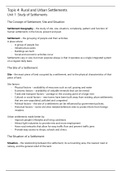
The Concept of Settlement, Site and Situation:
Settlement Geography – the study of site, size, situation, complexity, pattern and function of
human settlements in the future, present and past.
Settlement – the grouping of people and their activities.
A place where:
- A group of people live
- Infrastructure exists
- Buildings are built
- Social and economic activities occur
Settlements vary in size, but main purpose always is that it operates as a single integrated system
on a regular daily basis.
The Site of a Settlement:
Site – the exact piece of land occupied by a settlement, and to the physical characteristics of that
piece of land.
Site factors:
- Physical factors – availability of resources such as soil, grazing and water
- Economic factors – availability of valuable minerals that can be mined
- Trade and transport factors – portage or the crossing point of a large river
- Cultural or social factors – new towns have been built away from existing urban settlements
that are over-populated, polluted and congested.
- Political factors – the site of a settlement can be influenced by government policies.
- Historical factors – some old cities needed defensive sites to protect them from foreign
invaders.
Urban settlements made better by:
- Improve people’s lifestyles and living conditions
- Attract light industries to provide new and more employment
- Have road networks that allow for easy traffic flow and prevent traffic jams
- Provide easy access to shops, schools and clinics.
The Situation of a Settlement:
Situation – the relationship between the settlement, its surrounding area, the nearest road or
railway, and the general relief of the land.
Unit 1: Study of Settlements
The Concept of Settlement, Site and Situation:
Settlement Geography – the study of site, size, situation, complexity, pattern and function of
human settlements in the future, present and past.
Settlement – the grouping of people and their activities.
A place where:
- A group of people live
- Infrastructure exists
- Buildings are built
- Social and economic activities occur
Settlements vary in size, but main purpose always is that it operates as a single integrated system
on a regular daily basis.
The Site of a Settlement:
Site – the exact piece of land occupied by a settlement, and to the physical characteristics of that
piece of land.
Site factors:
- Physical factors – availability of resources such as soil, grazing and water
- Economic factors – availability of valuable minerals that can be mined
- Trade and transport factors – portage or the crossing point of a large river
- Cultural or social factors – new towns have been built away from existing urban settlements
that are over-populated, polluted and congested.
- Political factors – the site of a settlement can be influenced by government policies.
- Historical factors – some old cities needed defensive sites to protect them from foreign
invaders.
Urban settlements made better by:
- Improve people’s lifestyles and living conditions
- Attract light industries to provide new and more employment
- Have road networks that allow for easy traffic flow and prevent traffic jams
- Provide easy access to shops, schools and clinics.
The Situation of a Settlement:
Situation – the relationship between the settlement, its surrounding area, the nearest road or
railway, and the general relief of the land.