

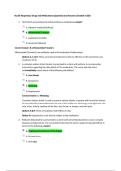
NCLEX Respiratory Drugs and Medications (Questions and Answers) Graded A 2025
1. All of which are examples of antiviral influenza medications except? A. baloxavir marboxil (Xofluza) B. ethionamide (Trecator) C. oseltamivir (Tamiflu) D. zanamivir (Relenza) Correct Answer: B. ethionamide (Trecator) Ethionamide (Trecator) is an antibiotic used in the treatment of tuberculosis. Options A, C, & D: These are antiviral medications that are effective in the prevention and treatment of flu. 2. A cromolyn sodium (Intal) inhaler is prescribed to a client with asthma. A nurse provides instructions regarding the side effects of this medication. The nurse tells the client to immediately report which of the following side effects? A. Sore throat B. Drowsiness C. Wheezing D. Hypotension Correct Answer: C. Wheezing Cromolyn Sodium (Intal) is used to prevent asthma attacks in people with bronchial asthma. Serious side effects associated with the use of this inhaler are wheezing, chest tightness, skin rash, hives, itching, swelling of the face, lips, throat, or tongue, and joint pain. Options A & B: These are expected side effects of Intal. Option D: Hypotension is not directly related to the medication. 3. Rifabutin (Mycobutin) is prescribed to a client with active Mycobacterium avium complex disease and tuberculosis. The nurse determines that the client is experiencing side effects in which of the following, except? A. Tingling and numbness of the fingers B. Blurred vision C. Arthralgia D. Flu-like symptoms Correct Answer: A. Tingling and numbness of the fingers Tingling and numbness of the fingers (peripheral neuropathy) is associated with the use of isoniazid (INH) due to the ability of the medication to damage nerves. Options B, C, & D: These are the side effects of Rifabutin. 4. A client is prescribed with guaifenesin (Mucinex). The nurse determines that the client understands the proper administration of this medication if the client states that he or she will: A. Limit oral fluid intake B. Take the medication with meals only C. Take an additional dose once fever and cough persist D. Drink extra fluids while taking this medication Correct Answer: D. Drink extra fluids while taking this medication Guaifenesin is an expectorant. Drink extra fluids to help loosen the congestion and lubricate the throat while taking this medication. Option A: Fluids are needed to loosen the secretions. Option B: The medication does not have to be taken with meals. Option C: Additional doses should not be taken without the prescription of the doctor. 5. Nurse Rita is giving instructions to her client who is taking antihistamine. Which of the following nurse teachings is appropriate for the client? A. Avoid ingesting alcohol B. Be aware that you may need to take a decongestant C. Be aware that you may have increased saliva D. Expect relief in 24 hours Because alcohol and antihistamines have sedating properties, concurrent administration of these drugs should be avoided. Antihistamines are a pharmaceutical class of drugs that act to treat histamine-mediated conditions. There are two main classes of histamine receptors: H-1 receptors and H-2 receptors. Antihistamine drugs that bind to H-1 receptors are generally used to treat allergies and allergic rhinitis. Drugs that bind to H-2 receptors treat upper gastrointestinal conditions that are caused by excessive stomach acid. Option B: Antihistamines and decongestants are often given together. Histamine (an endogenous chemical messenger) induces an increased level of vascular permeability, which leads to fluid moving from capillaries into the surrounding tissues. The overall outcome of this is increased swelling and dilation of vessels. Antihistamines stop this effect by acting as antagonists at the H-1 receptors. The clinical benefit is a reduction in allergy symptoms and any related symptoms. Option C: Dry mouth is a common side effect, not increased salivation. H-1 receptor antihistamines have anticholinergic properties, which are adverse effect-inducing; this principally occurs from the first generation category of antihistamines only. As a whole, they are sedating but may cause insomnia in some users. Due to their anticholinergic properties, dry mouth is a relatively common adverse effect. Option D: Not all antihistamines last 24 hours. The duration of the pharmacological action of first-generation antihistamines is about 4 to 6 hours. In contrast, second-generation antihistamines work for 12 to 24 hours. They are both metabolized by the liver using the P450 cytochrome system. 6. A nurse is about to administer albuterol (Ventolin HFA) 2 puffs and budesonide (Pulmicort Turbohaler) 2 puffs by a metered-dose inhaler. The nurse plans to administer by? A. Alternating with a single puff each, starting with albuterol B. Albuterol inhaler first then the budesonide C. Alternating with a single puff each, starting with budesonide D. Budesonide inhaler first then the albuterol Correct Answer: B. Albuterol inhaler first then the budesonide 7. If two different inhaled medications are prescribed and one of the medications contains a corticosteroid, administer the bronchodilator (Albuterol) first and the corticosteroid (Budesonide) second. This will allow for the widening of the air passages by the bronchodilator, making the corticosteroids more effective. Daniel has vertigo, which antihistamine is best for his condition? A. Terfenadine B. Meclizine C. Hydrocodone D. Guaifenesin Correct Answer: B. Meclizine
Información del documento
- Subido en
- 28 de agosto de 2025
- Número de páginas
- 14
- Escrito en
- 2025/2026
- Tipo
- Examen
- Contiene
- Preguntas y respuestas

