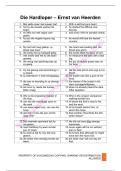
Die Hardloper – Ernst van Heerden
1. Met wilde maar met suiwer hart 1. With a wild but pure heart
2. het hy die woeste wedren fel 2. he started the difficult race
begin, fiercely,
3. en elke myl met rappe voet 3. and every mile he taunted nimbly,
getart,
4. hy sou die vlugste lopers nog 4. he would still beat the fastest
oorwin. runners.
5. Sy hart het hoog geklop, sy 5. His heart was beating fast, his
bloed was heet, blood was warm,
6. die winde het sy haregolf gelig; 6. the winds lifted his wave of hair;
7. met snelle draf het hy die baan 7. he measured the lane with a fast
gemeet, jog,
8. die vreug van spierkrag was op 8. the joy of muscle power was on
sy gesig. his face.
9. Hy het geloop met stormdrang in 9. He ran with storm and urge in his
sy bloed, blood,
10. sy ademstoot ‘n hete windgejaag, 10. his breath was like a gust of hot
wind,
11. die see se branding in sy strenge 11. the waves of the ocean in his
moed, stern courage/willpower,
12. toe hoor hy reeds die donker, 12. when he already heard the dark,
bitter vraag: bitter question:
13. Wie is die ongesiene makker in 13. Who is the unseen companion
die loop, walking beside him,
14. van wie die voet langs syne en 14. of whom the foot is next to his
die wind and the wind
15. van asem agter hom, van wie die 15. of his breath behind him, of
hoop whom the hope
16. dat nog ‘n bors die dun wit lint 16. that another chest finds the thin
mag vind? white ribbon?
17. Dié vreemde spanmaat het hy 17. He did not know this strange
nie geken, teammate,
18. nooit hardloop hy weer sonder 18. never again will he run without
pyn of vrees; pain or fear;
19. hy weet al het hy nou die loop 19. he knows that although he might
gewen, have won the race now,
20. die ander man eendag eerste sal 20. the other man will one day be
wees. first.
PROPERTY OF M SOUNES NO COPYING, SHARING OR DISTRIBUTION
1
ALLOWED
, Analysis of the poem
1. Met wilde maar met suiwer hart The first line is indicative
A (aanduidend) of the athlete’s
2. het hy die woeste wedren fel excitement (hy voel
begin, opgewonde) due to the (danksy)
B the word choice (woordkeuse)
of “wilde” vs “suiwer” heart.
He knows that he is well
prepared (goed voorbereid) for
the race (resies/wedloop), hence
the use of the conjunction
“maar” which shows (wys) that
he is excited (opgewonde)
“wilde” and a little nervous
(senuweeagtig), yet calm
“suiwer”.
The w-alliterasie shows (wys)
that this was a tough
(moeilike/taai) race
(resies/wedloop).
“fel” indicates (dui aan) that he
started strong (sterk).
Inversion (inversie), which is
the incorrect (verkeerde) word
order, is found in these two lines
as it was supposed to
(veronderstel om) read: “Hy het
die woeste wedren met wilde,
maar met suiwer hart fel begin.”
The inversion is used to help
with the rhyme scheme and
steady rhythm (ritme),
emulating (naboots/na-aap) the
steady stride (konstante pas)
of a runner (hardloper).
3. en elke myl met rappe voet “myl” shows (wys) that he was a
getart, long distance (langafstand)
A athlete.
The word “tart (taunt)” links to (is
verbind aan) the idea of
excitement and confidence
(selfversekerdheid) of the
runner. It is also an example of
personification.
“rappe” is the first synonym
(sinoniem/plaasvervanger) for
“vinnig” in this poem.
PROPERTY OF M SOUNES NO COPYING, SHARING OR DISTRIBUTION
2
ALLOWED
1. Met wilde maar met suiwer hart 1. With a wild but pure heart
2. het hy die woeste wedren fel 2. he started the difficult race
begin, fiercely,
3. en elke myl met rappe voet 3. and every mile he taunted nimbly,
getart,
4. hy sou die vlugste lopers nog 4. he would still beat the fastest
oorwin. runners.
5. Sy hart het hoog geklop, sy 5. His heart was beating fast, his
bloed was heet, blood was warm,
6. die winde het sy haregolf gelig; 6. the winds lifted his wave of hair;
7. met snelle draf het hy die baan 7. he measured the lane with a fast
gemeet, jog,
8. die vreug van spierkrag was op 8. the joy of muscle power was on
sy gesig. his face.
9. Hy het geloop met stormdrang in 9. He ran with storm and urge in his
sy bloed, blood,
10. sy ademstoot ‘n hete windgejaag, 10. his breath was like a gust of hot
wind,
11. die see se branding in sy strenge 11. the waves of the ocean in his
moed, stern courage/willpower,
12. toe hoor hy reeds die donker, 12. when he already heard the dark,
bitter vraag: bitter question:
13. Wie is die ongesiene makker in 13. Who is the unseen companion
die loop, walking beside him,
14. van wie die voet langs syne en 14. of whom the foot is next to his
die wind and the wind
15. van asem agter hom, van wie die 15. of his breath behind him, of
hoop whom the hope
16. dat nog ‘n bors die dun wit lint 16. that another chest finds the thin
mag vind? white ribbon?
17. Dié vreemde spanmaat het hy 17. He did not know this strange
nie geken, teammate,
18. nooit hardloop hy weer sonder 18. never again will he run without
pyn of vrees; pain or fear;
19. hy weet al het hy nou die loop 19. he knows that although he might
gewen, have won the race now,
20. die ander man eendag eerste sal 20. the other man will one day be
wees. first.
PROPERTY OF M SOUNES NO COPYING, SHARING OR DISTRIBUTION
1
ALLOWED
, Analysis of the poem
1. Met wilde maar met suiwer hart The first line is indicative
A (aanduidend) of the athlete’s
2. het hy die woeste wedren fel excitement (hy voel
begin, opgewonde) due to the (danksy)
B the word choice (woordkeuse)
of “wilde” vs “suiwer” heart.
He knows that he is well
prepared (goed voorbereid) for
the race (resies/wedloop), hence
the use of the conjunction
“maar” which shows (wys) that
he is excited (opgewonde)
“wilde” and a little nervous
(senuweeagtig), yet calm
“suiwer”.
The w-alliterasie shows (wys)
that this was a tough
(moeilike/taai) race
(resies/wedloop).
“fel” indicates (dui aan) that he
started strong (sterk).
Inversion (inversie), which is
the incorrect (verkeerde) word
order, is found in these two lines
as it was supposed to
(veronderstel om) read: “Hy het
die woeste wedren met wilde,
maar met suiwer hart fel begin.”
The inversion is used to help
with the rhyme scheme and
steady rhythm (ritme),
emulating (naboots/na-aap) the
steady stride (konstante pas)
of a runner (hardloper).
3. en elke myl met rappe voet “myl” shows (wys) that he was a
getart, long distance (langafstand)
A athlete.
The word “tart (taunt)” links to (is
verbind aan) the idea of
excitement and confidence
(selfversekerdheid) of the
runner. It is also an example of
personification.
“rappe” is the first synonym
(sinoniem/plaasvervanger) for
“vinnig” in this poem.
PROPERTY OF M SOUNES NO COPYING, SHARING OR DISTRIBUTION
2
ALLOWED