,LME3701 Assignment 2 ( COMPARATIVE &
HISTORICAL) COMPLETE ANSWERS) Semester 2
2025 - DUE September 2025; 100% TRUSTED
Complete, trusted solutions and explanations.
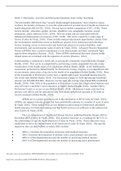
Historical approach
Historical Development of Alternative Dispute Resolution in South
Africa: From Common Law Roots to Modern Reform
Introduction
The resolution of disputes outside the formal court system, commonly
referred to as Alternative Dispute Resolution (ADR), has a long
history in South Africa. Historically, communities often resolved
disputes through customary practices, informal negotiations, or
mediation facilitated by traditional leaders. With the colonisation of
South Africa and the subsequent imposition of Roman-Dutch and
English common law traditions, dispute resolution became more
formalised within the judicial system, but ADR continued to exist in
parallel. In modern times, ADR has been shaped by statutory reforms,
case law, judicial initiatives, and institutional changes aimed at
promoting efficiency, access to justice, and reconciliation.
This essay traces the historical development of ADR in South Africa
from its early roots to its current position in the justice system. Particular
attention is paid to arbitration, mediation, plea bargaining in criminal
matters, the evolution of court-annexed mediation, and the South
African Law Reform Commission’s recent proposals for a Mediation
Act. The analysis demonstrates how ADR in South Africa has evolved
from informal, community-driven practices to an increasingly
institutionalised system supported by legislation and judicial
recognition.
, Early Origins of ADR in South Africa
Before the introduction of colonial legal systems, South African
communities relied heavily on customary dispute resolution
mechanisms, often involving chiefs, elders, or family heads who
mediated disputes. These processes were characterised by dialogue,
consensus, and the goal of restoring harmony rather than focusing
strictly on legal rights. The emphasis on reconciliation reflects features
that continue to inform ADR today, particularly restorative justice and
community-based mediation.
During the colonial period, Roman-Dutch law (later blended with
English influences) became entrenched in South Africa’s legal system.
Formal courts increasingly displaced traditional dispute resolution
processes. However, arbitration was recognised in Roman-Dutch law
as a legitimate means of resolving civil disputes. By the 19th century,
arbitration was commonly used in commercial and property disputes,
often governed by private agreements between the parties.
The Arbitration Act 42 of 1965
A major milestone in the history of ADR in South Africa was the
enactment of the Arbitration Act 42 of 1965, which codified the
framework for arbitration. This Act remains the primary statute
regulating arbitration in South Africa. It sets out procedures for the
appointment of arbitrators, the conduct of proceedings, and the
enforceability of arbitration awards.
Although arbitration under the Act was primarily geared toward
commercial disputes, its significance lies in formally recognising ADR
as part of South Africa’s legal framework. Arbitration clauses became
standard in commercial contracts, and courts began to enforce arbitration
HISTORICAL) COMPLETE ANSWERS) Semester 2
2025 - DUE September 2025; 100% TRUSTED
Complete, trusted solutions and explanations.
Historical approach
Historical Development of Alternative Dispute Resolution in South
Africa: From Common Law Roots to Modern Reform
Introduction
The resolution of disputes outside the formal court system, commonly
referred to as Alternative Dispute Resolution (ADR), has a long
history in South Africa. Historically, communities often resolved
disputes through customary practices, informal negotiations, or
mediation facilitated by traditional leaders. With the colonisation of
South Africa and the subsequent imposition of Roman-Dutch and
English common law traditions, dispute resolution became more
formalised within the judicial system, but ADR continued to exist in
parallel. In modern times, ADR has been shaped by statutory reforms,
case law, judicial initiatives, and institutional changes aimed at
promoting efficiency, access to justice, and reconciliation.
This essay traces the historical development of ADR in South Africa
from its early roots to its current position in the justice system. Particular
attention is paid to arbitration, mediation, plea bargaining in criminal
matters, the evolution of court-annexed mediation, and the South
African Law Reform Commission’s recent proposals for a Mediation
Act. The analysis demonstrates how ADR in South Africa has evolved
from informal, community-driven practices to an increasingly
institutionalised system supported by legislation and judicial
recognition.
, Early Origins of ADR in South Africa
Before the introduction of colonial legal systems, South African
communities relied heavily on customary dispute resolution
mechanisms, often involving chiefs, elders, or family heads who
mediated disputes. These processes were characterised by dialogue,
consensus, and the goal of restoring harmony rather than focusing
strictly on legal rights. The emphasis on reconciliation reflects features
that continue to inform ADR today, particularly restorative justice and
community-based mediation.
During the colonial period, Roman-Dutch law (later blended with
English influences) became entrenched in South Africa’s legal system.
Formal courts increasingly displaced traditional dispute resolution
processes. However, arbitration was recognised in Roman-Dutch law
as a legitimate means of resolving civil disputes. By the 19th century,
arbitration was commonly used in commercial and property disputes,
often governed by private agreements between the parties.
The Arbitration Act 42 of 1965
A major milestone in the history of ADR in South Africa was the
enactment of the Arbitration Act 42 of 1965, which codified the
framework for arbitration. This Act remains the primary statute
regulating arbitration in South Africa. It sets out procedures for the
appointment of arbitrators, the conduct of proceedings, and the
enforceability of arbitration awards.
Although arbitration under the Act was primarily geared toward
commercial disputes, its significance lies in formally recognising ADR
as part of South Africa’s legal framework. Arbitration clauses became
standard in commercial contracts, and courts began to enforce arbitration