SECTION B – INSOLVENCY LAW
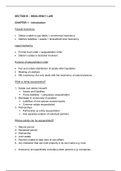
CHAPTER 1 – Introduction
Factual insolvency
• Debtor unable to pay debts = commercial insolvency
• Debtors liabilities > assets = factual/technical insolvency
Legal insolvency
• Formal court order = sequestration order
• Debtor’s estate is declared insolvent
Purpose of sequestration order
• Fair and orderly distribution of assets after liquidation
• Meeting of creditors
• NB: Insolvency Act only deals with the insolvency of natural persons
What is being sequestrated?
1. Estate (not debtor himself)
§ Assets and liabilities
§ If only liabilities – compulsory sequestration
2. Marriages in community of property
§ Liabilities of one spouse exceed assets
§ Common estate sequestrated
3. Partnerships
§ Partnership as entity sequestrated
§ And separate estates of individual partners
Whose estate can be sequestrated?
1. Natural person
2. Deceased person
3. Partnership
4. Joint estate
5. Persons unable to take care of own affairs
6. Any institution that can hold property in its own name e.g. trust
• Insolvency act specifically excludes juristic persons e.g. companies
, Where is the state sequestrated?
• Only high court has jurisdiction on insolvency matters
1. Where debtor is domiciled
2. Where debtor owns property
3. Where debtor has usually resided or conducted business within 12 months
preceding the application
CHAPTER 2 – Sequestration of a debtor’s estate
Introduction
• Sequestration = process to dissolve the estate of the debtor i.e. to liquidate (sell)
all the assets and to release (pay) all debt
• Distinguish:
§ Voluntary surrender = debtor applies for sequestration
§ Compulsory sequestration = creditor(s) applies for sequestration of debtor
• Different processes, but same consequences
Voluntary surrender
• Who brings application?
§ Debtor/representative
§ Executor of deceased estate
§ All partners together (partnership’s estate)
§ Both spouses (married in community of property)
§ Curator bonis of a person unable to look after own affairs
• Requirements for application: (debtor must prove)
1. Substantive requirements
⇒ Estate actually insolvent
⇒ Enough funds/assets in free residue to cover sequestration costs
⇒ Sequestration will be to the advantage of creditors as a group
2. Formalities
⇒ Notice of surrender and statement of affairs
Substantive requirements (voluntary surrender)
1. Estate actually insolvent
§ Prepare a statement of affairs
§ List value of all assets and liabilities
§ Show that debts exceed assets
2. Sequestration costs
§ Paid out of free residue
CHAPTER 1 – Introduction
Factual insolvency
• Debtor unable to pay debts = commercial insolvency
• Debtors liabilities > assets = factual/technical insolvency
Legal insolvency
• Formal court order = sequestration order
• Debtor’s estate is declared insolvent
Purpose of sequestration order
• Fair and orderly distribution of assets after liquidation
• Meeting of creditors
• NB: Insolvency Act only deals with the insolvency of natural persons
What is being sequestrated?
1. Estate (not debtor himself)
§ Assets and liabilities
§ If only liabilities – compulsory sequestration
2. Marriages in community of property
§ Liabilities of one spouse exceed assets
§ Common estate sequestrated
3. Partnerships
§ Partnership as entity sequestrated
§ And separate estates of individual partners
Whose estate can be sequestrated?
1. Natural person
2. Deceased person
3. Partnership
4. Joint estate
5. Persons unable to take care of own affairs
6. Any institution that can hold property in its own name e.g. trust
• Insolvency act specifically excludes juristic persons e.g. companies
, Where is the state sequestrated?
• Only high court has jurisdiction on insolvency matters
1. Where debtor is domiciled
2. Where debtor owns property
3. Where debtor has usually resided or conducted business within 12 months
preceding the application
CHAPTER 2 – Sequestration of a debtor’s estate
Introduction
• Sequestration = process to dissolve the estate of the debtor i.e. to liquidate (sell)
all the assets and to release (pay) all debt
• Distinguish:
§ Voluntary surrender = debtor applies for sequestration
§ Compulsory sequestration = creditor(s) applies for sequestration of debtor
• Different processes, but same consequences
Voluntary surrender
• Who brings application?
§ Debtor/representative
§ Executor of deceased estate
§ All partners together (partnership’s estate)
§ Both spouses (married in community of property)
§ Curator bonis of a person unable to look after own affairs
• Requirements for application: (debtor must prove)
1. Substantive requirements
⇒ Estate actually insolvent
⇒ Enough funds/assets in free residue to cover sequestration costs
⇒ Sequestration will be to the advantage of creditors as a group
2. Formalities
⇒ Notice of surrender and statement of affairs
Substantive requirements (voluntary surrender)
1. Estate actually insolvent
§ Prepare a statement of affairs
§ List value of all assets and liabilities
§ Show that debts exceed assets
2. Sequestration costs
§ Paid out of free residue