
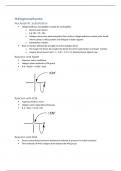
Halogenoalkanes
Nucleophilic Substitution
Halogenoalkanes susceptible to attack by nucleophiles
o Electron pair donors
o E.g. OH–, CN–, NH3
o Halogen atom more electronegative than carbon, halogenoalkanes contain polar bonds
where carbon is delta positive and halogen is delta negative
o Substitution reaction
Rate of reaction affected by strength of carbon-halogen bond
o The longer the bond, the weaker the bond, the more easily broken and faster reaction
o Longest bond, lowest rate C-I > C-Br > C-Cl > C-F Shortest bond, highest rate
Reaction with NaOH
Aqueous, warm conditions
Halogen atom replaced by OH group
R-X + NaOH -> R-OH + NaX
Reaction with KCN
Aqueous ethanol, warm
Halogen atom replaced by CN group
R-X + KCN -> R-CN + KX
Reaction with NH3
Excess concentrated ammonia dissolved in ethanol at pressure in sealed container
First molecule of NH3: halogen atom replaced by NH2 group
Nucleophilic Substitution
Halogenoalkanes susceptible to attack by nucleophiles
o Electron pair donors
o E.g. OH–, CN–, NH3
o Halogen atom more electronegative than carbon, halogenoalkanes contain polar bonds
where carbon is delta positive and halogen is delta negative
o Substitution reaction
Rate of reaction affected by strength of carbon-halogen bond
o The longer the bond, the weaker the bond, the more easily broken and faster reaction
o Longest bond, lowest rate C-I > C-Br > C-Cl > C-F Shortest bond, highest rate
Reaction with NaOH
Aqueous, warm conditions
Halogen atom replaced by OH group
R-X + NaOH -> R-OH + NaX
Reaction with KCN
Aqueous ethanol, warm
Halogen atom replaced by CN group
R-X + KCN -> R-CN + KX
Reaction with NH3
Excess concentrated ammonia dissolved in ethanol at pressure in sealed container
First molecule of NH3: halogen atom replaced by NH2 group


