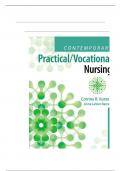
,TEST BANK FOR sx sx
Contemporary Practical/Vocational Nursing 9th Edition by Corinne Kurzen, Anna LaVon Ba
sx sx sx sx sx sx sx sx sx sx
rrett
Chapter 1-16 sx
Chapter 1, Adjusting to Student Life
sx sx sx sx sx
1. The nursing student has found the first 2 weeks of the nursing program fascinating but o
sx sx sx sx sx sx sx sx sx sx sx sx sx sx sx
verwhelming. This student is anxious and unable to sleep. What action should the nursing
sx sx sx sx sx sx sx sx sx sx sx sx sx sx
student take to address these feelings?
sx sx sx sx sx
A. Utilize the counseling services available at the college.
sx sx sx sx sx sx sx
B. Reduce the course load. sx sx sx
C. Eliminate the family activities and recreational activities. sx sx sx sx sx sx
D. Create a study group with some classmates and divide the course work.
sx sx sx sx sx sx sx sx sx sx sx
ANS: A s x
Feedback: Counseling services to help students make adjustments and solve problems may be
sx sx sx sx sx sx sx sx sx sx sx sx s
available to students. If so, they are often very helpful. This is preferable to reducing the co
x sx sx sx sx sx sx sx sx sx sx sx sx sx sx sx sx
urses the student is taking or eliminating family and recreational activities, which are benefi
sx sx sx sx sx sx sx sx sx sx sx sx sx
cial in stress management. Study groups can be helpful, but they are not intended to divide
sx sx sx sx sx sx sx sx sx sx sx sx sx sx sx sx
course work. sx
PTS: 1 s x DIF: Moderate
REF: p. 5, Personal Adjustments OBJ: 1
s x sx sx sx sx s x
NAT: Client Needs: Psychosocial Integrity
s x sx sx sx
TOP: Chapter 1 s x sx KEY: Integrated Process: Carings x sx sx
BLM: Cognitive Level: Apply NOT: Multiple Choice
sx sx sx sx s x sx
2. A nursing student will soon begin a new course with a new instructor. When encountering
sx sx sx sx sx sx sx sx sx sx sx sx sx sx sx
a new instructor for the first time, the student should:
sx sx sx sx sx sx sx sx sx
A. compliment the instructor on his or her knowledge and skills. sx sx sx sx sx sx sx sx sx
B. try to get to know the instructor as much as possible.
sx sx sx sx sx sx sx sx sx sx
C. remain silent until the instructor reveals his or her expectations.
sx sx sx sx sx sx sx sx sx
D. ask as many questions as possible so that the instructor notices the student.
sx sx sx sx sx sx sx sx sx sx sx sx
ANS: B s x
Feedback: Every instructor is different, and it is beneficial to get to know each instructor‘s sty
sx sx sx sx sx sx sx sx sx sx sx sx sx sx sx
le, personality, and expectations as much as possible. This does not involve offering persona
sx sx sx sx sx sx sx sx sx sx sx sx sx
l compliments to the instructor or asking questions for the purpose of becoming known. At t
sx sx sx sx sx sx sx sx sx sx sx sx sx sx sx
he same time, a student should not be completely silent at the start of a course.
sx sx sx sx sx sx sx sx sx sx sx sx sx sx sx
PTS: 1 s x DIF: Moderate
REF: p. 6, Program Structure OBJ: 1
s x sx sx sx sx s x
NAT: Client Needs: Psychosocial Integrity
s x sx sx sx
TOP: Chapter 1 s x sx
KEY: Integrated Process: Communication and Documentatio sx sx sx sx sx
n BLM: Cognitive Level: Apply
sx NOT: Multiple Choice
s x sx sx s x sx
3. A student has just begun a nursing program and is committed to success. When creating
sx sx sx sx sx sx sx sx sx sx sx sx sx sx sx
a schedule for the school term, what should the student do?
sx sx sx sx sx sx sx sx sx sx
,A. Make sure that recreation is prioritized over school work.
sx sx sx sx sx sx sx sx
B. Spread out school work evenly between all 7 days of the week.
sx sx sx sx sx sx sx sx sx sx sx
C. Ensure a balance between school activities and personal life.
sx sx sx sx sx sx sx sx
, D. Put off family activities until the midterm break.
sx sx sx sx sx sx sx
ANS: C s x
Feedback: A good schedule should be realistic and balanced. To get the most from the prog
sx sx sx sx sx sx sx sx sx sx sx sx sx sx sx
ram and still have time for a personal life, the student should make a schedule that fits the tim
sx sx sx sx sx sx sx sx sx sx sx sx sx sx sx sx sx sx
e available, not how much time the student wishes was available. This does not mean that s
sx sx sx sx sx sx sx sx sx sx sx sx sx sx sx sx
chool work should suffer because of personal activities, however. It is often helpful to sched
sx sx sx sx sx sx sx sx sx sx sx sx sx sx
ule days off rather than studying every day of the week.
sx sx sx sx sx sx sx sx sx sx
PTS: 1 DIF: Easy
s x
REF: p. 7, Scheduling Your Time OBJ: 1 s x sx sx sx sx sx s x
NAT: Client Needs: Safe and Effective Care Environment: Management of Care
s x sx sx sx sx sx sx sx sx sx sx
TOP: Chapter 1 s x sx
KEY: Integrated Process: Communication and Documentatio sx sx sx sx sx
n BLM: Cognitive Level: Apply
sx s xNOT: Multiple Choice sx sx s x sx
4. When learning how to assess clients‘ health, a student has found that the most beneficial le
sx sx sx sx sx sx sx sx sx sx sx sx sx sx sx
arning technique was watching an online video in which an experienced nurse demonstrated
sx sx sx sx sx sx sx sx sx sx sx sx sx
how to conduct an assessment. Which is this student‘s most likely learning style?
sx sx sx sx sx sx sx sx sx sx sx sx
A. Tactile
B. Visual
C. Auditory
D. Kinesthetic
ANS: B s x
Feedback: Visual learners learn best by watching things such as videos, movies, and demo
sx sx sx sx sx sx sx sx sx sx sx sx sx
nstrations. Tactile and kinesthetic learners benefit from touch. Auditory learners prefer to he
sx sx sx sx sx sx sx sx sx sx sx sx
ar information.
sx
PTS: 1 s x DIF: Easy
REF: p. 9, Applying Your Learning Style OBJ: 3
s x sx sx sx sx sx sx s x
NAT: Client Needs: Psychosocial Integrity
s x sx sx sx
TOP: Chapter 1 s x sx
KEY: Integrated Process: Teaching/Learnin sx sx sx
g BLM: Cognitive Level: Analyze
sx sx sx sx
NOT: Multiple Choice s x sx
5. A nursing student is aware of the importance of critical thinking, especially in clinical situ
sx sx sx sx sx sx sx sx sx sx sx sx sx sx
ations. When applying the principles of critical thinking to a situation, the student should be
sx sx sx sx sx sx sx sx sx sx sx sx sx sx
gin by asking:
sx sx
A. ―What did I do the last time I encountered a similar situation?‖
sx sx sx sx sx sx sx sx sx sx sx
B. ―Why do I need to act in this situation?‖ sx sx sx sx sx sx sx sx
C. ―What are the consequences of making the wrong decision in this situation?‖
sx sx sx sx sx sx sx sx sx sx sx
D. ―What are the facts that I know about this situation?‖
sx sx sx sx sx sx sx sx sx
ANS: D s x
Feedback: A useful starting point for the critical thinking process is to determine the facts a
sx sx sx sx sx sx sx sx sx sx sx sx sx sx sx
bout the situation. This should come before a comparison with previous situations. It is likely
sx sx sx sx sx sx sx sx sx sx sx sx sx sx sx
not helpful to ask what could possibly go wrong.
sx sx sx sx sx sx sx sx
PTS: 1 DIF: Difficult
s x
REF: p. 17, Developing Critical Thinking Skills OBJ: 4 s x sx sx sx sx sx sx s x
NAT: Client Needs: Safe and Effective Care Environment: Management of Care
s x sx sx sx sx sx sx sx sx sx
TOP: Chapter 1 KEY: Integrated Process: Clinical Problem-
s x sx sx sx sx sx
solving Process (Nursing Process) BLM: Cognitive Level: Apply NOT: Multiple Choice
sx sx sx sx s x sx sx s x sx
6. The nursing student is working with a female client who had recent hip surgery. The clien
sx sx sx sx sx sx sx sx sx sx sx sx sx sx sx
Contemporary Practical/Vocational Nursing 9th Edition by Corinne Kurzen, Anna LaVon Ba
sx sx sx sx sx sx sx sx sx sx
rrett
Chapter 1-16 sx
Chapter 1, Adjusting to Student Life
sx sx sx sx sx
1. The nursing student has found the first 2 weeks of the nursing program fascinating but o
sx sx sx sx sx sx sx sx sx sx sx sx sx sx sx
verwhelming. This student is anxious and unable to sleep. What action should the nursing
sx sx sx sx sx sx sx sx sx sx sx sx sx sx
student take to address these feelings?
sx sx sx sx sx
A. Utilize the counseling services available at the college.
sx sx sx sx sx sx sx
B. Reduce the course load. sx sx sx
C. Eliminate the family activities and recreational activities. sx sx sx sx sx sx
D. Create a study group with some classmates and divide the course work.
sx sx sx sx sx sx sx sx sx sx sx
ANS: A s x
Feedback: Counseling services to help students make adjustments and solve problems may be
sx sx sx sx sx sx sx sx sx sx sx sx s
available to students. If so, they are often very helpful. This is preferable to reducing the co
x sx sx sx sx sx sx sx sx sx sx sx sx sx sx sx sx
urses the student is taking or eliminating family and recreational activities, which are benefi
sx sx sx sx sx sx sx sx sx sx sx sx sx
cial in stress management. Study groups can be helpful, but they are not intended to divide
sx sx sx sx sx sx sx sx sx sx sx sx sx sx sx sx
course work. sx
PTS: 1 s x DIF: Moderate
REF: p. 5, Personal Adjustments OBJ: 1
s x sx sx sx sx s x
NAT: Client Needs: Psychosocial Integrity
s x sx sx sx
TOP: Chapter 1 s x sx KEY: Integrated Process: Carings x sx sx
BLM: Cognitive Level: Apply NOT: Multiple Choice
sx sx sx sx s x sx
2. A nursing student will soon begin a new course with a new instructor. When encountering
sx sx sx sx sx sx sx sx sx sx sx sx sx sx sx
a new instructor for the first time, the student should:
sx sx sx sx sx sx sx sx sx
A. compliment the instructor on his or her knowledge and skills. sx sx sx sx sx sx sx sx sx
B. try to get to know the instructor as much as possible.
sx sx sx sx sx sx sx sx sx sx
C. remain silent until the instructor reveals his or her expectations.
sx sx sx sx sx sx sx sx sx
D. ask as many questions as possible so that the instructor notices the student.
sx sx sx sx sx sx sx sx sx sx sx sx
ANS: B s x
Feedback: Every instructor is different, and it is beneficial to get to know each instructor‘s sty
sx sx sx sx sx sx sx sx sx sx sx sx sx sx sx
le, personality, and expectations as much as possible. This does not involve offering persona
sx sx sx sx sx sx sx sx sx sx sx sx sx
l compliments to the instructor or asking questions for the purpose of becoming known. At t
sx sx sx sx sx sx sx sx sx sx sx sx sx sx sx
he same time, a student should not be completely silent at the start of a course.
sx sx sx sx sx sx sx sx sx sx sx sx sx sx sx
PTS: 1 s x DIF: Moderate
REF: p. 6, Program Structure OBJ: 1
s x sx sx sx sx s x
NAT: Client Needs: Psychosocial Integrity
s x sx sx sx
TOP: Chapter 1 s x sx
KEY: Integrated Process: Communication and Documentatio sx sx sx sx sx
n BLM: Cognitive Level: Apply
sx NOT: Multiple Choice
s x sx sx s x sx
3. A student has just begun a nursing program and is committed to success. When creating
sx sx sx sx sx sx sx sx sx sx sx sx sx sx sx
a schedule for the school term, what should the student do?
sx sx sx sx sx sx sx sx sx sx
,A. Make sure that recreation is prioritized over school work.
sx sx sx sx sx sx sx sx
B. Spread out school work evenly between all 7 days of the week.
sx sx sx sx sx sx sx sx sx sx sx
C. Ensure a balance between school activities and personal life.
sx sx sx sx sx sx sx sx
, D. Put off family activities until the midterm break.
sx sx sx sx sx sx sx
ANS: C s x
Feedback: A good schedule should be realistic and balanced. To get the most from the prog
sx sx sx sx sx sx sx sx sx sx sx sx sx sx sx
ram and still have time for a personal life, the student should make a schedule that fits the tim
sx sx sx sx sx sx sx sx sx sx sx sx sx sx sx sx sx sx
e available, not how much time the student wishes was available. This does not mean that s
sx sx sx sx sx sx sx sx sx sx sx sx sx sx sx sx
chool work should suffer because of personal activities, however. It is often helpful to sched
sx sx sx sx sx sx sx sx sx sx sx sx sx sx
ule days off rather than studying every day of the week.
sx sx sx sx sx sx sx sx sx sx
PTS: 1 DIF: Easy
s x
REF: p. 7, Scheduling Your Time OBJ: 1 s x sx sx sx sx sx s x
NAT: Client Needs: Safe and Effective Care Environment: Management of Care
s x sx sx sx sx sx sx sx sx sx sx
TOP: Chapter 1 s x sx
KEY: Integrated Process: Communication and Documentatio sx sx sx sx sx
n BLM: Cognitive Level: Apply
sx s xNOT: Multiple Choice sx sx s x sx
4. When learning how to assess clients‘ health, a student has found that the most beneficial le
sx sx sx sx sx sx sx sx sx sx sx sx sx sx sx
arning technique was watching an online video in which an experienced nurse demonstrated
sx sx sx sx sx sx sx sx sx sx sx sx sx
how to conduct an assessment. Which is this student‘s most likely learning style?
sx sx sx sx sx sx sx sx sx sx sx sx
A. Tactile
B. Visual
C. Auditory
D. Kinesthetic
ANS: B s x
Feedback: Visual learners learn best by watching things such as videos, movies, and demo
sx sx sx sx sx sx sx sx sx sx sx sx sx
nstrations. Tactile and kinesthetic learners benefit from touch. Auditory learners prefer to he
sx sx sx sx sx sx sx sx sx sx sx sx
ar information.
sx
PTS: 1 s x DIF: Easy
REF: p. 9, Applying Your Learning Style OBJ: 3
s x sx sx sx sx sx sx s x
NAT: Client Needs: Psychosocial Integrity
s x sx sx sx
TOP: Chapter 1 s x sx
KEY: Integrated Process: Teaching/Learnin sx sx sx
g BLM: Cognitive Level: Analyze
sx sx sx sx
NOT: Multiple Choice s x sx
5. A nursing student is aware of the importance of critical thinking, especially in clinical situ
sx sx sx sx sx sx sx sx sx sx sx sx sx sx
ations. When applying the principles of critical thinking to a situation, the student should be
sx sx sx sx sx sx sx sx sx sx sx sx sx sx
gin by asking:
sx sx
A. ―What did I do the last time I encountered a similar situation?‖
sx sx sx sx sx sx sx sx sx sx sx
B. ―Why do I need to act in this situation?‖ sx sx sx sx sx sx sx sx
C. ―What are the consequences of making the wrong decision in this situation?‖
sx sx sx sx sx sx sx sx sx sx sx
D. ―What are the facts that I know about this situation?‖
sx sx sx sx sx sx sx sx sx
ANS: D s x
Feedback: A useful starting point for the critical thinking process is to determine the facts a
sx sx sx sx sx sx sx sx sx sx sx sx sx sx sx
bout the situation. This should come before a comparison with previous situations. It is likely
sx sx sx sx sx sx sx sx sx sx sx sx sx sx sx
not helpful to ask what could possibly go wrong.
sx sx sx sx sx sx sx sx
PTS: 1 DIF: Difficult
s x
REF: p. 17, Developing Critical Thinking Skills OBJ: 4 s x sx sx sx sx sx sx s x
NAT: Client Needs: Safe and Effective Care Environment: Management of Care
s x sx sx sx sx sx sx sx sx sx
TOP: Chapter 1 KEY: Integrated Process: Clinical Problem-
s x sx sx sx sx sx
solving Process (Nursing Process) BLM: Cognitive Level: Apply NOT: Multiple Choice
sx sx sx sx s x sx sx s x sx
6. The nursing student is working with a female client who had recent hip surgery. The clien
sx sx sx sx sx sx sx sx sx sx sx sx sx sx sx