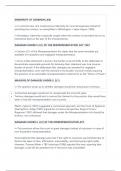
INDEMNITY AT COMMON LAW
⇒ In common law, one could pursue indemnity for incurred expenses instead of
annulling the contract, as exemplified in Whittington v Seale-Hayne (1900).
⇒ Nowadays, indemnity is typically sought when the contract is rescinded due to no
intentional fault on the part of the misrepresentor.
DAMAGES UNDER S 2(1) OF THE MISREPRESENTATION ACT 1967
⇒ Section 2(1) of the Misrepresentation Act states that the same remedies are
available for fraudulent and negligent misrepresentation.
⇒ Once a false statement is proven, the burden of proof shifts to the defendant to
demonstrate reasonable grounds for believing their statement was true (reverse
burden of proof). If the defendant fails, damages are awarded for negligent
misrepresentation, even with the claimant's low burden of proof, merely requiring
the presence of an actionable misrepresentation (referred to as the "fiction of fraud").
MEASURE OF DAMAGES UNDER S. 2(1)
⇒ The question arises as to whether damages should be contractual or tortious.
• Contractual damages would aim to compensate the innocent party.
• Tortious damages would aim to restore the claimant to the position they would have
been in had the misrepresentation not occurred.
Watts v Spence [1976] suggested a contractual approach, but the Court of Appeal in
Sharneyford v Edge [1987] argued for a tortious perspective. Royscot Trust v
Rogerson (1991) affirmed that damages under the Misrepresentation Act should be
tortious, not contractual.
DAMAGES UNDER S. 2(2) OF THE MISREPRESENTATION ACT
⇒ This provision allows the court to grant damages instead of rescission in cases of
non-fraudulent misrepresentation.
Some believed that damages were lost if the right to rescission was forfeited due to
factors like lapse of time, affirmation, impossibility, and third-party rights (p94).
However, Thomas Witter v TBP Industries [1996] rejected this view, asserting that
damages could still be awarded even if rescission was unavailable.
⇒ In common law, one could pursue indemnity for incurred expenses instead of
annulling the contract, as exemplified in Whittington v Seale-Hayne (1900).
⇒ Nowadays, indemnity is typically sought when the contract is rescinded due to no
intentional fault on the part of the misrepresentor.
DAMAGES UNDER S 2(1) OF THE MISREPRESENTATION ACT 1967
⇒ Section 2(1) of the Misrepresentation Act states that the same remedies are
available for fraudulent and negligent misrepresentation.
⇒ Once a false statement is proven, the burden of proof shifts to the defendant to
demonstrate reasonable grounds for believing their statement was true (reverse
burden of proof). If the defendant fails, damages are awarded for negligent
misrepresentation, even with the claimant's low burden of proof, merely requiring
the presence of an actionable misrepresentation (referred to as the "fiction of fraud").
MEASURE OF DAMAGES UNDER S. 2(1)
⇒ The question arises as to whether damages should be contractual or tortious.
• Contractual damages would aim to compensate the innocent party.
• Tortious damages would aim to restore the claimant to the position they would have
been in had the misrepresentation not occurred.
Watts v Spence [1976] suggested a contractual approach, but the Court of Appeal in
Sharneyford v Edge [1987] argued for a tortious perspective. Royscot Trust v
Rogerson (1991) affirmed that damages under the Misrepresentation Act should be
tortious, not contractual.
DAMAGES UNDER S. 2(2) OF THE MISREPRESENTATION ACT
⇒ This provision allows the court to grant damages instead of rescission in cases of
non-fraudulent misrepresentation.
Some believed that damages were lost if the right to rescission was forfeited due to
factors like lapse of time, affirmation, impossibility, and third-party rights (p94).
However, Thomas Witter v TBP Industries [1996] rejected this view, asserting that
damages could still be awarded even if rescission was unavailable.