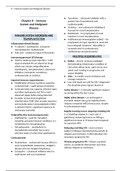
8 – Immune System and Malignant Disease
Tacrolimus – calcineurin inhibitor with a
Chapter 8 – Immune greater risk of neurotxocity and
System and Malignant cardiomyopathy
Disease Sirolimus – non-calcineurin inhibiting IS
licensed for renal transplantation
Basiliximab – for prophylaxis of acute
IMMUNE SYSTEM DISORDERS AND rejection in renal transplantation
TRANSPLANTATION Antithymocyte immunoglobin (rabbit) – for
prophylaxis of organ rejection in renal and
Inflammatory Bowel Disease
heart allograft recipients. Tolerability is
Tx options = azathioprine, ciclosporin,
increased with IV corticosteroid,
mercaptopurine, methotrexate
antihistamine and paracetamol
Folic acid – weekly to reduce MTX toxicity
Immunosuppressant (IS) therapy MULTIPLE SCLEROSIS (MS)
Used to suppress organ rejection = solid Define – chronic, immune-mediated,
organ transplant Pts are placed on drugs demyelinating inflammatory condition of
which may include antiproliferatives CNS which affects brain, optic nerves and
(azathioprine, mycophenolate), calcineurin spinal cord, leading to progressive and
inhibitors (ciclosporin, tacrolimus), severe disability
corticosteroids or sirolimus Aims – to modify course of disease and
Impaired immune responsiveness manage symptoms
Modification of tissue reactions caused by Low vit D levels are a RF for MS = diagnosed
corticosteroids = rapid spread of infection Pts should be given regular vitamin D
Corticosteroids may suppress infection signs Active disease = >2 clinically significant relapses
and allow septicaemia and TB to reach occurring within the last 2 years
advanced stages before being detected
Consider normal immunoglobulin Highly active disease = an unchanged or
administration ASAP after measles exposure increased relapse rate or by ongoing severe
and varicella-zoster immunoglobulin (VZIG) relapses compared with previous year, despite
is advised if there’s significant exposure to Tx with interferon beta
chickenpox (varicella) Rapidly-evolving severe relapsing-remitting MS
Antiproliferative immunosuppressants = >2 disabling relapses in 1 year and >1
o Azathioprine – used for transplant gadolinium-enhancing lesions on MRI or a
recipients and auto-immune conditions. It’s significant increase in T2 lesion load compared
metabolised to mercaptopurine. to a previous MRI
o Mycophenolate – metabolised to Relapsing-remitting MS = most common
mycophenolic acid which has a more pattern of disease characterised by periods of
selective mode of action than azathioprine relapses and remission. It often develops into
Corticosteroids secondary-progressive MS.
Prednisolone – marked anti-tumour effect in Primary-progressive MS = follows a gradual
acute lymphoblastic leukaemias, Hodgkin’s course, as symptoms that worsen over time,
disease and non-Hodgkin lymphomas without relapses or remissions
Ciclosporin – calcineurin inhibitor which is
nephrotoxic and non-myelotoxic
, 8 – Immune System and Malignant Disease
Progressive-relapsing MS = follows a course of CYTOTOXIC RESPONSIVE MALIGNANCY
steadily worsening neurological function from
onset, in addition to acute relapses Cytotoxic drug handling guidelines
Trained personnel should reconstitute
Drug Tx for relapsing-remitting MS cytotoxics in a designated pharmacy area
o Interferon-beta, glatiramer, teriflunomide – Wear protective clothing (incl. gloves,
preferred in active disease gowns and masks)
o Fingolimod – used in highly active disease Protect eyes and specify means of 1st aid
o Natalizumab – preferred in rapidly-evolving Pregnant staff must avoid exposure to
severe relapsing-remitting MS cytotoxic drugs
Use local procedures for dealing with
Drug Tx for secondary progressive MS
spillages and safe disposal of waste material
o Interferon beta-1B – preferred as it reduces
(including syringes, containers and
risk of relapse but doesn’t slow disability
absorbent material)
Managing Symptoms Monitor staff exposure to cytotoxics
Chronic symptoms like fatigue, spasticity,
Safe system requirements for cytotoxics
visual problems and emotional lability
Give cytotoxic drugs for cancer Tx as part of
produce much of the disability in MS
a wider pathway of care coordinated by a
Smoking worsens disability = cessation multidisciplinary team
Prescribe, dispense and administer
cytotoxics only in the context of a written
protocol or Tx plan
1. Relapses – corticosteroids (oral Dispense injectable cytotoxics if they’re
methylprednisolone) are 1st line. Consider prepared for administration
IV form as an alternative Dispense oral cytotoxics with clear
directions for use
2. Fatigue and impaired mobility –
amantadine is advised for fatigue and Risk of incorrect dose of oral anti-cancer drugs
fampridine can improve walking NPSA advises the prescribing and use of ORAL
cytotoxics should be carried out to the same
3. Spasticity standard as parenteral cytotoxics
Non-specialists who prescribe/administer
Manage factors like constipation, ongoing oral cytotoxics should have access
infection, poor mobility aids, pressure to written protocols and Tx plans, incl.
ulcers, posture and pain. guidance on monitoring and Tx of toxicity
Staff dispensing oral cytotoxics should
1st line = baclofen or gabapentin. confirm the prescribed dose is appropriate
Pts should have written info taken from the
2nd line = tizanidine, dantrolene, BZPs
original protocol from the initiating hospital
A cannabis extract containing that includes details of the regimen, Tx plan
dronabinol and cannabidiol is used for and monitoring requirements
mod-to-severe spasticity Cytotoxic drug doses
Doses may be fixed or determined by
4. Oscillopsia – gabapentin or memantine
factors like body-surface area or weight,
5. Emotional lability – amitriptyline neutrophil count, renal and hepatic function
and H/O previous ADRs to the cytotoxic
Tacrolimus – calcineurin inhibitor with a
Chapter 8 – Immune greater risk of neurotxocity and
System and Malignant cardiomyopathy
Disease Sirolimus – non-calcineurin inhibiting IS
licensed for renal transplantation
Basiliximab – for prophylaxis of acute
IMMUNE SYSTEM DISORDERS AND rejection in renal transplantation
TRANSPLANTATION Antithymocyte immunoglobin (rabbit) – for
prophylaxis of organ rejection in renal and
Inflammatory Bowel Disease
heart allograft recipients. Tolerability is
Tx options = azathioprine, ciclosporin,
increased with IV corticosteroid,
mercaptopurine, methotrexate
antihistamine and paracetamol
Folic acid – weekly to reduce MTX toxicity
Immunosuppressant (IS) therapy MULTIPLE SCLEROSIS (MS)
Used to suppress organ rejection = solid Define – chronic, immune-mediated,
organ transplant Pts are placed on drugs demyelinating inflammatory condition of
which may include antiproliferatives CNS which affects brain, optic nerves and
(azathioprine, mycophenolate), calcineurin spinal cord, leading to progressive and
inhibitors (ciclosporin, tacrolimus), severe disability
corticosteroids or sirolimus Aims – to modify course of disease and
Impaired immune responsiveness manage symptoms
Modification of tissue reactions caused by Low vit D levels are a RF for MS = diagnosed
corticosteroids = rapid spread of infection Pts should be given regular vitamin D
Corticosteroids may suppress infection signs Active disease = >2 clinically significant relapses
and allow septicaemia and TB to reach occurring within the last 2 years
advanced stages before being detected
Consider normal immunoglobulin Highly active disease = an unchanged or
administration ASAP after measles exposure increased relapse rate or by ongoing severe
and varicella-zoster immunoglobulin (VZIG) relapses compared with previous year, despite
is advised if there’s significant exposure to Tx with interferon beta
chickenpox (varicella) Rapidly-evolving severe relapsing-remitting MS
Antiproliferative immunosuppressants = >2 disabling relapses in 1 year and >1
o Azathioprine – used for transplant gadolinium-enhancing lesions on MRI or a
recipients and auto-immune conditions. It’s significant increase in T2 lesion load compared
metabolised to mercaptopurine. to a previous MRI
o Mycophenolate – metabolised to Relapsing-remitting MS = most common
mycophenolic acid which has a more pattern of disease characterised by periods of
selective mode of action than azathioprine relapses and remission. It often develops into
Corticosteroids secondary-progressive MS.
Prednisolone – marked anti-tumour effect in Primary-progressive MS = follows a gradual
acute lymphoblastic leukaemias, Hodgkin’s course, as symptoms that worsen over time,
disease and non-Hodgkin lymphomas without relapses or remissions
Ciclosporin – calcineurin inhibitor which is
nephrotoxic and non-myelotoxic
, 8 – Immune System and Malignant Disease
Progressive-relapsing MS = follows a course of CYTOTOXIC RESPONSIVE MALIGNANCY
steadily worsening neurological function from
onset, in addition to acute relapses Cytotoxic drug handling guidelines
Trained personnel should reconstitute
Drug Tx for relapsing-remitting MS cytotoxics in a designated pharmacy area
o Interferon-beta, glatiramer, teriflunomide – Wear protective clothing (incl. gloves,
preferred in active disease gowns and masks)
o Fingolimod – used in highly active disease Protect eyes and specify means of 1st aid
o Natalizumab – preferred in rapidly-evolving Pregnant staff must avoid exposure to
severe relapsing-remitting MS cytotoxic drugs
Use local procedures for dealing with
Drug Tx for secondary progressive MS
spillages and safe disposal of waste material
o Interferon beta-1B – preferred as it reduces
(including syringes, containers and
risk of relapse but doesn’t slow disability
absorbent material)
Managing Symptoms Monitor staff exposure to cytotoxics
Chronic symptoms like fatigue, spasticity,
Safe system requirements for cytotoxics
visual problems and emotional lability
Give cytotoxic drugs for cancer Tx as part of
produce much of the disability in MS
a wider pathway of care coordinated by a
Smoking worsens disability = cessation multidisciplinary team
Prescribe, dispense and administer
cytotoxics only in the context of a written
protocol or Tx plan
1. Relapses – corticosteroids (oral Dispense injectable cytotoxics if they’re
methylprednisolone) are 1st line. Consider prepared for administration
IV form as an alternative Dispense oral cytotoxics with clear
directions for use
2. Fatigue and impaired mobility –
amantadine is advised for fatigue and Risk of incorrect dose of oral anti-cancer drugs
fampridine can improve walking NPSA advises the prescribing and use of ORAL
cytotoxics should be carried out to the same
3. Spasticity standard as parenteral cytotoxics
Non-specialists who prescribe/administer
Manage factors like constipation, ongoing oral cytotoxics should have access
infection, poor mobility aids, pressure to written protocols and Tx plans, incl.
ulcers, posture and pain. guidance on monitoring and Tx of toxicity
Staff dispensing oral cytotoxics should
1st line = baclofen or gabapentin. confirm the prescribed dose is appropriate
Pts should have written info taken from the
2nd line = tizanidine, dantrolene, BZPs
original protocol from the initiating hospital
A cannabis extract containing that includes details of the regimen, Tx plan
dronabinol and cannabidiol is used for and monitoring requirements
mod-to-severe spasticity Cytotoxic drug doses
Doses may be fixed or determined by
4. Oscillopsia – gabapentin or memantine
factors like body-surface area or weight,
5. Emotional lability – amitriptyline neutrophil count, renal and hepatic function
and H/O previous ADRs to the cytotoxic