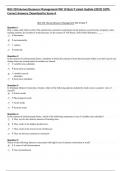
ATLS Post Test Review and Key Concepts
Actual Questions with Verified Answers (),
100% Guarantee Score Pass
1. Primary indicationfortransfer:Unavailabilityofsurgicalresourcesorsevere
qw qw qw w
q w
q qw qw qw qw
injuries.
qw
2. GCS score:Glasgow Coma Scale;measures consciousness level.
qw w
q qw qw w
q qw qw
3. Tensionpneumothorax:Life-threateningconditionrequiringimmediateneedle
w
q w
q w
q w
q w
q w
q
decompression.
qw
4. Spinalcord injury belowT-10:Usuallysparesbowel and bladder function.
w
q qw qw w
q w
q qw qw qw qw qw
5. Indicationfor chest tube insertion:Conditionslike pneumothorax ormassive
qw qw qw qw w
q qw qw qw qw
hemothorax.
qw
6. Immediate management of head injury:Prevent secondary brain injury
qw qw qw qw w
q qw qw qw
post-trauma.
qw
7. Celiotomy:Surgical procedure for abdominal exploration.
w
q qw qw qw qw
8. Diagnostic peritoneal lavage:Procedure to assess intra-abdominal bleeding.
qw qw w
q qw qw qw qw
9. Central venous pressure line:Used for monitoring venous blood pressure.
qw qw qw w
q qw qw qw qw qw
10. Frostbite treatment:Initial treatment involves warm (40°C) water immersion.
qw w
q qw qw qw qw qw qw
mailto:https://www.stuvia.com/user/Wisdoms 1 r/ r8
qw qw
, 11. Shock diagnosis criteria:Systolic blood pressure below 90 mm Hg.
qw qw w
q qw qw qw qw qw qw
12. Hyperflexion fractures:Inherently unstable injuries in upper thoracic spine. qw w
q qw qw qw qw qw qw
13. Spinal immobilization:Use scoop stretcher or long spine board.
qw w
q qw qw qw qw qw qw
14. Signs of hemothorax:Absence of breath sounds and dullness to percussion.
qw qw w
q qw qw qw qw qw qw qw
15. Volume replacement guide:Blood pressure is most reliable indicator.
qw qw w
q qw qw qw qw qw
16. Magnetic resonance imaging:Used to diagnose spinal cord injuries.
qw qw w
q qw qw qw qw qw
17. Respiratoryrateinshock:Maybeelevatedduetocompensatorymechanisms. w
q w
q w
q w
q w
q w
q w
q w
q w
q w
q
18. Pneumatic antishock garment:Used to stabilize patients in shock.
qw qw w
q qw qw qw qw qw
19. Diaphragmatic rupture:Contraindication for nasogastric intubation. qw w
q qw qw qw
20. Central cord syndrome:Most common spinal cord injury in children.
qw qw w
q qw qw qw qw qw qw
21. Endotracheal intubation:Indicated for patients with severe head injuries. qw w
q qw qw qw qw qw qw
22. External fixation:Used for stabilizing pelvic fractures.
qw w
q qw qw qw qw
23. Intravenouscrystalloidsolution:Administeredtomanagehypovolemic w
q w
q w
q w
q w
q w
q
shock.
qw
24. Jugular venous pressure:Indicator of right atrial pressure.
qw qw w
q qw qw qw qw
25. Cervical spine x-ray:Essential for assessing potential spinal injuries.
qw qw w
q qw qw qw qw qw
26. Epidural hematoma:Caused by arterial bleeding, often after trauma.
qw w
q qw qw qw qw qw qw
27. Subdural hematoma:Venous bleeding,slower onsetof symptoms.
qw w
q qw qw qw qw qw
28. Closed tube thoracostomy:Procedure to drain air/fluid from pleural space.
qw qw w
q qw qw qw qw qw qw
29. Ringer's lactate solution:IV fluid used for volume resuscitation.
qw qw w
q qw qw qw qw qw
30. Hypotension:Abnormally low blood pressure, here 60/0 mm Hg. w
q qw qw qw qw qw qw qw
31. Heart rate:Number of heartbeats per minute;here 160 bpm.
qw w
q qw qw qw qw w
q qw qw
32. Respiratory rate:Number of breaths per minute;here 14 breaths. qw w
q qw qw qw qw w
q qw qw
33. Arterialbloodgasdetermination:Testtomeasureoxygenandcarbondioxide
w
q w
q w
q w
q w
q w
q w
q w
q w
q w
q
levels.
qw
mailto:https://www.stuvia.com/user/Wisdoms 2 r/ r8
qw qw
Actual Questions with Verified Answers (),
100% Guarantee Score Pass
1. Primary indicationfortransfer:Unavailabilityofsurgicalresourcesorsevere
qw qw qw w
q w
q qw qw qw qw
injuries.
qw
2. GCS score:Glasgow Coma Scale;measures consciousness level.
qw w
q qw qw w
q qw qw
3. Tensionpneumothorax:Life-threateningconditionrequiringimmediateneedle
w
q w
q w
q w
q w
q w
q
decompression.
qw
4. Spinalcord injury belowT-10:Usuallysparesbowel and bladder function.
w
q qw qw w
q w
q qw qw qw qw qw
5. Indicationfor chest tube insertion:Conditionslike pneumothorax ormassive
qw qw qw qw w
q qw qw qw qw
hemothorax.
qw
6. Immediate management of head injury:Prevent secondary brain injury
qw qw qw qw w
q qw qw qw
post-trauma.
qw
7. Celiotomy:Surgical procedure for abdominal exploration.
w
q qw qw qw qw
8. Diagnostic peritoneal lavage:Procedure to assess intra-abdominal bleeding.
qw qw w
q qw qw qw qw
9. Central venous pressure line:Used for monitoring venous blood pressure.
qw qw qw w
q qw qw qw qw qw
10. Frostbite treatment:Initial treatment involves warm (40°C) water immersion.
qw w
q qw qw qw qw qw qw
mailto:https://www.stuvia.com/user/Wisdoms 1 r/ r8
qw qw
, 11. Shock diagnosis criteria:Systolic blood pressure below 90 mm Hg.
qw qw w
q qw qw qw qw qw qw
12. Hyperflexion fractures:Inherently unstable injuries in upper thoracic spine. qw w
q qw qw qw qw qw qw
13. Spinal immobilization:Use scoop stretcher or long spine board.
qw w
q qw qw qw qw qw qw
14. Signs of hemothorax:Absence of breath sounds and dullness to percussion.
qw qw w
q qw qw qw qw qw qw qw
15. Volume replacement guide:Blood pressure is most reliable indicator.
qw qw w
q qw qw qw qw qw
16. Magnetic resonance imaging:Used to diagnose spinal cord injuries.
qw qw w
q qw qw qw qw qw
17. Respiratoryrateinshock:Maybeelevatedduetocompensatorymechanisms. w
q w
q w
q w
q w
q w
q w
q w
q w
q w
q
18. Pneumatic antishock garment:Used to stabilize patients in shock.
qw qw w
q qw qw qw qw qw
19. Diaphragmatic rupture:Contraindication for nasogastric intubation. qw w
q qw qw qw
20. Central cord syndrome:Most common spinal cord injury in children.
qw qw w
q qw qw qw qw qw qw
21. Endotracheal intubation:Indicated for patients with severe head injuries. qw w
q qw qw qw qw qw qw
22. External fixation:Used for stabilizing pelvic fractures.
qw w
q qw qw qw qw
23. Intravenouscrystalloidsolution:Administeredtomanagehypovolemic w
q w
q w
q w
q w
q w
q
shock.
qw
24. Jugular venous pressure:Indicator of right atrial pressure.
qw qw w
q qw qw qw qw
25. Cervical spine x-ray:Essential for assessing potential spinal injuries.
qw qw w
q qw qw qw qw qw
26. Epidural hematoma:Caused by arterial bleeding, often after trauma.
qw w
q qw qw qw qw qw qw
27. Subdural hematoma:Venous bleeding,slower onsetof symptoms.
qw w
q qw qw qw qw qw
28. Closed tube thoracostomy:Procedure to drain air/fluid from pleural space.
qw qw w
q qw qw qw qw qw qw
29. Ringer's lactate solution:IV fluid used for volume resuscitation.
qw qw w
q qw qw qw qw qw
30. Hypotension:Abnormally low blood pressure, here 60/0 mm Hg. w
q qw qw qw qw qw qw qw
31. Heart rate:Number of heartbeats per minute;here 160 bpm.
qw w
q qw qw qw qw w
q qw qw
32. Respiratory rate:Number of breaths per minute;here 14 breaths. qw w
q qw qw qw qw w
q qw qw
33. Arterialbloodgasdetermination:Testtomeasureoxygenandcarbondioxide
w
q w
q w
q w
q w
q w
q w
q w
q w
q w
q
levels.
qw
mailto:https://www.stuvia.com/user/Wisdoms 2 r/ r8
qw qw