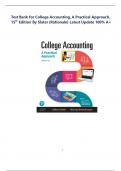
Test Bank for College Accounting, A Practical Approach,
15th Edition By Slater (Rationale) Latest Update 100% A+
1
, TABLE OF CONTENT
1. Accounting Concepts And Procedures
2. Debits And Credits: Analyzing And Recording Business Transactions
3. Beginning The Accounting Cycle
4. The Accounting Cycle Continued
4A. Appendix: Depreciation
5. The Accounting Cycle Completed
6. Banking Procedures And Control Of Cash
7. Calculating Pay And Recording Payroll Taxes: The Beginning Of The Payroll Process
8. Paying The Payroll, Depositing Payroll Taxes, And Filing The Required Quarterly And
Annual Tax Forms: The Conclusion Of The Payroll Process
9. Sales And Cash Receipts In A Perpetual Inventory System
10. Purchases And Cash Payments In A Perpetual Inventory System
11. Preparing A Worksheet For A Merchandise Company Using The Perpetual Method
12. Completion Of The Accounting Cycle For A Merchandise Company Using The Perpetual
Inventory Method
12A. Appendix: Accounting For Merchandise Inventory Using The Periodic Method Of
Inventory Valuation
13. Accounting For Bad Debts
14. Notes Receivable And Notes Payable
15. Accounting For Merchandise Inventory
16. Accounting For Property, Plant, Equipment, And Intangible Assets
17. Partnership
18. Corporations: Organizations And Stock
19. Corporations: Stock Values, Dividends, Treasury Stocks, And Retained Earnings
20. Corporations And Bonds Payable
21. Statement Of Cash Flows
22. Analyzing Financial Statements
23. The Voucher System
24. Departmental Accounting
25. Manufacturing Accounting
2
,Chapter: 1 Accounting Concepts And
Procedures
LEARNING OBJECTIVE1-1
1) The Type Of Business Organization Where The Owners Are NOT Personally Liable For The Business’s Debts
Is A:
A) Corporation
B) Partnership
C) Sole Proprietorship
D) All Of The
AboveANS: A
Diff: 2
LO: 1-1
AACSB: Reflective Thinking
Learning Outcome: Define Accounting Terms, Accounting Concepts And Principles
2) The Purpose Of The Accounting Process Is To Provide Financial Information About:
A) Sole Proprietorships
B) Small Businesses
C) Large Corporations
D) All Of These Answers Are
Correct ANS: D
Diff: 1
LO: 1-1
AACSB: Reflective Thinking
Learning Outcome: Define Accounting Terms, Accounting Concepts And Principles
3) Accounting Provides Information To:
A) Investors
B) Government
C) Managers
D) All Of These Answers Are
Correct ANS: D
Diff: 2
LO: 1-1
AACSB: Reflective Thinking
Learning Outcome: Define Accounting Terms, Accounting Concepts And Principles
3
, 4) Which Of The Following Is A Characteristic Of A Sole Proprietorship?
A) Business Owned By More Than One Person.
B) Easy To Form.
C) Each Stockholder Acts As An Owner Of The Company.
D) Can Continue
Indefinitely.ANS: B
Diff: 1
LO: 1-1
AACSB: Reflective Thinking
Learning Outcome: Define Accounting Terms, Accounting Concepts And Principles
5) A Partnership Is A Business Which:
A) Is Easy To Form
B) Ends With The Death Of A Partner
C) Is Owned By More Than One Person
D) All Of These Answers Are
Correct ANS: D
Diff: 1
LO: 1-1
AACSB: Reflective Thinking
Learning Outcome: Define Accounting Terms, Accounting Concepts And Principles
6) Which Is An Advantage Of A Sole Proprietorship Form Of Business?
A) There Is Limited Personal Risk.
B) The Business Can Continue Indefinitely.
C) The Owner Makes All The Decisions.
D) The Business Is Owned By
Stockholders.ANS: C
Diff: 1
LO: 1-1
AACSB: Reflective Thinking
Learning Outcome: Define Accounting Terms, Accounting Concepts And Principles
7) Which Of The Following Is NOT A Type Of Business Organization?
A) Corporation
B) Partnership
C) Sole Proprietorship
D) Limited Asset Corporation
ANS: D
Diff: 1
LO: 1-1
AACSB: Reflective Thinking
Learning Outcome: Define Accounting Terms, Accounting Concepts And Principles
4
15th Edition By Slater (Rationale) Latest Update 100% A+
1
, TABLE OF CONTENT
1. Accounting Concepts And Procedures
2. Debits And Credits: Analyzing And Recording Business Transactions
3. Beginning The Accounting Cycle
4. The Accounting Cycle Continued
4A. Appendix: Depreciation
5. The Accounting Cycle Completed
6. Banking Procedures And Control Of Cash
7. Calculating Pay And Recording Payroll Taxes: The Beginning Of The Payroll Process
8. Paying The Payroll, Depositing Payroll Taxes, And Filing The Required Quarterly And
Annual Tax Forms: The Conclusion Of The Payroll Process
9. Sales And Cash Receipts In A Perpetual Inventory System
10. Purchases And Cash Payments In A Perpetual Inventory System
11. Preparing A Worksheet For A Merchandise Company Using The Perpetual Method
12. Completion Of The Accounting Cycle For A Merchandise Company Using The Perpetual
Inventory Method
12A. Appendix: Accounting For Merchandise Inventory Using The Periodic Method Of
Inventory Valuation
13. Accounting For Bad Debts
14. Notes Receivable And Notes Payable
15. Accounting For Merchandise Inventory
16. Accounting For Property, Plant, Equipment, And Intangible Assets
17. Partnership
18. Corporations: Organizations And Stock
19. Corporations: Stock Values, Dividends, Treasury Stocks, And Retained Earnings
20. Corporations And Bonds Payable
21. Statement Of Cash Flows
22. Analyzing Financial Statements
23. The Voucher System
24. Departmental Accounting
25. Manufacturing Accounting
2
,Chapter: 1 Accounting Concepts And
Procedures
LEARNING OBJECTIVE1-1
1) The Type Of Business Organization Where The Owners Are NOT Personally Liable For The Business’s Debts
Is A:
A) Corporation
B) Partnership
C) Sole Proprietorship
D) All Of The
AboveANS: A
Diff: 2
LO: 1-1
AACSB: Reflective Thinking
Learning Outcome: Define Accounting Terms, Accounting Concepts And Principles
2) The Purpose Of The Accounting Process Is To Provide Financial Information About:
A) Sole Proprietorships
B) Small Businesses
C) Large Corporations
D) All Of These Answers Are
Correct ANS: D
Diff: 1
LO: 1-1
AACSB: Reflective Thinking
Learning Outcome: Define Accounting Terms, Accounting Concepts And Principles
3) Accounting Provides Information To:
A) Investors
B) Government
C) Managers
D) All Of These Answers Are
Correct ANS: D
Diff: 2
LO: 1-1
AACSB: Reflective Thinking
Learning Outcome: Define Accounting Terms, Accounting Concepts And Principles
3
, 4) Which Of The Following Is A Characteristic Of A Sole Proprietorship?
A) Business Owned By More Than One Person.
B) Easy To Form.
C) Each Stockholder Acts As An Owner Of The Company.
D) Can Continue
Indefinitely.ANS: B
Diff: 1
LO: 1-1
AACSB: Reflective Thinking
Learning Outcome: Define Accounting Terms, Accounting Concepts And Principles
5) A Partnership Is A Business Which:
A) Is Easy To Form
B) Ends With The Death Of A Partner
C) Is Owned By More Than One Person
D) All Of These Answers Are
Correct ANS: D
Diff: 1
LO: 1-1
AACSB: Reflective Thinking
Learning Outcome: Define Accounting Terms, Accounting Concepts And Principles
6) Which Is An Advantage Of A Sole Proprietorship Form Of Business?
A) There Is Limited Personal Risk.
B) The Business Can Continue Indefinitely.
C) The Owner Makes All The Decisions.
D) The Business Is Owned By
Stockholders.ANS: C
Diff: 1
LO: 1-1
AACSB: Reflective Thinking
Learning Outcome: Define Accounting Terms, Accounting Concepts And Principles
7) Which Of The Following Is NOT A Type Of Business Organization?
A) Corporation
B) Partnership
C) Sole Proprietorship
D) Limited Asset Corporation
ANS: D
Diff: 1
LO: 1-1
AACSB: Reflective Thinking
Learning Outcome: Define Accounting Terms, Accounting Concepts And Principles
4