The Ordering of Europe in the 20th and 21st Century
Week 1 – 3 September 2019
Novel from the 1930s about a future National Socialist “Eurafrican” empire
o Europe and Africa should form one large economic entity. The two parts of the world
need each other.
The mental map of Europe of members “Cold War generation” like yours truly (Robin de
Bruin himself)
o This is normality for many members of the cold war generation. No Lithuania,
Croatia, Serbia etc. only the Soviet Union and Yugoslavia existed.
o Strong distinction between east and west Europe.
o Still feeling of being on communist territory in east Germany.
o Borders within Europe mattered much more during the Cold War then they do today.
o You needed a lot of coins to make a phone call from France to the Netherlands.
o Map shows the different borders of two different generations (during Cold War and
after Cold War).
Ordering
• Activity of ordering: focus on “mental maps” of Europe
• Ordering & bordering not just geographical: focus on community and diversity in
Europe.
• Activity of ordering:
1. Dividing lines between “included” and “non-included” groups, thinking about
solidarity, diversity and “the other” (based on religion, norms & values, class,
political views, ethnicity, gender, age, nationality & citizenship)
2. Coherence of narratives (political ideologies, generation clash, class struggle,
battle of the sexes etc.)
o How Europeans saw their roles and thought that groups were ordered.
o What did solidarity mean?
o We will look at the coherence of the narratives of different groups within Europe e.g.
political ideologies, ideas about a generation clash, the battles of the sexes.
o Focus on dividing lines between included and non-included groups.
1
,Tony Judt
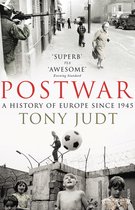
o Universalist social democrat is how he described himself.
o Zionist and Marxist.
o Teacher of history.
o His book contains footnotes and bibliography.
o Judt claims that Europe was able to rebuild itself politically and economically after
the second world war only by forgetting the past. Europe was able to define itself
culturally and morally by forgetting the past.
o The atrocities of the Second World War were big, so people wanted to forget and did
not want to have fascist regimes again, so the culture and mentality changed. The
atrocities of the Second World War also resulted in people wanting to change the
continent and therefore rebuilding it completely politically and economically.
History as a form of ordering
• Chronological ordering:
- Turning points
• Geographical ordering:
- National history
- Transnational history
- Comparative history
- European history
- World history/global history
• Subdisciplinary ordering:
- Economic history
- Cultural history
- Intellectual history
- History of mentalities
- etc.
o Academic history is a form of ordering itself.
This week’s main topic: Ordering of Europe by political “families” (before 1945)
• Capitalist Democracy
• Authoritarian (Catholic, Corporatist) Social-Conservatism/Fascism/Nazism
• Communism
• What were the boundaries between these systems? How did they classify “friend” or
“foe”?
• To what extent can these systems be regarded as “Europeanist” (not: European)
systems?
o How capitalist democracy, now authoritarian conservatives and communists looked
at each other.
o To what extent can these systems be regarded as Europeanist systems?
o Europeanist: make analysis that characterize European politics etc.
Europe after the First World War
• League of Nations: national self-determination and democracy. Disintegration
Austro-Hungarian empire.
• Problems ethnic minorities in new nation states.
2
, • Fear of “class struggle” and communism after Russian Revolution 1917.
• Agricultural crisis after the First World War, economic protectionism European
states.
o In the beginning of the 20th century, the world was Europeanized as the world was
colonialized by the Europeans.
o After WWI there was a decline in the position of the power of the colonizers.
o There was a feeling of insecurity because of the Europeans losing power. The feeling
of crisis was intensified by the fear of communism spreading and by the communist
revolution in 1917.
o After the end of the WWI hope was put in the League of Nations, established by the
US.
o The division of the Austro-Hungarian empire in smaller states was in accordance with
the ideas of the ideas of the League of Nations. It was in accordance with the idea of
national self-determination. However, it caused different problems as ethnic conflicts
between different populations arise.
o The aim of the League of Nations (peace and cooperation) was frustrated by the
conditions of peace that the UK and France put upon Germany. Germany had to
make enormous reparations.
o The tendency towards increasing protectionism began. National states started to
protect their own economies and their own agricultural systems. This is an important
starting point for the crisis of the interwar years.
o During WWI Europe’s own agricultural production shrank and afterwards there was
an overload of agricultural products.
New democracies under pressure
• Democratic politicians were blamed for artificially dividing “the people”/ “the nation”
in order to gain votes.
• Little confidence in the capacity of the majority of the voters to choose wisely.
o After end of WWI new representative parliamentary democracy was introduced.
o Democratic politicians were blamed for dividing the people. People did not trust
politicians.
o People did not trust other people to vote wisely. Little confidence in capacity.
o Fascism was the response to this deeply felt crisis (economic crisis)
o Mussolini came into power in 1922.
Definitions of Fascism/Nazism
• Attempt of the ruling capitalist class to remain in power during crisis of capitalism
(Communist view)
• More subtle form of state planning than Socialism (Capitalist democratic view,
Friedrich Hayek)
• Anti-Marxism - radically opposed and yet related to Marxism (Fascism expert Ernst
Nolte 1963)
3
, • Conviction that only a populist, trans-class movement of purifying, cathartic national
rebirth can stem tide of decadence (Fascism expert Roger Griffin 2007)
• Creating the “new man” (Square in front of the Stadio Olimpico, Rome)
o One can interpret the essence of fascism in various ways.
o Communist view: thinking of it as a reaction to communism.
o Role of identity: fascism is an extreme form of nationalism. Fascism is a response to
the death of God.
o The Communists believe that fascism is a form of capitalism (in a crisis).
o Capitalist: fascism resembles socialism.
Marxist interpretation of the origins of the Second World War
o These views look at the origins of the Second World War in completely different
ways, but they do that from their own viewpoints.
o The main ideologies of the interwar year ordered the political landscape from their
own point of view.
Ordering “other” ideologies from an ideological point of view
• Liberal Democrats: “Fascism and Communism are both totalitarian, statist,
ideologies”
• Communism: “Fascism is the result of the inner contradictions of capitalism (and
Social Democracy is the accomplice of capitalism)”
• National Socialism: “Capitalism and Communism are part of the same global Jewish
conspiracy”
o Communism: struggle between working class and elite.
o Hitler did not acknowledge a class struggle. As long as the property class and the
working class were from the same race, there was no injustice.
o The Third Reich had overcome injustice between classes.
o According to Hitler there was an antagonism between capitalism and communism,
but it was all part of Jewish conspiracy.
4
Week 1 – 3 September 2019
Novel from the 1930s about a future National Socialist “Eurafrican” empire
o Europe and Africa should form one large economic entity. The two parts of the world
need each other.
The mental map of Europe of members “Cold War generation” like yours truly (Robin de
Bruin himself)
o This is normality for many members of the cold war generation. No Lithuania,
Croatia, Serbia etc. only the Soviet Union and Yugoslavia existed.
o Strong distinction between east and west Europe.
o Still feeling of being on communist territory in east Germany.
o Borders within Europe mattered much more during the Cold War then they do today.
o You needed a lot of coins to make a phone call from France to the Netherlands.
o Map shows the different borders of two different generations (during Cold War and
after Cold War).
Ordering
• Activity of ordering: focus on “mental maps” of Europe
• Ordering & bordering not just geographical: focus on community and diversity in
Europe.
• Activity of ordering:
1. Dividing lines between “included” and “non-included” groups, thinking about
solidarity, diversity and “the other” (based on religion, norms & values, class,
political views, ethnicity, gender, age, nationality & citizenship)
2. Coherence of narratives (political ideologies, generation clash, class struggle,
battle of the sexes etc.)
o How Europeans saw their roles and thought that groups were ordered.
o What did solidarity mean?
o We will look at the coherence of the narratives of different groups within Europe e.g.
political ideologies, ideas about a generation clash, the battles of the sexes.
o Focus on dividing lines between included and non-included groups.
1
,Tony Judt
o Universalist social democrat is how he described himself.
o Zionist and Marxist.
o Teacher of history.
o His book contains footnotes and bibliography.
o Judt claims that Europe was able to rebuild itself politically and economically after
the second world war only by forgetting the past. Europe was able to define itself
culturally and morally by forgetting the past.
o The atrocities of the Second World War were big, so people wanted to forget and did
not want to have fascist regimes again, so the culture and mentality changed. The
atrocities of the Second World War also resulted in people wanting to change the
continent and therefore rebuilding it completely politically and economically.
History as a form of ordering
• Chronological ordering:
- Turning points
• Geographical ordering:
- National history
- Transnational history
- Comparative history
- European history
- World history/global history
• Subdisciplinary ordering:
- Economic history
- Cultural history
- Intellectual history
- History of mentalities
- etc.
o Academic history is a form of ordering itself.
This week’s main topic: Ordering of Europe by political “families” (before 1945)
• Capitalist Democracy
• Authoritarian (Catholic, Corporatist) Social-Conservatism/Fascism/Nazism
• Communism
• What were the boundaries between these systems? How did they classify “friend” or
“foe”?
• To what extent can these systems be regarded as “Europeanist” (not: European)
systems?
o How capitalist democracy, now authoritarian conservatives and communists looked
at each other.
o To what extent can these systems be regarded as Europeanist systems?
o Europeanist: make analysis that characterize European politics etc.
Europe after the First World War
• League of Nations: national self-determination and democracy. Disintegration
Austro-Hungarian empire.
• Problems ethnic minorities in new nation states.
2
, • Fear of “class struggle” and communism after Russian Revolution 1917.
• Agricultural crisis after the First World War, economic protectionism European
states.
o In the beginning of the 20th century, the world was Europeanized as the world was
colonialized by the Europeans.
o After WWI there was a decline in the position of the power of the colonizers.
o There was a feeling of insecurity because of the Europeans losing power. The feeling
of crisis was intensified by the fear of communism spreading and by the communist
revolution in 1917.
o After the end of the WWI hope was put in the League of Nations, established by the
US.
o The division of the Austro-Hungarian empire in smaller states was in accordance with
the ideas of the ideas of the League of Nations. It was in accordance with the idea of
national self-determination. However, it caused different problems as ethnic conflicts
between different populations arise.
o The aim of the League of Nations (peace and cooperation) was frustrated by the
conditions of peace that the UK and France put upon Germany. Germany had to
make enormous reparations.
o The tendency towards increasing protectionism began. National states started to
protect their own economies and their own agricultural systems. This is an important
starting point for the crisis of the interwar years.
o During WWI Europe’s own agricultural production shrank and afterwards there was
an overload of agricultural products.
New democracies under pressure
• Democratic politicians were blamed for artificially dividing “the people”/ “the nation”
in order to gain votes.
• Little confidence in the capacity of the majority of the voters to choose wisely.
o After end of WWI new representative parliamentary democracy was introduced.
o Democratic politicians were blamed for dividing the people. People did not trust
politicians.
o People did not trust other people to vote wisely. Little confidence in capacity.
o Fascism was the response to this deeply felt crisis (economic crisis)
o Mussolini came into power in 1922.
Definitions of Fascism/Nazism
• Attempt of the ruling capitalist class to remain in power during crisis of capitalism
(Communist view)
• More subtle form of state planning than Socialism (Capitalist democratic view,
Friedrich Hayek)
• Anti-Marxism - radically opposed and yet related to Marxism (Fascism expert Ernst
Nolte 1963)
3
, • Conviction that only a populist, trans-class movement of purifying, cathartic national
rebirth can stem tide of decadence (Fascism expert Roger Griffin 2007)
• Creating the “new man” (Square in front of the Stadio Olimpico, Rome)
o One can interpret the essence of fascism in various ways.
o Communist view: thinking of it as a reaction to communism.
o Role of identity: fascism is an extreme form of nationalism. Fascism is a response to
the death of God.
o The Communists believe that fascism is a form of capitalism (in a crisis).
o Capitalist: fascism resembles socialism.
Marxist interpretation of the origins of the Second World War
o These views look at the origins of the Second World War in completely different
ways, but they do that from their own viewpoints.
o The main ideologies of the interwar year ordered the political landscape from their
own point of view.
Ordering “other” ideologies from an ideological point of view
• Liberal Democrats: “Fascism and Communism are both totalitarian, statist,
ideologies”
• Communism: “Fascism is the result of the inner contradictions of capitalism (and
Social Democracy is the accomplice of capitalism)”
• National Socialism: “Capitalism and Communism are part of the same global Jewish
conspiracy”
o Communism: struggle between working class and elite.
o Hitler did not acknowledge a class struggle. As long as the property class and the
working class were from the same race, there was no injustice.
o The Third Reich had overcome injustice between classes.
o According to Hitler there was an antagonism between capitalism and communism,
but it was all part of Jewish conspiracy.
4