ANCC APRN EXAM QUESTIONS WITH ALL CORRECT
& VERIFIED ANSWERS (UPDATED TO PASS)
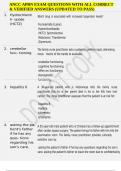
1. Hydrochlorot Which drug is associated with increased lipoprotein levels?
h- iazide
(HCTZ) Furosemide (Lasix).
Hydrochlorothiazide
(HCTZ). Spironolactone
(Aldactone). Triamterene
(Dyrenium).
2. cerebellar The family nurse practitioner asks a patient to perform rapid, alternating
func- tioning move- ments of the hands to evaluate:
cerebellar functioning.
cognitive functioning.
reflex arc functioning.
stereognostic
functioning.
3. hepatitis B. A 38-year-old patient who is Vietnamese tells the family nurse
practitioner that his or her parent died in his or her 40s from liver
cancer. The nurse practitioner assesses that the patient is at risk for:
hepatitis B.
malaria.
tularemia.
tyrosinemia
4. asking the pa- A 55-year-old male patient who is Chinese has a follow-up appointment
tient's father after cardiac bypass surgery. The patient brings his father with him into the
if he has any examination room. The family nurse practitioner provides culturally
ques- tions sensitive care by:
regarding his
son's care. asking the patient's father if he has any questions regarding his son's
care. asking the patient's father to leave the room due to confidentiality
1/
38
, ANCC APRN EXAM QUESTIONS WITH ALL CORRECT
& VERIFIED ANSWERS (UPDATED TO PASS)
issues. performing the
examination without
commenting to the
patient's father. performing
the examination, then telling
the patient's father the
examination findings.
2/
38
, ANCC APRN EXAM QUESTIONS WITH ALL CORRECT
& VERIFIED ANSWERS (UPDATED TO PASS)
5. long latency A diflcult aspect of determining occupational exposure to disease is the:
pe- riod
between ex- confidentiality of the information within company records.
posure and inaccuracy of occupational disease reporting.
dis- ease long latency period between exposure and disease
develop- development. reliance on workers' memories.
ment.
The family nurse practitioner exhibits professional leadership by:
6. creating a adding clinical protocols to the nurse practitioner scope of practice.
task force to comparing the workplace roles of the registered nurse and the nurse
address practitioner. creating a task force to address scope-of-practice
scope-of-prac- concerns.
tice concerns. lobbying to eliminate continuing education requirements.
To comply with regulations for third-party payor reimbursement and
documenta- tion, a family nurse practitioner correlates:
7. evaluation
and evaluation and management code with history, examination and medical
management decision making.
code with health outcomes with physical examination findings and plan of care.
history, medication orders and treatment plan with electronic billing.
examination patient privacy with informed consent.
and medical
decision The family nurse practitioner examines a patient who has sustained a non-
making work-re- lated injury that interferes with the patient's ability to perform his
or her job. The patient does not qualify for medical disability and has a
reasonable chance of engaging in a suitable occupation with proper
8. vocational re- therapy. The nurse practitioner recommends that the patient apply for:
habilitation
ser- vices. Family and Medical Leave Act
benefits. home health services.
3/
38
, ANCC APRN exam
questions
Social Security benefits.
vocational rehabilitation
services.
9. requesting a
re- ferral for A 45-year-old patient who is an opera singer reports progressive
evalua- hoarseness for the last four weeks. The hoarseness began after a three-
hour opera performance.
tion of the larynx. The patient does not smoke and reports no weight loss, upper
respiratory infection, dysphagia, or shortness of breath. The family
nurse practitioner manages this patient by:
ordering a computed tomography scan of the head.
ordering an immediate lateral neck x-ray.
prescribing systemic antibiotics and cool mist
inhalations. requesting a referral for evaluation of
the larynx.
10. one month
and six 12. Motivational in- terviewing.
months.
11. tertiary
preven- tion.
4/
38
& VERIFIED ANSWERS (UPDATED TO PASS)
1. Hydrochlorot Which drug is associated with increased lipoprotein levels?
h- iazide
(HCTZ) Furosemide (Lasix).
Hydrochlorothiazide
(HCTZ). Spironolactone
(Aldactone). Triamterene
(Dyrenium).
2. cerebellar The family nurse practitioner asks a patient to perform rapid, alternating
func- tioning move- ments of the hands to evaluate:
cerebellar functioning.
cognitive functioning.
reflex arc functioning.
stereognostic
functioning.
3. hepatitis B. A 38-year-old patient who is Vietnamese tells the family nurse
practitioner that his or her parent died in his or her 40s from liver
cancer. The nurse practitioner assesses that the patient is at risk for:
hepatitis B.
malaria.
tularemia.
tyrosinemia
4. asking the pa- A 55-year-old male patient who is Chinese has a follow-up appointment
tient's father after cardiac bypass surgery. The patient brings his father with him into the
if he has any examination room. The family nurse practitioner provides culturally
ques- tions sensitive care by:
regarding his
son's care. asking the patient's father if he has any questions regarding his son's
care. asking the patient's father to leave the room due to confidentiality
1/
38
, ANCC APRN EXAM QUESTIONS WITH ALL CORRECT
& VERIFIED ANSWERS (UPDATED TO PASS)
issues. performing the
examination without
commenting to the
patient's father. performing
the examination, then telling
the patient's father the
examination findings.
2/
38
, ANCC APRN EXAM QUESTIONS WITH ALL CORRECT
& VERIFIED ANSWERS (UPDATED TO PASS)
5. long latency A diflcult aspect of determining occupational exposure to disease is the:
pe- riod
between ex- confidentiality of the information within company records.
posure and inaccuracy of occupational disease reporting.
dis- ease long latency period between exposure and disease
develop- development. reliance on workers' memories.
ment.
The family nurse practitioner exhibits professional leadership by:
6. creating a adding clinical protocols to the nurse practitioner scope of practice.
task force to comparing the workplace roles of the registered nurse and the nurse
address practitioner. creating a task force to address scope-of-practice
scope-of-prac- concerns.
tice concerns. lobbying to eliminate continuing education requirements.
To comply with regulations for third-party payor reimbursement and
documenta- tion, a family nurse practitioner correlates:
7. evaluation
and evaluation and management code with history, examination and medical
management decision making.
code with health outcomes with physical examination findings and plan of care.
history, medication orders and treatment plan with electronic billing.
examination patient privacy with informed consent.
and medical
decision The family nurse practitioner examines a patient who has sustained a non-
making work-re- lated injury that interferes with the patient's ability to perform his
or her job. The patient does not qualify for medical disability and has a
reasonable chance of engaging in a suitable occupation with proper
8. vocational re- therapy. The nurse practitioner recommends that the patient apply for:
habilitation
ser- vices. Family and Medical Leave Act
benefits. home health services.
3/
38
, ANCC APRN exam
questions
Social Security benefits.
vocational rehabilitation
services.
9. requesting a
re- ferral for A 45-year-old patient who is an opera singer reports progressive
evalua- hoarseness for the last four weeks. The hoarseness began after a three-
hour opera performance.
tion of the larynx. The patient does not smoke and reports no weight loss, upper
respiratory infection, dysphagia, or shortness of breath. The family
nurse practitioner manages this patient by:
ordering a computed tomography scan of the head.
ordering an immediate lateral neck x-ray.
prescribing systemic antibiotics and cool mist
inhalations. requesting a referral for evaluation of
the larynx.
10. one month
and six 12. Motivational in- terviewing.
months.
11. tertiary
preven- tion.
4/
38