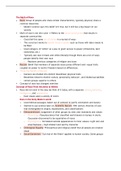
competitive environment: refers to external factors that impact businesses
within an industry, including the actions and strategies of competitors. Businesses
can analyse this environment using tools like SWOT analysis and Porter's Five
Forces. (Threat of new entrants, Bargaining power of suppliers, Bargaining power of
customers, Threat of substitute products, Industry rivalry)
-Effects of Competition on Businesses:
Profitability: Intense competition can reduce profit margins, leading to lower
prices. Companies focus on cost management and value-added services to stay
profitable.
Business Size: Larger firms often dominate due to economies of scale, making it
harder for smaller businesses to compete.
Business Behavior: Companies may adopt aggressive or socially responsible
strategies, impacting marketing and customer engagement.
Product Development: Competition drives innovation, leading to improved
products and faster development cycles.
Market Share and Revenue: Companies must adapt to retain or grow market
share, with competition directly impacting sales and market presence.
Pressure to Innovate: Businesses innovate to stay ahead of competitors,
improving products and services.
Pricing Strategies: Price wars often reduce margins, with businesses using
promotions or cost-cutting to stay competitive.
Quality: Companies enhance product quality and focus on customer satisfaction to
build loyalty.
Efficiency: Firms streamline operations to reduce costs and improve profitability.
Risk of Failure: Smaller firms may face higher risks of failure due to intense
competition.
-Strategies for Small Firms to Compete:
Niche Market: Specializing in deprived markets helps build expertise and loyalty.
Personalized Customer Service: Providing exceptional service leads to higher
customer satisfaction.
Agile Operations: Small firms can adapt quickly to changes and customer needs.
Digital Marketing and social media: These tools help small firms reach a broad
audience affordably.
Quality Over Quantity: Focusing on high-quality products builds customer loyalty.
Collaboration and Networking: Partnering with other businesses expands reach
and resources.
Innovation and Creativity: Constant innovation can provide a competitive edge in
niche markets.
-Business Aims: Broad, long-term goals guiding a business's purpose and
direction. Not specific or measurable but provide overall vision.
, Examples include profit maximization, growth, survival, social responsibility,
customer satisfaction, market leadership, and innovation.
-Mission Statements: Formal summary outlining a business's purpose, standards,
and strategy.
Key elements include, Purpose: Reason for existence beyond profit. Values: Core
principles guiding the business. Standards & Behavior: Expectations for business
operations. Strategy: High-level plan to achieve goals.
-Development of Corporate Objectives: Specific, medium to long-term goals
that help achieve business aims.
Steps to develop include understanding business aims, analyzing the environment,
defining SMART objectives, and ensuring effective communication and monitoring.
-SMART Objectives:
Specific: Clear and defined goals.
Measurable: Track progress with criteria.
Achievable: Realistic within resources.
Relevant: Aligned with the company’s mission.
Time-bound: Set deadlines.
-Departmental and Functional Objectives:
Departmental Objectives: Tailored to specific departments (e.g., marketing,
operations).
Functional Objectives: Detailed goals within a department to achieve broader
objectives.
-Relationship Between Objectives:
Corporate Objectives: Broad, company-wide goals.
Departmental Objectives: Department-specific goals supporting corporate
objectives.
-Functional Objectives: Specific tasks that operationalize departmental goals.
-Differences Between Small and Large Firms in Goals:
Small Firms: Focus on survival, steady growth, and niche markets.
Large Firms: Focus on rapid growth, market domination, and innovation at a global
scale.
-Critical Appraisal of Mission Statements and Corporate Aims: Mission
Statements:
Strengths: Provides focus, inspires stakeholders, and guides strategic decisions.
Weaknesses: Can be too vague, misaligned with actions, impractical, or outdated.
-Corporate Aims:
within an industry, including the actions and strategies of competitors. Businesses
can analyse this environment using tools like SWOT analysis and Porter's Five
Forces. (Threat of new entrants, Bargaining power of suppliers, Bargaining power of
customers, Threat of substitute products, Industry rivalry)
-Effects of Competition on Businesses:
Profitability: Intense competition can reduce profit margins, leading to lower
prices. Companies focus on cost management and value-added services to stay
profitable.
Business Size: Larger firms often dominate due to economies of scale, making it
harder for smaller businesses to compete.
Business Behavior: Companies may adopt aggressive or socially responsible
strategies, impacting marketing and customer engagement.
Product Development: Competition drives innovation, leading to improved
products and faster development cycles.
Market Share and Revenue: Companies must adapt to retain or grow market
share, with competition directly impacting sales and market presence.
Pressure to Innovate: Businesses innovate to stay ahead of competitors,
improving products and services.
Pricing Strategies: Price wars often reduce margins, with businesses using
promotions or cost-cutting to stay competitive.
Quality: Companies enhance product quality and focus on customer satisfaction to
build loyalty.
Efficiency: Firms streamline operations to reduce costs and improve profitability.
Risk of Failure: Smaller firms may face higher risks of failure due to intense
competition.
-Strategies for Small Firms to Compete:
Niche Market: Specializing in deprived markets helps build expertise and loyalty.
Personalized Customer Service: Providing exceptional service leads to higher
customer satisfaction.
Agile Operations: Small firms can adapt quickly to changes and customer needs.
Digital Marketing and social media: These tools help small firms reach a broad
audience affordably.
Quality Over Quantity: Focusing on high-quality products builds customer loyalty.
Collaboration and Networking: Partnering with other businesses expands reach
and resources.
Innovation and Creativity: Constant innovation can provide a competitive edge in
niche markets.
-Business Aims: Broad, long-term goals guiding a business's purpose and
direction. Not specific or measurable but provide overall vision.
, Examples include profit maximization, growth, survival, social responsibility,
customer satisfaction, market leadership, and innovation.
-Mission Statements: Formal summary outlining a business's purpose, standards,
and strategy.
Key elements include, Purpose: Reason for existence beyond profit. Values: Core
principles guiding the business. Standards & Behavior: Expectations for business
operations. Strategy: High-level plan to achieve goals.
-Development of Corporate Objectives: Specific, medium to long-term goals
that help achieve business aims.
Steps to develop include understanding business aims, analyzing the environment,
defining SMART objectives, and ensuring effective communication and monitoring.
-SMART Objectives:
Specific: Clear and defined goals.
Measurable: Track progress with criteria.
Achievable: Realistic within resources.
Relevant: Aligned with the company’s mission.
Time-bound: Set deadlines.
-Departmental and Functional Objectives:
Departmental Objectives: Tailored to specific departments (e.g., marketing,
operations).
Functional Objectives: Detailed goals within a department to achieve broader
objectives.
-Relationship Between Objectives:
Corporate Objectives: Broad, company-wide goals.
Departmental Objectives: Department-specific goals supporting corporate
objectives.
-Functional Objectives: Specific tasks that operationalize departmental goals.
-Differences Between Small and Large Firms in Goals:
Small Firms: Focus on survival, steady growth, and niche markets.
Large Firms: Focus on rapid growth, market domination, and innovation at a global
scale.
-Critical Appraisal of Mission Statements and Corporate Aims: Mission
Statements:
Strengths: Provides focus, inspires stakeholders, and guides strategic decisions.
Weaknesses: Can be too vague, misaligned with actions, impractical, or outdated.
-Corporate Aims: