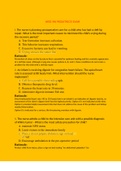
North Carolina Dental Jurisprudence
Finals Assessment Review
(Questions & Solutions)
2025
©2025
, Question 1 (Multiple Choice):
In North Carolina, the primary purpose of dental jurisprudence is to:
A. Emphasize clinical treatment planning exclusively.
B. Integrate state statutes, administrative rules, and ethical guidelines
into daily practice.
C. Focus solely on billing and reimbursement procedures.
D. Analyze patient treatment outcomes from a clinical perspective.
- Correct ANS: B
- Rationale: Dental jurisprudence in North Carolina is designed to
ensure that dental professionals practice in compliance with the state’s
law, administrative rules, and ethical standards, thereby safeguarding
patient welfare and legal integrity.
---
Question 2 (Fill-in-the-Blank):
The statutory foundation that governs dental practice in North Carolina is
the __________.
- Correct ANS: North Carolina Dental Practice Act
- Rationale: This act is the primary legislative instrument that outlines
the legal boundaries, licensure requirements, and professional standards
for dental practice in the state.
---
Question 3 (True/False):
Dental jurisprudence in North Carolina deals solely with clinical
procedures and does not address ethical considerations.
- Correct ANS: False
©2025
,- Rationale: North Carolina dental jurisprudence covers a broad
spectrum of topics—including legal statutes, administrative rules, ethical
responsibilities, and recordkeeping—ensuring comprehensive oversight
of dental practice.
---
Question 4 (Multiple Choice):
A North Carolina dentist is confronted with a situation where patient
confidentiality is at risk. Which legal and ethical concept primarily comes
into play?
A. Clinical treatment efficacy
B. Staff delegation protocols
C. Patient privacy and confidentiality
D. Financial management and billing
- Correct ANS: C
- Rationale: Protecting patient privacy is a cornerstone of both legal
regulation and ethical practice; breaches in confidentiality are taken very
seriously in North Carolina jurisprudence.
---
Question 5 (Fill-in-the-Blank):
Before performing any significant dental procedure, North Carolina
dentists must obtain __________ consent from their patients.
- Correct ANS: informed
- Rationale: Informed consent is a legal and ethical requirement that
ensures patients are fully aware of the risks, benefits, and alternatives to
the proposed treatment.
---
Question 6 (Multiple Response):
©2025
, Select all components that are considered foundational in the
introduction of North Carolina dental jurisprudence:
A. Licensing and regulatory compliance
B. Ethical principles including patient autonomy and confidentiality
C. Detailed clinical treatment protocols
D. Recordkeeping requirements and documentation
E. Public health and infection control standards
- Correct ANSs: A, B, D, E
- Rationale: The introductory curriculum covers the legal basis for
licensure (A), ethical considerations (B), proper recordkeeping (D), and
public health guidelines (E); clinical treatment protocols (C), while
important, fall under clinical practice rather than jurisprudence.
---
Section 2: Statutory Framework and Regulations (6 Questions)
Question 7 (Multiple Choice):
Which of the following serves as the primary statutory instrument for
dental practice in North Carolina?
A. North Carolina Medical Practice Act
B. North Carolina Dental Practice Act
C. Federal Dental Licensing Regulations
D. North Carolina Health Care Standards
- Correct ANS: B
- Rationale: The North Carolina Dental Practice Act establishes the legal
framework for all aspects of dental practice in the state, including
licensure, scope of practice, and disciplinary measures.
---
Question 8 (Fill-in-the-Blank):
The detailed protocols, procedures, and interpretative guidelines issued
©2025
Finals Assessment Review
(Questions & Solutions)
2025
©2025
, Question 1 (Multiple Choice):
In North Carolina, the primary purpose of dental jurisprudence is to:
A. Emphasize clinical treatment planning exclusively.
B. Integrate state statutes, administrative rules, and ethical guidelines
into daily practice.
C. Focus solely on billing and reimbursement procedures.
D. Analyze patient treatment outcomes from a clinical perspective.
- Correct ANS: B
- Rationale: Dental jurisprudence in North Carolina is designed to
ensure that dental professionals practice in compliance with the state’s
law, administrative rules, and ethical standards, thereby safeguarding
patient welfare and legal integrity.
---
Question 2 (Fill-in-the-Blank):
The statutory foundation that governs dental practice in North Carolina is
the __________.
- Correct ANS: North Carolina Dental Practice Act
- Rationale: This act is the primary legislative instrument that outlines
the legal boundaries, licensure requirements, and professional standards
for dental practice in the state.
---
Question 3 (True/False):
Dental jurisprudence in North Carolina deals solely with clinical
procedures and does not address ethical considerations.
- Correct ANS: False
©2025
,- Rationale: North Carolina dental jurisprudence covers a broad
spectrum of topics—including legal statutes, administrative rules, ethical
responsibilities, and recordkeeping—ensuring comprehensive oversight
of dental practice.
---
Question 4 (Multiple Choice):
A North Carolina dentist is confronted with a situation where patient
confidentiality is at risk. Which legal and ethical concept primarily comes
into play?
A. Clinical treatment efficacy
B. Staff delegation protocols
C. Patient privacy and confidentiality
D. Financial management and billing
- Correct ANS: C
- Rationale: Protecting patient privacy is a cornerstone of both legal
regulation and ethical practice; breaches in confidentiality are taken very
seriously in North Carolina jurisprudence.
---
Question 5 (Fill-in-the-Blank):
Before performing any significant dental procedure, North Carolina
dentists must obtain __________ consent from their patients.
- Correct ANS: informed
- Rationale: Informed consent is a legal and ethical requirement that
ensures patients are fully aware of the risks, benefits, and alternatives to
the proposed treatment.
---
Question 6 (Multiple Response):
©2025
, Select all components that are considered foundational in the
introduction of North Carolina dental jurisprudence:
A. Licensing and regulatory compliance
B. Ethical principles including patient autonomy and confidentiality
C. Detailed clinical treatment protocols
D. Recordkeeping requirements and documentation
E. Public health and infection control standards
- Correct ANSs: A, B, D, E
- Rationale: The introductory curriculum covers the legal basis for
licensure (A), ethical considerations (B), proper recordkeeping (D), and
public health guidelines (E); clinical treatment protocols (C), while
important, fall under clinical practice rather than jurisprudence.
---
Section 2: Statutory Framework and Regulations (6 Questions)
Question 7 (Multiple Choice):
Which of the following serves as the primary statutory instrument for
dental practice in North Carolina?
A. North Carolina Medical Practice Act
B. North Carolina Dental Practice Act
C. Federal Dental Licensing Regulations
D. North Carolina Health Care Standards
- Correct ANS: B
- Rationale: The North Carolina Dental Practice Act establishes the legal
framework for all aspects of dental practice in the state, including
licensure, scope of practice, and disciplinary measures.
---
Question 8 (Fill-in-the-Blank):
The detailed protocols, procedures, and interpretative guidelines issued
©2025