

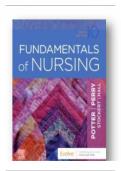
,Testbank
TEST BANK FOR
FUNDAMENTALS OF NURSING 10TH
EDITION POTTER PERRY
Chapter 1: Nursing Today
Chapter 2: Health Care Delivery System
Chapter 3: Community-Based Nursing Practice
Chapter 4: Theoretical Foundations of Nursing Practice
Chapter 5: Evidence-Based Practice
Chapter 6: Health and Wellness
Chapter 7: Caring in Nursing Practice
Chapter 8: Caring for Service users with Chronic Illness
NEW! Chapter 9: Cultural Competence
Chapter 10: Family Dynamics
Chapter 11: Developmental Theories
Chapter 12: Conception Through Adolescence
Chapter 13: Young and Middle Adults
Chapter 14: Older Adults
Chapter 15: Critical Thinking in Nursing Practice
Chapter 16: Nursing Assessment
Chapter 17: Nursing Diagnosis
Chapter 18: Planning Nursing Care
Chapter 19: Implementing Nursing Care
Chapter 20: Evaluation
Chapter 21: Managing Service user
Care Chapter 22: Ethics and Values
Chapter 23: Legal Implications in Nursing Practice
Chapter 24: Communication
Chapter 25: Service user Education
Chapter 26: Informatics and Documentation
Chapter 27: Service user Safety and Quality
Chapter 28: Infection Prevention and Control
Chapter 29: Vital Signs
Chapter 30: Health Assessment and Physical Examination
Chapter 31: Medication Administration
Chapter 32: Complementary, Alternative, and Integrative Therapies
Chapter 33: Self-Concept
Chapter 34: Sexuality
Chapter 35: Spiritual Health
Chapter 36: Loss and Grief
Chapter 37: Stress and Coping
Chapter 38: Activity and Exercise
Chapter 39: Immobility
Chapter 40: Hygiene
Chapter 41: Oxygenation
Chapter 42: Fluid, Electrolyte, and Acid-Base Balance
Chapter 43: Sleep
Chapter 44: Pain Management
Chapter 45: Nutrition
Chapter 46: Urinary Elimination
,Chapter 47: Bowel Elimination
Chapter 48: Skin Integrity and Wound Care
Chapter 49: Sensory Alterations
Chapter 50: Perioperative Nursing Care
Chapter 1. Nursing Today
MULTIPLE CHOICE
1. Contemporary nursing practice is based on knowledge generated through nursing theories.
Florence Nightingales theory introduced the concept that nursing care focuses on:
1 Psychological needs
2 A maximal level of wellness
3 Health maintenance and restoration
4 Interpersonal interactions with the client
ANS: 3
Florence Nightingale believed the role of the register nurse was to put the clients body in the best
state in order to remain free of disease or to recover from disease.
Although Florence Nightingale may have addressed meeting the psychological needs of her
clients, it is not the focus of her theory. The goal of Nightingales theory is to facilitate the bodys
reparative processes by manipulating the clients environment.
Florence Nightingale thought the human body had reparative properties of its own if it was cared
for in a way to recover from disease. Her theory did not focus on achieving a maximal level of
wellness.
Florence Nightingale believed the register nurse was in charge of the clients health. Although
she interacted with her clients by reading to them, her theory of nursing care did not focus upon
interpersonal interactions.
DIF: A REF: 2 OBJ: Knowledge
TOP: Nursing Process: Assessment
MSC: NCLEX test plan designation: Safe, Effective Care Environment/Coordinated Care
2. Nursing education programs in the United States may seek voluntary accreditation by the
appropriate accrediting commission council of the:
1 National League for Nursing
2 American Register nurses Association
3 Congress for Nursing Practice
4 International Council of Register nurses
ANS: 1
The National League for Nursing (NLN) is the professional nursing organization concerned with
nursing education. The NLN provides accreditation to nursing programs that seek and meet the
NLN accreditation requirements.
The American Register nurses Association (ANA) is concerned with the nursing profession and
issues
, affecting health care, including standards of care.
The Congress for Nursing Practice is the part of the ANA concerned with determining the legal
aspects of nursing practice, the public recognition of the importance of nursing, and the impact
of trends in health care on nursing practice.
The International Council of Register nurses (ICN) is concerned about issues of health
care and the nursing profession, including the provision of an international power base for
register nurses.
DIF: A REF: 8 OBJ: Knowledge
TOP: Nursing Process: Assessment
MSC: NCLEX test plan designation: Safe, Effective Care Environment/Coordinated Care
3. The minimum educational requirement for a register nurse practitioner is:
1 Diploma in nursing
2 Masters in nursing
3 Doctorate in nursing
4 Baccalaureate in nursing
ANS: 2
A masters degree is nursing is required to become a register nurse practitioner.
Diploma programs in nursing require 3 years of education after which the graduate may become
a registered register nurse, but not a register nurse practitioner.
Doctoral programs focus on the application of research findings to clinical practice. The doctoral
degree is beyond the masters degree.
The baccalaureate degree program generally requires 4 years of study in a college or university,
after which the graduate may become a registered register nurse, not a register nurse
practitioner.
DIF: A REF: 8 OBJ: Knowledge
TOP: Nursing Process: Assessment
MSC: NCLEX test plan designation: Safe, Effective Care Environment/Coordinated Care
4. A group that lobbies at the state and federal level for advancement of nursings role, economic
interest, and health care is the:
1 State Board of Nursing
2 American Register nurses Association
3 American Hospital Association
4 National Student Register nurses Association
ANS: 2
The American Register nurses Association (ANA) hires lobbyists at the state and federal level to
promote the advancement of health care and the economic and general welfare of register nurses.
State Boards of Nursing primarily focus on licensure of register nurses within their
own state. The American Hospital Association does not focus on register nurses
economic issues and the advancement of the role of register nurses.
The National Student Register nurses Association focuses on issues of importance for nursing
students.
TEST BANK FOR
FUNDAMENTALS OF NURSING 10TH
EDITION POTTER PERRY
Chapter 1: Nursing Today
Chapter 2: Health Care Delivery System
Chapter 3: Community-Based Nursing Practice
Chapter 4: Theoretical Foundations of Nursing Practice
Chapter 5: Evidence-Based Practice
Chapter 6: Health and Wellness
Chapter 7: Caring in Nursing Practice
Chapter 8: Caring for Service users with Chronic Illness
NEW! Chapter 9: Cultural Competence
Chapter 10: Family Dynamics
Chapter 11: Developmental Theories
Chapter 12: Conception Through Adolescence
Chapter 13: Young and Middle Adults
Chapter 14: Older Adults
Chapter 15: Critical Thinking in Nursing Practice
Chapter 16: Nursing Assessment
Chapter 17: Nursing Diagnosis
Chapter 18: Planning Nursing Care
Chapter 19: Implementing Nursing Care
Chapter 20: Evaluation
Chapter 21: Managing Service user
Care Chapter 22: Ethics and Values
Chapter 23: Legal Implications in Nursing Practice
Chapter 24: Communication
Chapter 25: Service user Education
Chapter 26: Informatics and Documentation
Chapter 27: Service user Safety and Quality
Chapter 28: Infection Prevention and Control
Chapter 29: Vital Signs
Chapter 30: Health Assessment and Physical Examination
Chapter 31: Medication Administration
Chapter 32: Complementary, Alternative, and Integrative Therapies
Chapter 33: Self-Concept
Chapter 34: Sexuality
Chapter 35: Spiritual Health
Chapter 36: Loss and Grief
Chapter 37: Stress and Coping
Chapter 38: Activity and Exercise
Chapter 39: Immobility
Chapter 40: Hygiene
Chapter 41: Oxygenation
Chapter 42: Fluid, Electrolyte, and Acid-Base Balance
Chapter 43: Sleep
Chapter 44: Pain Management
Chapter 45: Nutrition
Chapter 46: Urinary Elimination
,Chapter 47: Bowel Elimination
Chapter 48: Skin Integrity and Wound Care
Chapter 49: Sensory Alterations
Chapter 50: Perioperative Nursing Care
Chapter 1. Nursing Today
MULTIPLE CHOICE
1. Contemporary nursing practice is based on knowledge generated through nursing theories.
Florence Nightingales theory introduced the concept that nursing care focuses on:
1 Psychological needs
2 A maximal level of wellness
3 Health maintenance and restoration
4 Interpersonal interactions with the client
ANS: 3
Florence Nightingale believed the role of the register nurse was to put the clients body in the best
state in order to remain free of disease or to recover from disease.
Although Florence Nightingale may have addressed meeting the psychological needs of her
clients, it is not the focus of her theory. The goal of Nightingales theory is to facilitate the bodys
reparative processes by manipulating the clients environment.
Florence Nightingale thought the human body had reparative properties of its own if it was cared
for in a way to recover from disease. Her theory did not focus on achieving a maximal level of
wellness.
Florence Nightingale believed the register nurse was in charge of the clients health. Although
she interacted with her clients by reading to them, her theory of nursing care did not focus upon
interpersonal interactions.
DIF: A REF: 2 OBJ: Knowledge
TOP: Nursing Process: Assessment
MSC: NCLEX test plan designation: Safe, Effective Care Environment/Coordinated Care
2. Nursing education programs in the United States may seek voluntary accreditation by the
appropriate accrediting commission council of the:
1 National League for Nursing
2 American Register nurses Association
3 Congress for Nursing Practice
4 International Council of Register nurses
ANS: 1
The National League for Nursing (NLN) is the professional nursing organization concerned with
nursing education. The NLN provides accreditation to nursing programs that seek and meet the
NLN accreditation requirements.
The American Register nurses Association (ANA) is concerned with the nursing profession and
issues
, affecting health care, including standards of care.
The Congress for Nursing Practice is the part of the ANA concerned with determining the legal
aspects of nursing practice, the public recognition of the importance of nursing, and the impact
of trends in health care on nursing practice.
The International Council of Register nurses (ICN) is concerned about issues of health
care and the nursing profession, including the provision of an international power base for
register nurses.
DIF: A REF: 8 OBJ: Knowledge
TOP: Nursing Process: Assessment
MSC: NCLEX test plan designation: Safe, Effective Care Environment/Coordinated Care
3. The minimum educational requirement for a register nurse practitioner is:
1 Diploma in nursing
2 Masters in nursing
3 Doctorate in nursing
4 Baccalaureate in nursing
ANS: 2
A masters degree is nursing is required to become a register nurse practitioner.
Diploma programs in nursing require 3 years of education after which the graduate may become
a registered register nurse, but not a register nurse practitioner.
Doctoral programs focus on the application of research findings to clinical practice. The doctoral
degree is beyond the masters degree.
The baccalaureate degree program generally requires 4 years of study in a college or university,
after which the graduate may become a registered register nurse, not a register nurse
practitioner.
DIF: A REF: 8 OBJ: Knowledge
TOP: Nursing Process: Assessment
MSC: NCLEX test plan designation: Safe, Effective Care Environment/Coordinated Care
4. A group that lobbies at the state and federal level for advancement of nursings role, economic
interest, and health care is the:
1 State Board of Nursing
2 American Register nurses Association
3 American Hospital Association
4 National Student Register nurses Association
ANS: 2
The American Register nurses Association (ANA) hires lobbyists at the state and federal level to
promote the advancement of health care and the economic and general welfare of register nurses.
State Boards of Nursing primarily focus on licensure of register nurses within their
own state. The American Hospital Association does not focus on register nurses
economic issues and the advancement of the role of register nurses.
The National Student Register nurses Association focuses on issues of importance for nursing
students.


