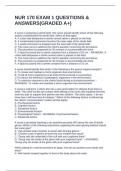
1. A patient with acute blood loss from a traumatic injury may
experience which of the following?
A. Decreased heart rate
B. Decreased respiratory rate
C. Increased blood pressure
D. Increased heart rate
Answer: D) Increased heart rate
Rationale: Acute blood loss leads to a decrease in circulating
blood volume, which triggers compensatory tachycardia
(increased heart rate) to maintain cardiac output.
2. Which of the following is a primary complication of untreated
hypertension?
A. Diabetes
B. Stroke
C. Asthma
D. Hyperthyroidism
Answer: B) Stroke
Rationale: Untreated hypertension can cause damage to blood
vessels, increasing the risk of a stroke due to the development of
atherosclerosis or rupture of a weakened vessel.
3. What is the primary cause of hypercapnia in patients with
chronic obstructive pulmonary disease (COPD)?
A. Increased carbon dioxide production
B. Airway obstruction
C. Pulmonary fibrosis
D. Decreased tidal volume
Answer: B) Airway obstruction
Rationale: In COPD, airway obstruction leads to difficulty in
exhaling CO2, resulting in the accumulation of carbon dioxide in
,the bloodstream (hypercapnia).
4. A patient with chronic kidney disease (CKD) is most at risk for
which of the following electrolyte imbalances?
A. Hyperkalemia
B. Hypokalemia
C. Hypercalcemia
D. Hypocalcemia
Answer: A) Hyperkalemia
Rationale: In CKD, the kidneys are unable to excrete potassium
effectively, leading to the accumulation of potassium in the blood,
resulting in hyperkalemia.
5. A patient with a diagnosis of schizophrenia may experience
which of the following symptoms?
A. Auditory hallucinations
B. Extreme fatigue
C. Increased blood pressure
D. Chronic cough
Answer: A) Auditory hallucinations
Rationale: Schizophrenia is often associated with psychotic
symptoms, including auditory hallucinations, delusions, and
disorganized thinking.
6. What is a common sign of a urinary tract infection (UTI) in
older adults?
A. Fever and chills
B. Confusion and delirium
C. Painful urination
D. Excessive thirst
Answer: B) Confusion and delirium
Rationale: In older adults, UTIs may present with atypical
symptoms such as confusion, delirium, or agitation, rather than
, the typical symptoms of fever and dysuria.
7. A patient with hypothyroidism is most likely to have which of
the following symptoms?
A. Weight loss
B. Increased heart rate
C. Cold intolerance
D. Heat intolerance
Answer: C) Cold intolerance
Rationale: Hypothyroidism leads to reduced metabolism, causing
symptoms such as cold intolerance, weight gain, and fatigue.
8. Which of the following factors is most likely to increase the
risk of deep vein thrombosis (DVT)?
A. Frequent physical activity
B. Use of oral contraceptives
C. Low body weight
D. Dehydration
Answer: B) Use of oral contraceptives
Rationale: Oral contraceptives can increase clotting factor
production, which elevates the risk of DVT.
9. A patient presents with fever, jaundice, and dark urine. Which
condition might this indicate?
A. Hepatitis
B. Gallstones
C. Pancreatitis
D. Cirrhosis
Answer: A) Hepatitis
Rationale: Hepatitis can lead to liver inflammation, resulting in
jaundice (yellowing of the skin), dark urine, and fever.
10. What is a classic symptom of Parkinson’s disease?
experience which of the following?
A. Decreased heart rate
B. Decreased respiratory rate
C. Increased blood pressure
D. Increased heart rate
Answer: D) Increased heart rate
Rationale: Acute blood loss leads to a decrease in circulating
blood volume, which triggers compensatory tachycardia
(increased heart rate) to maintain cardiac output.
2. Which of the following is a primary complication of untreated
hypertension?
A. Diabetes
B. Stroke
C. Asthma
D. Hyperthyroidism
Answer: B) Stroke
Rationale: Untreated hypertension can cause damage to blood
vessels, increasing the risk of a stroke due to the development of
atherosclerosis or rupture of a weakened vessel.
3. What is the primary cause of hypercapnia in patients with
chronic obstructive pulmonary disease (COPD)?
A. Increased carbon dioxide production
B. Airway obstruction
C. Pulmonary fibrosis
D. Decreased tidal volume
Answer: B) Airway obstruction
Rationale: In COPD, airway obstruction leads to difficulty in
exhaling CO2, resulting in the accumulation of carbon dioxide in
,the bloodstream (hypercapnia).
4. A patient with chronic kidney disease (CKD) is most at risk for
which of the following electrolyte imbalances?
A. Hyperkalemia
B. Hypokalemia
C. Hypercalcemia
D. Hypocalcemia
Answer: A) Hyperkalemia
Rationale: In CKD, the kidneys are unable to excrete potassium
effectively, leading to the accumulation of potassium in the blood,
resulting in hyperkalemia.
5. A patient with a diagnosis of schizophrenia may experience
which of the following symptoms?
A. Auditory hallucinations
B. Extreme fatigue
C. Increased blood pressure
D. Chronic cough
Answer: A) Auditory hallucinations
Rationale: Schizophrenia is often associated with psychotic
symptoms, including auditory hallucinations, delusions, and
disorganized thinking.
6. What is a common sign of a urinary tract infection (UTI) in
older adults?
A. Fever and chills
B. Confusion and delirium
C. Painful urination
D. Excessive thirst
Answer: B) Confusion and delirium
Rationale: In older adults, UTIs may present with atypical
symptoms such as confusion, delirium, or agitation, rather than
, the typical symptoms of fever and dysuria.
7. A patient with hypothyroidism is most likely to have which of
the following symptoms?
A. Weight loss
B. Increased heart rate
C. Cold intolerance
D. Heat intolerance
Answer: C) Cold intolerance
Rationale: Hypothyroidism leads to reduced metabolism, causing
symptoms such as cold intolerance, weight gain, and fatigue.
8. Which of the following factors is most likely to increase the
risk of deep vein thrombosis (DVT)?
A. Frequent physical activity
B. Use of oral contraceptives
C. Low body weight
D. Dehydration
Answer: B) Use of oral contraceptives
Rationale: Oral contraceptives can increase clotting factor
production, which elevates the risk of DVT.
9. A patient presents with fever, jaundice, and dark urine. Which
condition might this indicate?
A. Hepatitis
B. Gallstones
C. Pancreatitis
D. Cirrhosis
Answer: A) Hepatitis
Rationale: Hepatitis can lead to liver inflammation, resulting in
jaundice (yellowing of the skin), dark urine, and fever.
10. What is a classic symptom of Parkinson’s disease?