PNU 128 EXAM 3 QUESTIONS AND CORRECT
ANSWERS
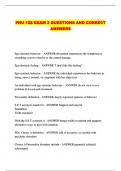
Ego-dystonic behavior - ANSWER the patient experiences the symptoms as
something aversive that he or she cannot manage
Ego-dystonic feeling - ANSWER "I don't like this feeling"
Ego-syntonic behavior - ANSWER the individual experiences her behavior as
being correct, normal, or congruent with her objectives
An individual with ego-syntonic behavior - ANSWER do not view it as a
problem & do not seek treatment
Personality definition - ANSWER deeply ingrained patterns of behavior
S.E.T acronym stands for - ANSWER Support and concern
Empathize
Truth statement
With the S.E.T acronym it - ANSWER brings reality to patient and suggests
alternative ways to deal with situation
PDs: Cluster A definition - ANSWER odd or eccentric, co-morbid with
psychotic disorders
Cluster A Personality disorders include - ANSWER paranoid, schizoid,
schizotypal
, Paranoid PD - ANSWER suspicious and think others are out to get them (tend
to talk openly so they won't be misinterpreted)
Schizoid PD - ANSWER lack the need for social contact, poor social skills
Interventions for a client with Schizoid PD - ANSWER don't force
socialization, facilitate development of closeness to one person
Schizotypal PD - ANSWER (pre-schizophrenia) odd beliefs or superstitious,
poor hygiene
Interventions for client with Schizotypal PD - ANSWER assist with social
skills and hygiene to socialize
PDs: Cluster B definition - ANSWER dramatic and emotional
Cluster B PDs are co-morbid with - ANSWER affective disorders (most
common)
Cluster B PDs are - ANSWER antisocial, histrionic, narcissistic, borderline,
spllitting
Antisocial PD - ANSWER sociopath, no empathy, disregard for other
Interventions for a client with Antisocial PD - ANSWER setting boundaries
Histrionic PD - ANSWER excessive emotionality, superficial, needs to be
center of attention
Interventions for a client with Histrionic PD - ANSWER give patient
appropriate feedback on social interactions to lessen excessive emotions
Narcissistic PD - ANSWER grandiose, need for admiration, sense of
entitlement, lacks empathy
ANSWERS
Ego-dystonic behavior - ANSWER the patient experiences the symptoms as
something aversive that he or she cannot manage
Ego-dystonic feeling - ANSWER "I don't like this feeling"
Ego-syntonic behavior - ANSWER the individual experiences her behavior as
being correct, normal, or congruent with her objectives
An individual with ego-syntonic behavior - ANSWER do not view it as a
problem & do not seek treatment
Personality definition - ANSWER deeply ingrained patterns of behavior
S.E.T acronym stands for - ANSWER Support and concern
Empathize
Truth statement
With the S.E.T acronym it - ANSWER brings reality to patient and suggests
alternative ways to deal with situation
PDs: Cluster A definition - ANSWER odd or eccentric, co-morbid with
psychotic disorders
Cluster A Personality disorders include - ANSWER paranoid, schizoid,
schizotypal
, Paranoid PD - ANSWER suspicious and think others are out to get them (tend
to talk openly so they won't be misinterpreted)
Schizoid PD - ANSWER lack the need for social contact, poor social skills
Interventions for a client with Schizoid PD - ANSWER don't force
socialization, facilitate development of closeness to one person
Schizotypal PD - ANSWER (pre-schizophrenia) odd beliefs or superstitious,
poor hygiene
Interventions for client with Schizotypal PD - ANSWER assist with social
skills and hygiene to socialize
PDs: Cluster B definition - ANSWER dramatic and emotional
Cluster B PDs are co-morbid with - ANSWER affective disorders (most
common)
Cluster B PDs are - ANSWER antisocial, histrionic, narcissistic, borderline,
spllitting
Antisocial PD - ANSWER sociopath, no empathy, disregard for other
Interventions for a client with Antisocial PD - ANSWER setting boundaries
Histrionic PD - ANSWER excessive emotionality, superficial, needs to be
center of attention
Interventions for a client with Histrionic PD - ANSWER give patient
appropriate feedback on social interactions to lessen excessive emotions
Narcissistic PD - ANSWER grandiose, need for admiration, sense of
entitlement, lacks empathy