

PSY 211 Module Five Milestone
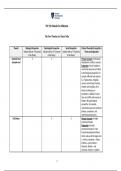
Part One: Theories at a Glance Table
Theorist Biological Perspective Psychological Perspective Social Perspective Primary Theoretical Concept(s) or
Indicate with an ‘X’ if present Indicate with an ‘X’ if present Indicate with an ‘X’ if present Theme and Explanation
in the theory. in the theory. in the theory.
Sigmund Freud X X Primary Concepts: Psychosexual
(example row) development, conflicts, neuroses
Explanation: Freud's insights on
unconscious processes are linked
to the biological perspective. For
example, different brain systems
(i.e., hippocampus, amygdala,
sensory cortex) impact memory,
emotion, and sensation, all of
which can influence our
perception. In addition, Freud's
focus on conflicts and neuroses is
linked to the psychological
perspective. For example,
unresolved trauma can manifest in
phobias, compulsions, and
unintentional expressions.
Erik Erikson X X Primary Concepts: the eight
psychosocial stages
Explanation: the eight
psychosocial stages is a Neo-
Freudian developmental theory
that is made up of the stages trust
v. mistrust, autonomy v. shame,
initiative v. guilt, industry v.
inferiority, identity v. role
confusion, intimacy v. isolation,
1
, Theorist Biological Perspective Psychological Perspective Social Perspective Primary Theoretical Concept(s) or
Indicate with an ‘X’ if present Indicate with an ‘X’ if present Indicate with an ‘X’ if present Theme and Explanation
in the theory. in the theory. in the theory.
generativity, integrity v. despair.
Unlike Freud’s psychosexual
theory, Erikson’s theory extends
throughout the lifetime. Another
difference with Erikson’s theory in
comparison to Freud’s is the
conflicts in these stages influence
the later stages and the child will
progress through the stages due
to biological development and due
to social influences (Sigelman &
Rider, Theories of Human
Development, 2018).
Maria Montessori [Insert X here or leave blank.] X X Primary Concepts: the Montessori
teaching method
Explanation: Montessori’s theory
of education is based on the belief
that children have the desire to
learn, and their education should
be guided by the child, not by
their age like modern education
systems are. This form of
education resembles scaffold
learning as the child’s education is
based on the child’s abilities and
built on from there. The focus of
this education style is hands-on
methods of education and avoids
using abstract methods of
teaching (Ruhl, 2024).
Jean Piaget X X Primary Concepts: the
constructivist approach to
intelligence
Explanation: Piaget’s cognitive
2
Part One: Theories at a Glance Table
Theorist Biological Perspective Psychological Perspective Social Perspective Primary Theoretical Concept(s) or
Indicate with an ‘X’ if present Indicate with an ‘X’ if present Indicate with an ‘X’ if present Theme and Explanation
in the theory. in the theory. in the theory.
Sigmund Freud X X Primary Concepts: Psychosexual
(example row) development, conflicts, neuroses
Explanation: Freud's insights on
unconscious processes are linked
to the biological perspective. For
example, different brain systems
(i.e., hippocampus, amygdala,
sensory cortex) impact memory,
emotion, and sensation, all of
which can influence our
perception. In addition, Freud's
focus on conflicts and neuroses is
linked to the psychological
perspective. For example,
unresolved trauma can manifest in
phobias, compulsions, and
unintentional expressions.
Erik Erikson X X Primary Concepts: the eight
psychosocial stages
Explanation: the eight
psychosocial stages is a Neo-
Freudian developmental theory
that is made up of the stages trust
v. mistrust, autonomy v. shame,
initiative v. guilt, industry v.
inferiority, identity v. role
confusion, intimacy v. isolation,
1
, Theorist Biological Perspective Psychological Perspective Social Perspective Primary Theoretical Concept(s) or
Indicate with an ‘X’ if present Indicate with an ‘X’ if present Indicate with an ‘X’ if present Theme and Explanation
in the theory. in the theory. in the theory.
generativity, integrity v. despair.
Unlike Freud’s psychosexual
theory, Erikson’s theory extends
throughout the lifetime. Another
difference with Erikson’s theory in
comparison to Freud’s is the
conflicts in these stages influence
the later stages and the child will
progress through the stages due
to biological development and due
to social influences (Sigelman &
Rider, Theories of Human
Development, 2018).
Maria Montessori [Insert X here or leave blank.] X X Primary Concepts: the Montessori
teaching method
Explanation: Montessori’s theory
of education is based on the belief
that children have the desire to
learn, and their education should
be guided by the child, not by
their age like modern education
systems are. This form of
education resembles scaffold
learning as the child’s education is
based on the child’s abilities and
built on from there. The focus of
this education style is hands-on
methods of education and avoids
using abstract methods of
teaching (Ruhl, 2024).
Jean Piaget X X Primary Concepts: the
constructivist approach to
intelligence
Explanation: Piaget’s cognitive
2

