AUD CPA Exam Final Review
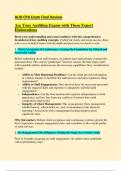
Ace Your Auditing Exams with These Expert
Elaborations
Boost your understanding and exam readiness with this comprehensive
breakdown of key auditing concepts. Crafted for clarity and exam success, these
notes cover essential topics with the depth and precision you need to excel.
1. Client Acceptance & Continuance: Laying the Foundation for Ethical and
Successful Audits
Before embarking on an audit journey, an auditor must meticulously evaluate the
potential client. This crucial "gatekeeper" function ensures the firm aligns itself
with reputable entities and possesses the necessary capabilities. Key considerations
include:
Ability to Meet Reporting Deadlines: Can the client provide information
in a timely manner to facilitate the audit process and meet regulatory filing
requirements?
Ability to Staff Engagements: Does the firm have the necessary personnel
with the required skills and expertise to adequately staff the audit
engagement?
Independence: Can the firm maintain the requisite independence in both
appearance and fact, free from any conflicts of interest that could
compromise objectivity?
Integrity of Client Management: This is paramount. Does management
exhibit honesty, ethical behavior, and a commitment to fair financial
reporting? Association with a management lacking integrity poses
significant risks.
Why this matters: Robust client acceptance and continuance policies protect the
firm's reputation, mitigate engagement risks, and contribute to the overall quality
of audit services.
2. Pre-Engagement Due Diligence: Setting the Stage for a Sound Audit
Prior to formally accepting an audit engagement, the auditor must undertake
critical preliminary steps:
, Acceptable Financial Reporting Framework: The auditor must determine
if the financial reporting framework (e.g., IFRS, GAAP) to be used by the
client is suitable given the nature of the entity and the purpose of the
financial statements.
Management's Acknowledgment and Understanding of Responsibilities:
A clear agreement must be obtained from management confirming their
understanding and acceptance of their responsibilities, including:
o Preparation and fair presentation of the financial statements.
o Design, implementation, and maintenance of internal controls relevant
to the preparation and fair presentation of financial statements.
o Providing the auditor with access to all information necessary for the
audit, any additional information the auditor may request, and
unrestricted access to individuals within the entity to obtain audit
evidence.
Why this matters: These steps ensure a common understanding of the audit's
scope and responsibilities, minimizing potential misunderstandings and setting the
stage for an effective audit.
3. Management's Cornerstones: Responsibilities in Financial Reporting
Management plays a pivotal role in the financial reporting process. Their
responsibilities are fundamental to a successful audit:
Preparation and Fair Presentation of Financial Statements: Management
is responsible for ensuring that the financial statements are prepared in
accordance with the applicable financial reporting framework and present a
true and fair view of the entity's financial position, performance, and cash
flows.
Design, Implementation, and Maintenance of Internal Controls:
Management is responsible for establishing and maintaining an effective
system of internal controls to provide reasonable assurance regarding the
reliability of financial reporting.
Providing Auditor Access: Management must grant the auditor:
o Access to all information relevant to the preparation and fair
presentation of the financial statements.
o Any additional information that the auditor may request for the
purpose of the audit.
o Unrestricted access to persons within the entity from whom the
auditor deems it necessary to obtain audit evidence.
,Why this matters: A clear understanding of management's responsibilities is
crucial for the auditor to plan and execute the audit effectively and to hold
management accountable for the integrity of the financial statements.
4. Inquiring with the Predecessor Auditor: Uncovering Potential Red Flags
When taking on a new audit client, communication with the predecessor auditor is
a vital step to gain insights and identify potential risks:
The successor auditor should make inquiries regarding:
Integrity of Management: Any concerns or observations about the honesty
and ethical behavior of management.
Disagreements with Management: Any significant disagreements between
the predecessor auditor and management regarding accounting principles,
audit scope, or reporting.
Reasons for Change in Auditors: Understanding the circumstances that led
to the change in auditors can reveal potential underlying issues.
Fraud, Noncompliance, and Internal Control Matters: Any instances or
concerns related to fraud, noncompliance with laws and regulations, or
significant deficiencies/material weaknesses in internal control, and how
these were communicated to management, the audit committee, or those
charged with governance.
Why this matters: Insights from the predecessor auditor can provide valuable
information about the client's management and potential risks, aiding the successor
auditor in assessing the engagement risk and planning the audit.
5. Initial Audit Focus: Establishing a Reliable Starting Point
During the audit of a new client, the auditor must obtain sufficient appropriate
audit evidence regarding:
Opening Balances: Whether the opening balances contain misstatements
that could materially affect the current period's financial statements.
Consistent Application of Accounting Policies: Whether the accounting
policies applied in the current period are consistent with those applied in the
prior period.
, Why this matters: Ensuring the accuracy of opening balances and the consistent
application of accounting policies provides a reliable foundation for the current
period audit.
6. Reviewing Predecessor's Documentation: Leveraging Past Insights
The new auditor should review the predecessor auditor's documentation related to:
Planning: The overall audit strategy and plan developed for the prior year.
Risk Assessment Procedures: The procedures performed to identify and
assess the risks of material misstatement.
Further Audit Procedures: The nature, timing, and extent of tests of
controls and substantive procedures performed.
Results: The findings and conclusions reached during the prior year's audit.
Matters of Continuing Accounting & Audit Significance: Issues that had
a continuing impact on the financial statements or the audit process.
Why this matters: Reviewing the predecessor's documentation provides valuable
insights into the client's business, risks, and accounting practices, aiding the new
auditor in planning and executing the current audit effectively.
7. The Engagement Letter: Defining the Audit Contract
The engagement letter serves as the formal contract between the client and the
auditor, crucial for:
Reducing the Risk of Misinterpretation: Clearly outlining the
responsibilities of both parties, the scope of the audit, and the expected
deliverables.
Why this matters: A well-defined engagement letter minimizes
misunderstandings, sets expectations, and provides a clear framework for the audit
engagement.
8. Recurring Audits: Reassessing the Engagement Terms
For recurring audits, the auditor should assess whether:
Circumstances Require Revision of Engagement Terms: Changes in the
client's business, regulatory environment, or other factors may necessitate a
revision of the original engagement letter.
Ace Your Auditing Exams with These Expert
Elaborations
Boost your understanding and exam readiness with this comprehensive
breakdown of key auditing concepts. Crafted for clarity and exam success, these
notes cover essential topics with the depth and precision you need to excel.
1. Client Acceptance & Continuance: Laying the Foundation for Ethical and
Successful Audits
Before embarking on an audit journey, an auditor must meticulously evaluate the
potential client. This crucial "gatekeeper" function ensures the firm aligns itself
with reputable entities and possesses the necessary capabilities. Key considerations
include:
Ability to Meet Reporting Deadlines: Can the client provide information
in a timely manner to facilitate the audit process and meet regulatory filing
requirements?
Ability to Staff Engagements: Does the firm have the necessary personnel
with the required skills and expertise to adequately staff the audit
engagement?
Independence: Can the firm maintain the requisite independence in both
appearance and fact, free from any conflicts of interest that could
compromise objectivity?
Integrity of Client Management: This is paramount. Does management
exhibit honesty, ethical behavior, and a commitment to fair financial
reporting? Association with a management lacking integrity poses
significant risks.
Why this matters: Robust client acceptance and continuance policies protect the
firm's reputation, mitigate engagement risks, and contribute to the overall quality
of audit services.
2. Pre-Engagement Due Diligence: Setting the Stage for a Sound Audit
Prior to formally accepting an audit engagement, the auditor must undertake
critical preliminary steps:
, Acceptable Financial Reporting Framework: The auditor must determine
if the financial reporting framework (e.g., IFRS, GAAP) to be used by the
client is suitable given the nature of the entity and the purpose of the
financial statements.
Management's Acknowledgment and Understanding of Responsibilities:
A clear agreement must be obtained from management confirming their
understanding and acceptance of their responsibilities, including:
o Preparation and fair presentation of the financial statements.
o Design, implementation, and maintenance of internal controls relevant
to the preparation and fair presentation of financial statements.
o Providing the auditor with access to all information necessary for the
audit, any additional information the auditor may request, and
unrestricted access to individuals within the entity to obtain audit
evidence.
Why this matters: These steps ensure a common understanding of the audit's
scope and responsibilities, minimizing potential misunderstandings and setting the
stage for an effective audit.
3. Management's Cornerstones: Responsibilities in Financial Reporting
Management plays a pivotal role in the financial reporting process. Their
responsibilities are fundamental to a successful audit:
Preparation and Fair Presentation of Financial Statements: Management
is responsible for ensuring that the financial statements are prepared in
accordance with the applicable financial reporting framework and present a
true and fair view of the entity's financial position, performance, and cash
flows.
Design, Implementation, and Maintenance of Internal Controls:
Management is responsible for establishing and maintaining an effective
system of internal controls to provide reasonable assurance regarding the
reliability of financial reporting.
Providing Auditor Access: Management must grant the auditor:
o Access to all information relevant to the preparation and fair
presentation of the financial statements.
o Any additional information that the auditor may request for the
purpose of the audit.
o Unrestricted access to persons within the entity from whom the
auditor deems it necessary to obtain audit evidence.
,Why this matters: A clear understanding of management's responsibilities is
crucial for the auditor to plan and execute the audit effectively and to hold
management accountable for the integrity of the financial statements.
4. Inquiring with the Predecessor Auditor: Uncovering Potential Red Flags
When taking on a new audit client, communication with the predecessor auditor is
a vital step to gain insights and identify potential risks:
The successor auditor should make inquiries regarding:
Integrity of Management: Any concerns or observations about the honesty
and ethical behavior of management.
Disagreements with Management: Any significant disagreements between
the predecessor auditor and management regarding accounting principles,
audit scope, or reporting.
Reasons for Change in Auditors: Understanding the circumstances that led
to the change in auditors can reveal potential underlying issues.
Fraud, Noncompliance, and Internal Control Matters: Any instances or
concerns related to fraud, noncompliance with laws and regulations, or
significant deficiencies/material weaknesses in internal control, and how
these were communicated to management, the audit committee, or those
charged with governance.
Why this matters: Insights from the predecessor auditor can provide valuable
information about the client's management and potential risks, aiding the successor
auditor in assessing the engagement risk and planning the audit.
5. Initial Audit Focus: Establishing a Reliable Starting Point
During the audit of a new client, the auditor must obtain sufficient appropriate
audit evidence regarding:
Opening Balances: Whether the opening balances contain misstatements
that could materially affect the current period's financial statements.
Consistent Application of Accounting Policies: Whether the accounting
policies applied in the current period are consistent with those applied in the
prior period.
, Why this matters: Ensuring the accuracy of opening balances and the consistent
application of accounting policies provides a reliable foundation for the current
period audit.
6. Reviewing Predecessor's Documentation: Leveraging Past Insights
The new auditor should review the predecessor auditor's documentation related to:
Planning: The overall audit strategy and plan developed for the prior year.
Risk Assessment Procedures: The procedures performed to identify and
assess the risks of material misstatement.
Further Audit Procedures: The nature, timing, and extent of tests of
controls and substantive procedures performed.
Results: The findings and conclusions reached during the prior year's audit.
Matters of Continuing Accounting & Audit Significance: Issues that had
a continuing impact on the financial statements or the audit process.
Why this matters: Reviewing the predecessor's documentation provides valuable
insights into the client's business, risks, and accounting practices, aiding the new
auditor in planning and executing the current audit effectively.
7. The Engagement Letter: Defining the Audit Contract
The engagement letter serves as the formal contract between the client and the
auditor, crucial for:
Reducing the Risk of Misinterpretation: Clearly outlining the
responsibilities of both parties, the scope of the audit, and the expected
deliverables.
Why this matters: A well-defined engagement letter minimizes
misunderstandings, sets expectations, and provides a clear framework for the audit
engagement.
8. Recurring Audits: Reassessing the Engagement Terms
For recurring audits, the auditor should assess whether:
Circumstances Require Revision of Engagement Terms: Changes in the
client's business, regulatory environment, or other factors may necessitate a
revision of the original engagement letter.